Some T cell responses were weaker in older COVID-19 survivors
An observational study of COVID-19 survivors aged 18–59 and 60 or older found weaker responses after inactivated vaccines and subsequent Omicron infection in older adults.
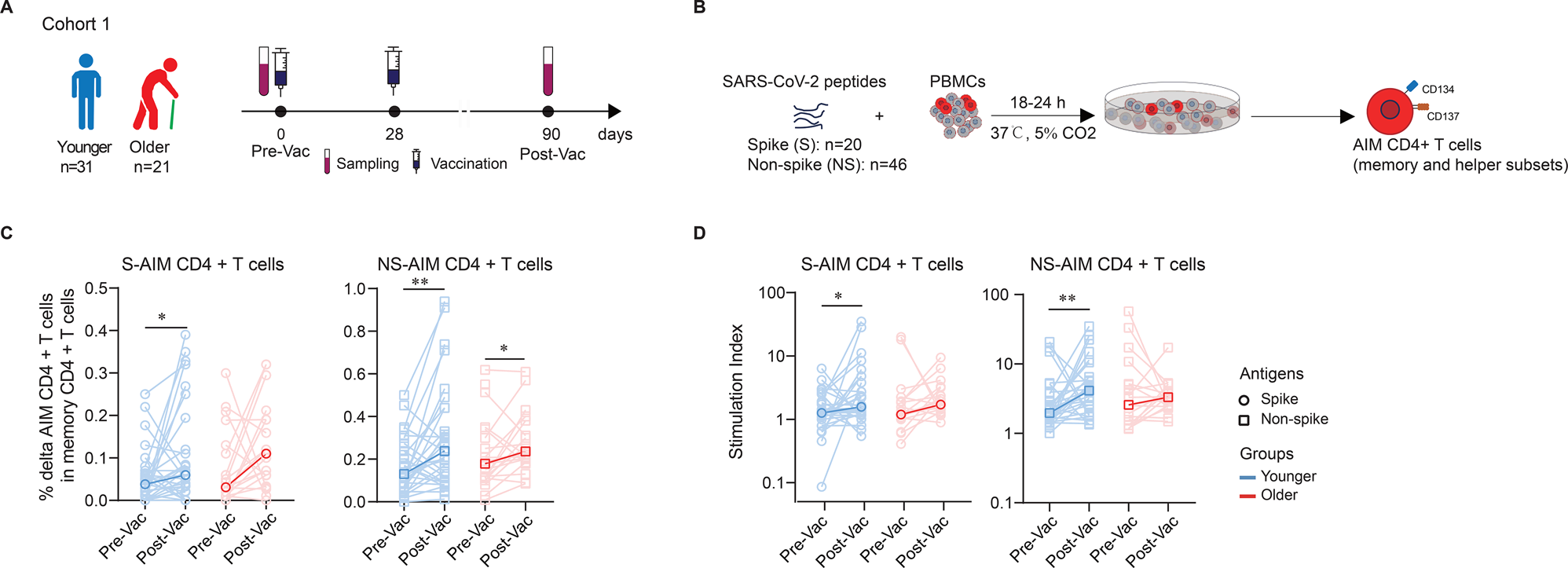
Adults aged 18–59 and 60 or older who had recovered from COVID-19 took part in a longitudinal observational study. They received inactivated COVID-19 vaccines, made with killed virus, and later had Omicron infections despite vaccination. Researchers tracked helper T cells, which coordinate immune responses, in blood samples.
Older adults showed weaker helper T cell activation after vaccination. Among cells responding to viral proteins other than the surface spike protein, older adults had a smaller share of Th1 cells, a helper T cell type involved in antiviral defence. The age-associated differences persisted after Omicron infection, including weaker helper T cell memory responses and less expansion of Th1 cells responding to proteins other than spike.
Why it matters
Age-related changes in antiviral immunity contribute to older adults’ higher risk of severe COVID-19. The researchers called for age-tailored vaccination strategies aimed at strengthening protective cellular immunity.
Caveats
This observational study cannot establish that age caused the differences, and immune-cell measurements alone do not show protection against severe illness. Its findings concern previously infected, vaccinated adults who later had Omicron infection.
- Inactivated sars-cov-2 vaccines
- Sars-cov-2 breakthrough infection
- Immune response
- Inflammation
- COVID-19
- Humans
The paper
Chinese PLA General Hospital
Journal of Translational Medicine, 12 Oct 2026, Open access, CC BY-NC-ND