Blood proteins are linked to heart changes and disease risks
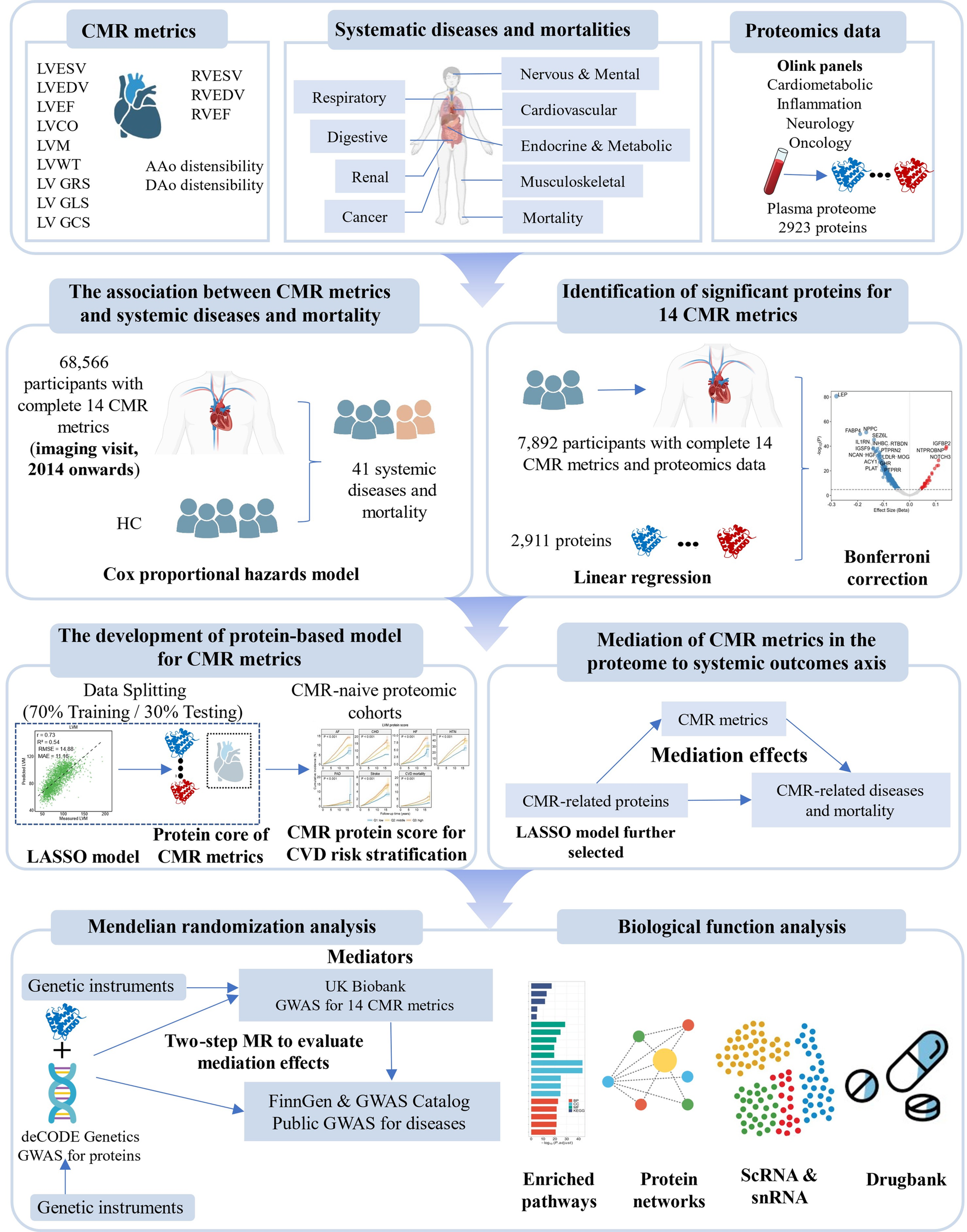
In 68,566 adults, heart scans were linked to broad health risks, and a sub-study of 7,892 people identified 681 blood proteins tied to heart structure.
68,566 participants
Limit: Median follow-up lasted under four years
Edited by Boris Djordjevic · AgingResearch.News
In an observational study of 68,566 adults in the UK Biobank followed for a median of 3.82 to 3.98 years, researchers examined links between 14 heart magnetic resonance imaging metrics, 41 diseases, and death. They identified 88 significant associations across body systems. In a subgroup of 7,892 participants, 681 blood proteins were associated with heart imaging traits, largely reflecting inflammation and tissue remodeling. Computer models using 26 to 57 proteins predicted the imaging measures and showed potential utility for assessing disease risk. A genetic analysis using Mendelian randomization, a method that uses gene variants to evaluate cause and effect, prioritized 222 potential causal protein-imaging pairs. This analysis also suggested that left ventricular mass, the muscle mass of the heart's main pumping chamber, potentially mediates links between five blood proteins and atrial fibrillation, an irregular heartbeat.
Why it matters
Cardiovascular remodeling is a common feature of aging that contributes to heart failure and other conditions. Identifying circulating proteins linked to these structural changes may clarify the molecular pathways that connect aging heart tissue to wider disease risks.
Caveats
The observational findings cannot prove cause and effect, and the median follow-up lasted under four years. In addition, blood proteins were measured in only a subset of participants, and the genetic analyses rely on assumptions that require experimental confirmation.
- Inflammation
- Extracellular matrix remodeling
- Immune response
- Left ventricular mass
- Atrial fibrillation
- Humans
The paper
Zhejiang University; China Medical University
Cardiovascular Diabetology, Oct 20, 2026, Open access, CC BY-NC-ND