Air pollutants link to disease through distinct proteomic paths
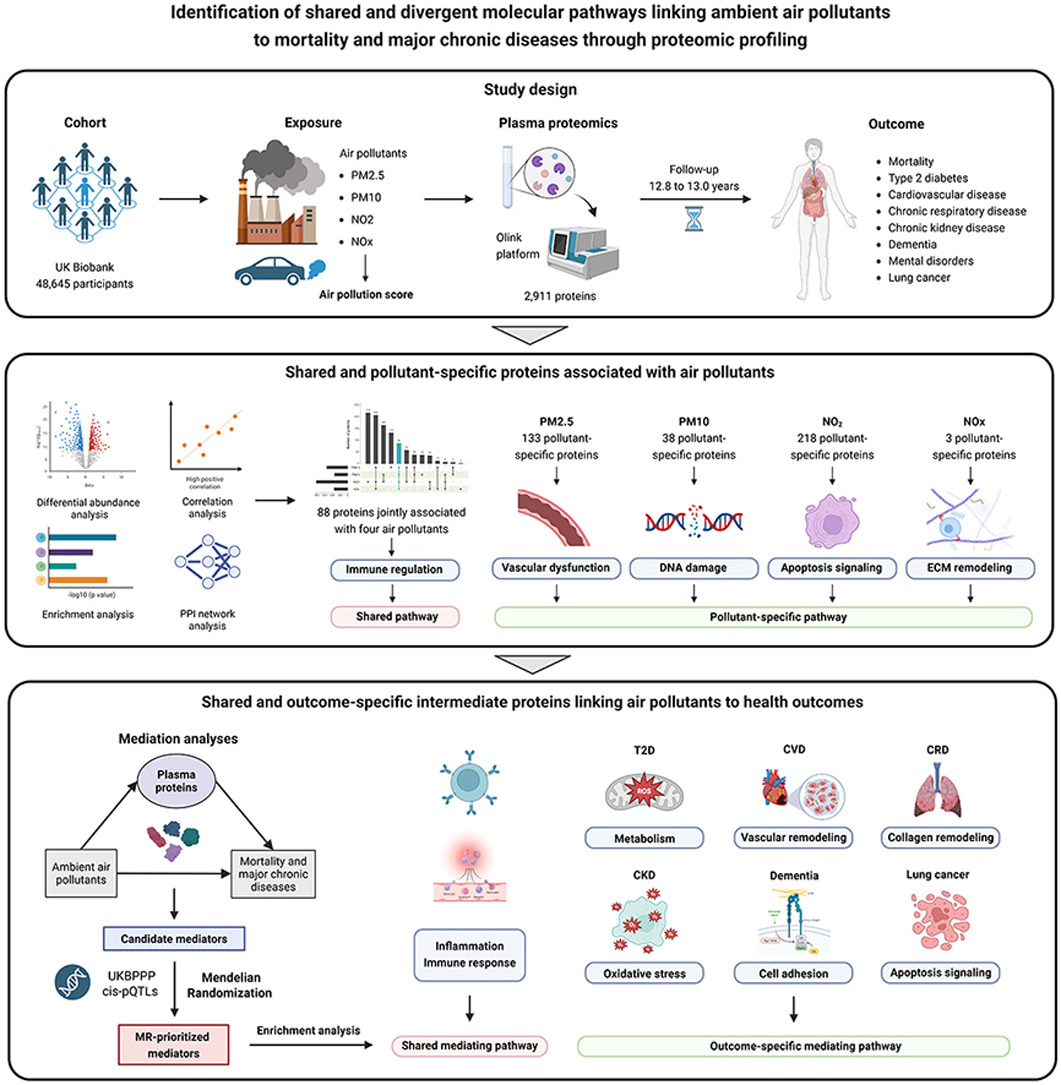
In 48,645 UK Biobank participants, plasma proteomic profiles linked ambient air pollutants to mortality and chronic diseases through shared immune and divergent molecular pathways.
Redox Biology
In 48,645 UK Biobank participants, researchers profiled plasma proteins associated with exposure to particulate matter (PM2.5 and PM10), nitrogen dioxide, and nitrogen oxides. Proteins jointly linked to all four pollutants were enriched in immune regulatory pathways. Proteins uniquely associated with PM2.5, PM10, nitrogen dioxide, and nitrogen oxides were enriched in vascular dysfunction, DNA damage, apoptosis signaling, and extracellular matrix remodeling pathways, respectively. Mediation and Mendelian randomization analyses identified potential mediating proteins linked to health outcomes. Shared pathways included inflammation and immune responses, whereas outcome-specific pathways included vascular remodeling for cardiovascular disease, oxidative stress for chronic kidney disease, and cell adhesion for dementia. Cell-type and tissue analyses also highlighted advanced glycosylation end product-specific receptor (AGER) specificity for chronic respiratory disease and lung cancer.
Why it matters
The findings help outline molecular mechanisms through which environmental toxicant exposures may contribute to chronic disease risks and mortality in human populations.
Caveats
The study relies on observational associations and Mendelian randomization in an adult biobank cohort, which cannot rule out unmeasured confounding or account for varying lifetime exposure patterns.
The paper
Show 7 more authors
Xinran Li, Yinting Lu, Jingjing Jia, Yulin Xie, Xiang Cheng, Liegang Liu, Zhilei Shan,Huazhong University of Science and Technology
Redox Biology · 23 Sep 2026