Blood protein score improved heart failure risk prediction
A 101-protein score raised a measure of predictive performance from 0.670 with age and sex alone to 0.786 in the validation group.
Limit: The clinical comparison model omitted QRS duration, potentially distorting the comparison
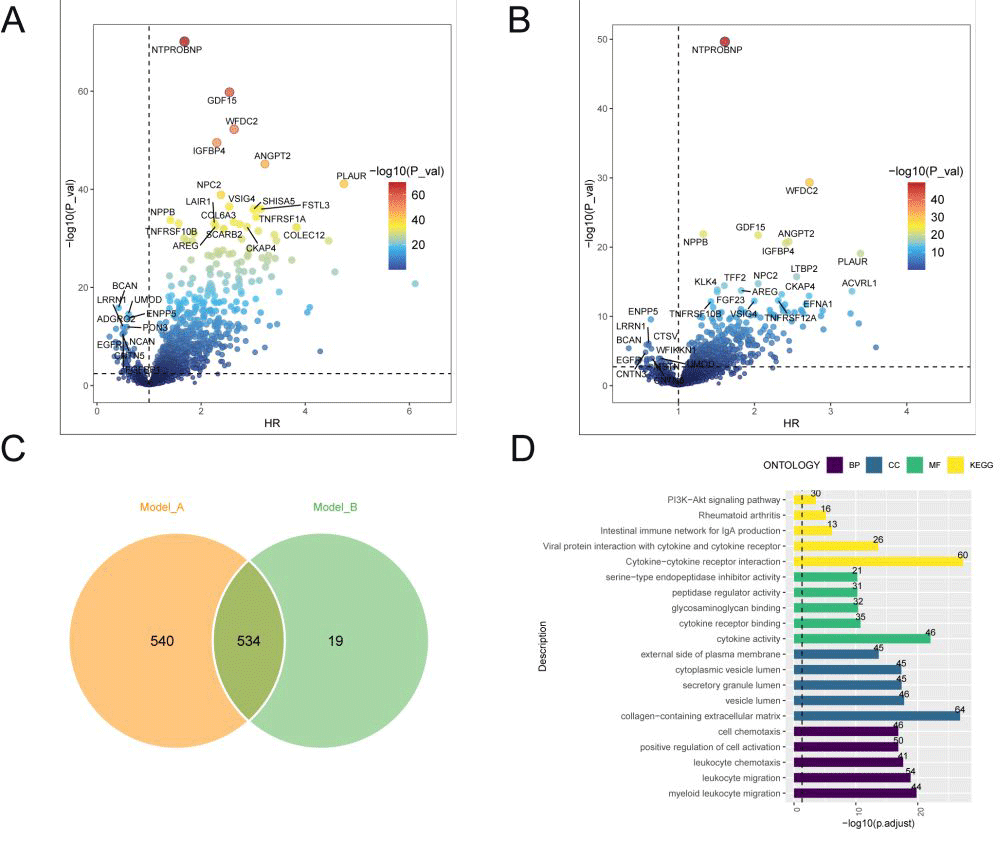
An observational study analyzed blood samples from 16,128 UK Biobank participants with high blood pressure and no heart failure at the start. Researchers measured 2,911 blood proteins and randomly split participants into groups to develop and test a risk score. Over a median follow-up of 15.1 years, 1,074 participants developed heart failure, a condition in which the heart cannot pump blood effectively.
The score used 101 proteins. In the validation group, adding it to an existing clinical prediction model raised the C-index, a measure of how well a model ranks people by risk, from 0.727 to 0.787. Protein scores were elevated years before diagnosis. The authors concluded that protein profiling may support earlier identification of people at risk.
Why it matters
For heart failure, an age-related disease, recognizing risk before overt disease develops may support earlier prevention.
Caveats
This observational study assessed prediction, not whether using the score prevents heart failure. Validation used a split of the same UK Biobank population, all with high blood pressure, rather than a separate cohort.
The paper
The Second Xiangya Hospital of Central South University
Journal of Global Health, Oct 19, 2026


