Lifestyle risk factors for cervical glandular and squamous cell neoplasia: insights from a prospective cohort study of over 117,000 women
Abstract
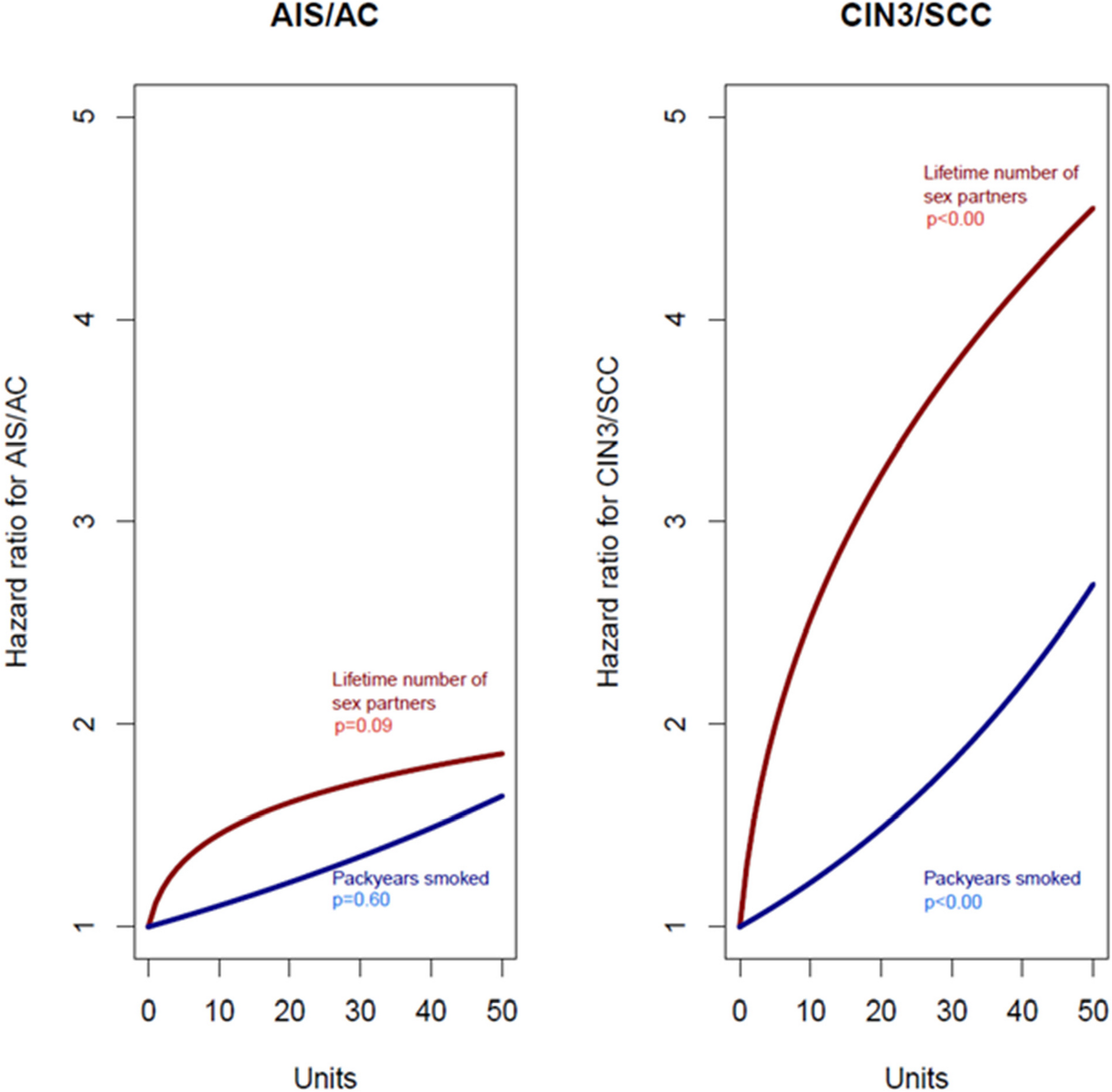
Background: While cervical cancer screening has successfully reduced squamous cell carcinoma (SCC) rates, adenocarcinoma (AC) incidence is rising, particularly among younger women. Although SCC and AC differ in genomics and treatment responses, evidence regarding their distinct lifestyle risk factors remains limited. To address this gap, this prospective cohort study investigates lifestyle-related risk factors specifically associated with high-grade glandular and with squamous cervical lesions compared to the unaffected women. Methods: One hundred seventeen thousand five hundred eleven women, from Norway, Sweden, Denmark, and Iceland aged 18–45 years who completed a questionnaire on cervical neoplasia risk factors, were followed for a mean of 9.5 years for cervical precancer and cancer. Results: Altogether, 23 women were subsequently diagnosed with AC and 66 with SCC, while 174 were found to have adenocarcinoma in situ (AIS) and 2,926 had cervical intraepithelial neoplasia grade 3 (CIN3). Compared to unaffected women, those diagnosed with AIS/AC or CIN3/SCC reported earlier age at first intercourse and more lifetime sexual partners. Multivariate analysis revealed different risk profiles: CIN3/SCC risk was independently associated with number of sexual partners (adjusted HR = 1.47, 95% CI: 1.34–1.56), hormonal contraceptive use (adjusted HR = 1.23, 95% CI: 1.02–1.47), history of chlamydia (adjusted HR = 1.43, 95% CI: 1.31–1.56), and smoking (adjusted HR = 1.02 per pack-year, 95% CI: 1.02–1.03). In contrast, history of genital warts was specifically associated with AIS/AC (adjusted HR = 1.60, 95% CI: 1.15–2.24). Conclusion: These findings highlight the importance of targeted prevention strategies, including development risk-based screening models, improving adherence to screening guidelines, for both glandular and squamous cell cervical lesions. Filling this knowledge gap is vital for achieving the WHO’s cervical cancer elimination goals.
The paper
Norwegian Institute of Public Health
BMC Public Health, 15 Oct 2026, Open access, CC BY