Two negative oral cancer screens could allow 10-year gaps
Over 11 years, oral cancer developed in 4.13% of people positive on both screens versus 0.13% of those negative on both.
Registered NCT04494620
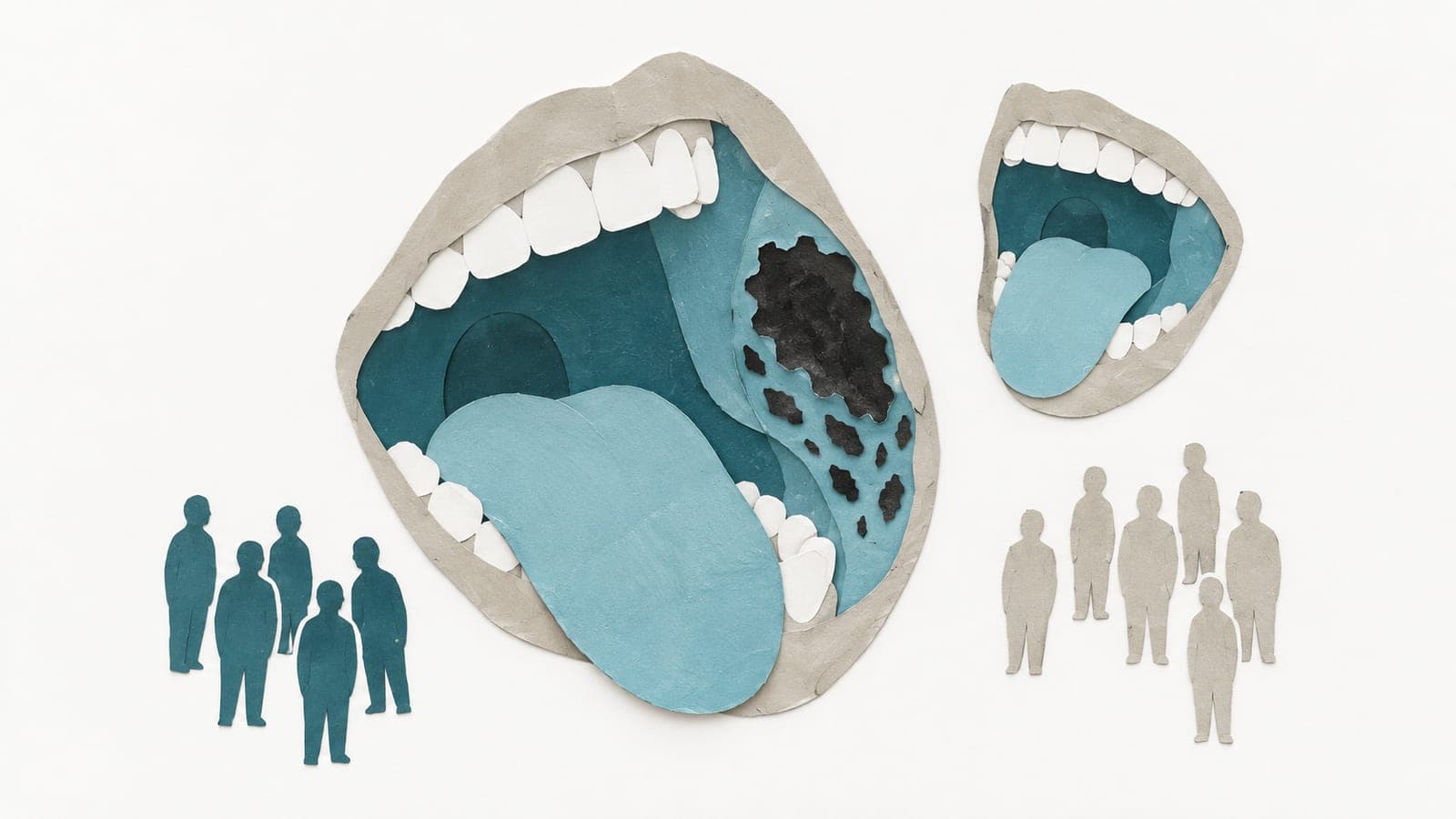
Researchers analysed data from 41,225 people with a history of chewing, smoking or drinking alcohol who attended at least one screen in the Kerala Oral Cancer Screening Trial. They conducted an observational analysis of screening results and modelled cancer progression.
Among 28,821 people who attended two consecutive visual inspections, the median gap was 3.5 years. People positive on either screen accounted for 66.1% of new oral cancers over 11 years. The lifetime model estimated an average of 2.7 years from early-stage to late-stage oral cancer. The researchers concluded that screening intervals could extend to 10 years for people negative on both screens. They called for intensive follow-up of screen-positive people with precancer, abnormal tissue that can develop into cancer.
Why it matters
Modelling oral cancer across a lifetime addresses how screening and follow-up might be spaced as people grow older.
Caveats
The researchers did not test 10-year screening intervals; they proposed them from their analysis. The findings concern screening attendees with a history of chewing, smoking or drinking alcohol, not the general population.
The paper
Clinical and lifetime natural history of oral cancer: implications for screening and surveillance
National Cancer Institute
Journal of the National Cancer Institute, 7 Oct 2026