Depression risk from modifiable factors declines with age
In a study of 428,078 adults followed for 13 years, population-attributable fractions for modifiable depression risks fell from 83.47% in middle age to 76.77% in the elderly.
Epidemiology and Psychiatric Sciences
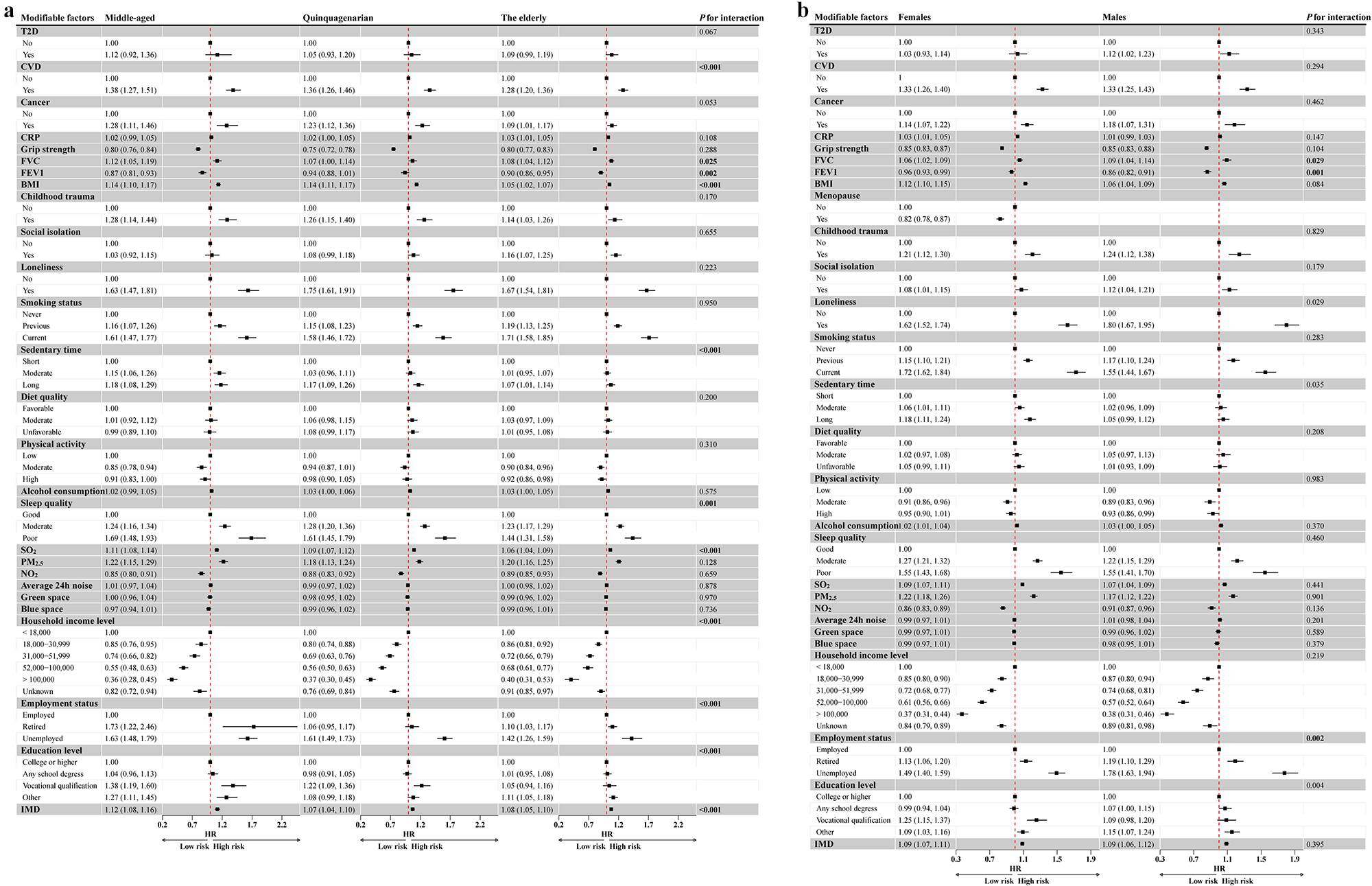
In a prospective cohort of 428,078 adults followed for a mean of 13.11 years, 15,106 participants developed incident depression identified through hospital records. Hazard ratios for modifiable factors were similar between sexes but varied across age groups, with overall population-attributable fractions declining from 83.47% in middle age to 76.77% in the elderly. Health-related factors consistently showed the highest attributable fractions across all age subgroups and females, driven by weak grip strength and unhealthy body mass index. Socioeconomic factors ranked first in males, led by unemployment, while lifestyle factors ranked second in younger adults and females. Combined risk patterns predominated by low social support and socioeconomic status were associated with up to a 4.37-fold rise in depression risk.
Why it matters
The findings indicate that physical frailty markers like grip strength and metabolic health track closely with depression risk across the lifespan. They suggest that addressing modifiable physical and social factors early in adulthood could offer greater opportunities to reduce late-life psychiatric burden.
Caveats
Incident depression was identified exclusively through hospital records, which likely captured only severe cases and missed milder episodes managed in outpatient settings. Additionally, observational findings cannot establish direct causation, though Mendelian randomization supported potential causal associations for top-ranked factors.
The paper
Sun Yat-sen University
Epidemiology and Psychiatric Sciences · 1 Oct 2026