Increasing a brain protein delayed signs of aging in mice
Removing the protein from brain support cells accelerated aging-related changes and impaired nervous system function in mouse experiments.
Limit: Cre toxicity or floxed allele effects could influence outcomes in aged mice
Edited by Boris Djordjevic · AgingResearch.News
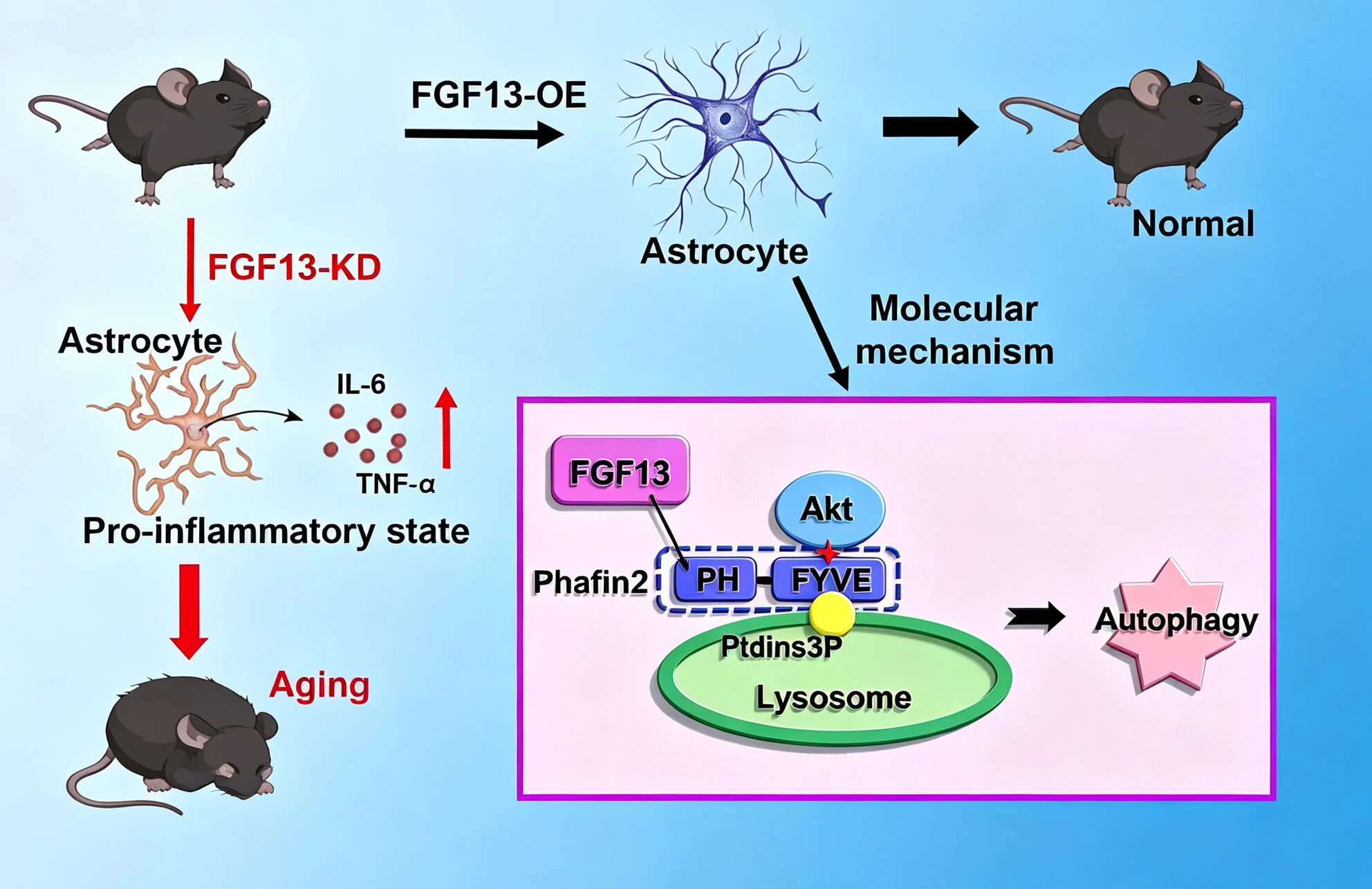
In mice, experiments found that FGF13, a protein found in the nervous system, affected aging-related changes and brain function. Removing it specifically from cortical astrocytes, support cells in the brain’s outer layer, accelerated aging-related changes and impaired nervous system function. Increasing FGF13 delayed aging and eased age-related problems with thinking.
Analysis of gene activity pointed mainly to effects on inflammation and autophagy, the process cells use to break down and recycle their contents. The researchers reported that FGF13 bound to another protein, Phafin2, and promoted autophagy in astrocytes. They concluded that FGF13 improved conditions around brain cells by regulating astrocyte function.
Why it matters
Brain aging brings cognitive decline. The work points to the environment surrounding neurons as a possible avenue for studying how to preserve brain function with age.
Caveats
These mouse experiments do not establish benefits in people. The abstract does not describe the measures used to judge aging or report how long the experiments lasted.


Comments
Be the first to comment.