Resveratrol reduced kidney scarring in mice with diabetes
In experiments in diabetic mice, resveratrol also reduced senescence, a state in which cells stop dividing.
Our read
Interventions- Studied:
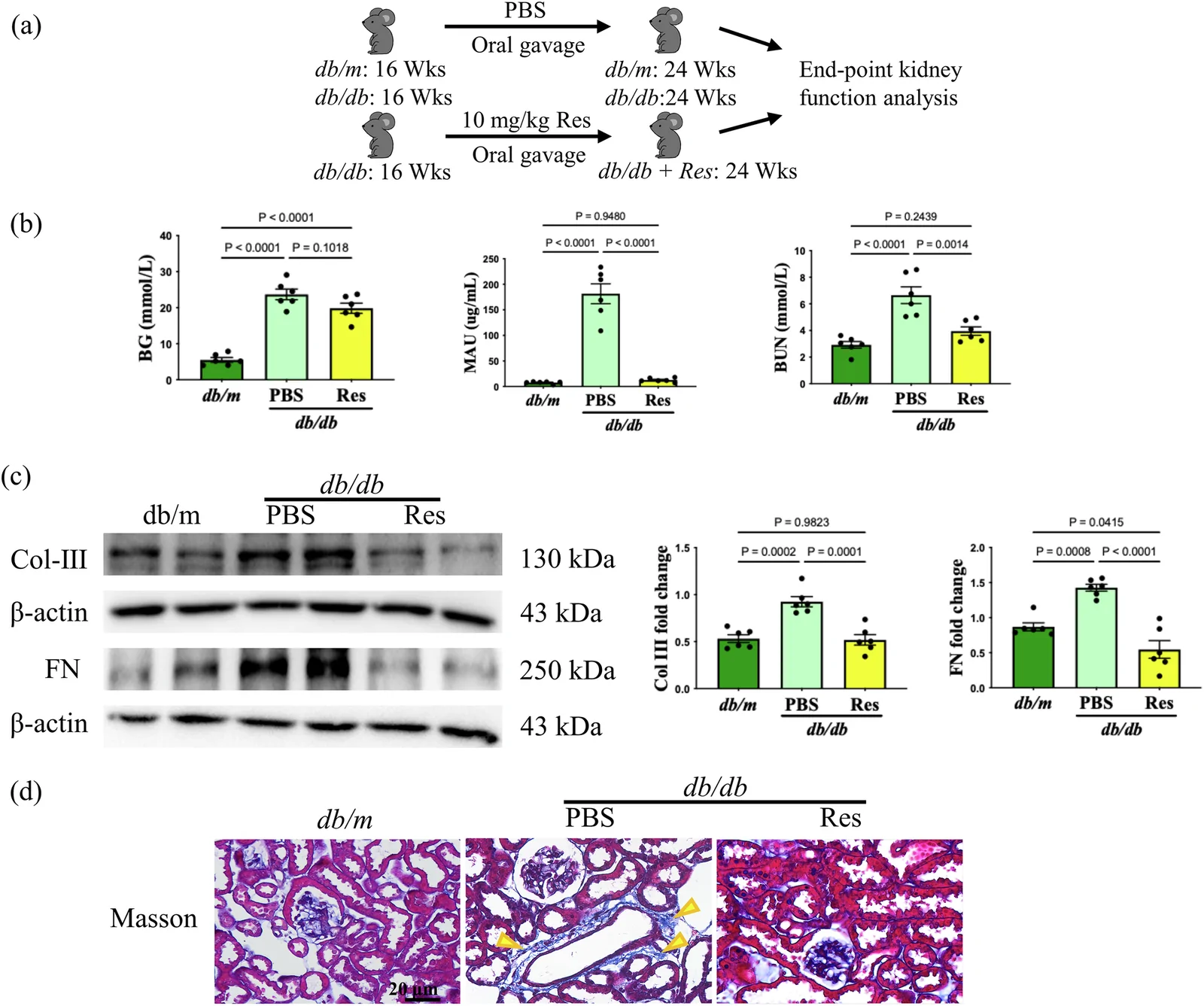
- Experiments in db/db mice with diabetic kidney disease, 8 weeks, against untreated diabetic mice
- What changed:
- Resveratrol-treated diabetic mice had less kidney scarring than untreated diabetic mice
- The catch:
- Kidney scarring was assessed after only 8 weeks of treatment
- In the record:
- One of 1,480 papers on resveratrol on record: 343 with results in people, 395 in animals. Its result on cellular senescence agrees with 29 of 30 other findings on record; 1 points the other way.
Editor of record: Boris Djordjevic · AgingResearch.News
Db/db mice given resveratrol had less kidney scarring and cellular senescence in an animal experiment on diabetic kidney disease. Resveratrol altered interactions between proteins that switch genes on or off.
In mouse kidney tubule cells, high-sugar conditions increased E2F1, a protein that activates gene activity. This caused DNA damage and senescence. Reducing E2f1 gene activity in mice also eased diabetic kidney disease. The authors reported that resveratrol increased E2F7 and E2F8, two proteins that suppress gene activity. These proteins bound to the control region of the E2f1 gene and reduced its activity, suppressing E2F1-induced senescence. The authors highlighted this regulatory relationship as a promising therapeutic target.
Why it matters
Cell senescence connects this work to an aging-related process. The authors identify control of gene activity as a potential route for targeting senescence in diabetic kidney disease.
Caveats
Experiments in mice and mouse kidney cells do not show whether resveratrol would reduce kidney damage in people with diabetes.
From the paper
- Limitation
Notably, tubulointerstitial E2F1 expression exhibited an unexpected positive correlation with GFR within the DKD cohort.
Quoted word for word from the full text on nature.com.
Resveratrol is part of David Sinclair's daily regimen in LifespanMore supplements
The paper
E2F7 and E2F8 attenuate diabetic kidney disease by suppressing E2F1-induced tubular senescence
Communications Biology, Nov 13, 2026, Open access, CC BY

Comments
Be the first to comment.