Blocking ribosome production caused kidney scarring in mice
In mouse experiments, a drug that blocked production of cells’ protein-making machinery caused kidney scarring before kidney function declined.
Edited by Boris Djordjevic · AgingResearch.News
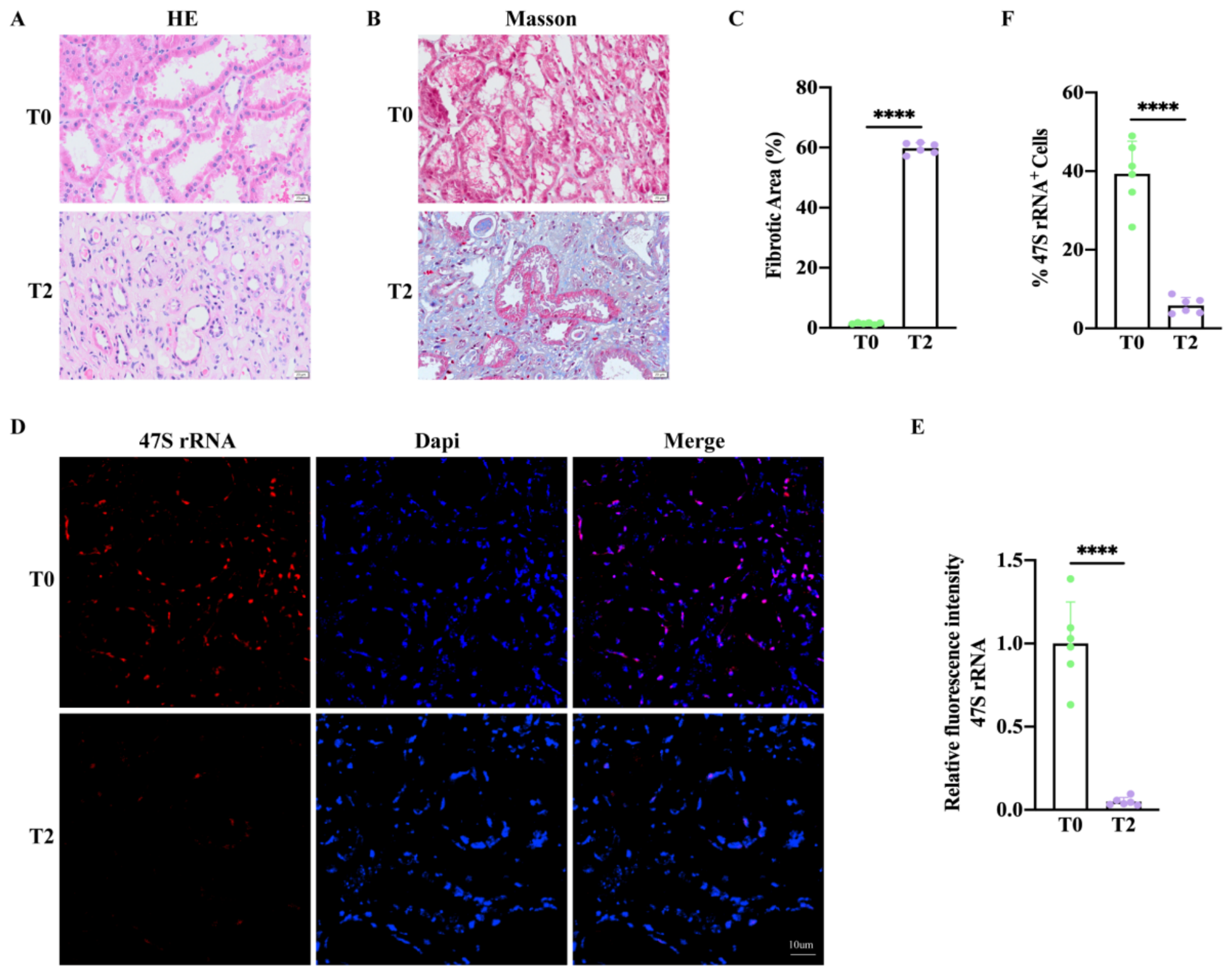
Researchers combined biopsies from people with IgA nephropathy, a kidney disease, with experiments in mice and lab-grown proximal tubular epithelial cells, which line kidney tubules. They examined ribosome biogenesis—the production of cells’ protein-making machinery. Fibrotic human kidneys and mouse fibrosis models showed defects in the gene activity needed to make ribosomes.
In mice, CX5461, a drug that inhibits ribosome production, caused kidney scarring before kidney function declined. In cultured cells, impaired ribosome production activated a stress pathway involving p53, a protein that can halt cell division, and triggered senescence, a state in which cells stop dividing. Silencing a gene needed for ribosome production also activated this pathway and senescence without causing DNA damage.
Why it matters
The work addresses how senescence, a process studied in aging research, may contribute to kidney scarring. It offers a framework for understanding organ toxicities associated with drugs that inhibit ribosome production.
Caveats
The causal evidence came from experiments in mice and lab-grown cells, not interventions in people. The abstract did not report sample sizes, doses or exposure durations.
From the paper
- Limitation
First, our mechanistic investigation focused primarily on the initiation step of RiBi (rDNA transcription), leaving the contribution of subsequent RiBi steps, such as rRNA processing, ribosomal subunit assembly, and nuclear export, to fibrosis unresolved.
Quoted word for word from the full text on mdpi.com.
The paper
Defective Ribosome Biogenesis Drives Tubular Senescence and Renal Fibrosis via IRBC-p53 Activation
Huazhong University of Science and Technology
Cells, Oct 16, 2026, Open access


