Restoring protein activity reduced DNA damage in aged human cells
After 72 hours, lab-grown human skin cells with increased activity of a gene-regulating protein showed more DNA repair gene activity and partly restored DNA-packaging marks.
Our read
Interventions- Studied:
- Experiments in aged human dermal fibroblasts, 72 h, against empty-vector control fibroblasts
- What changed:
- DNA damage fell in aged human fibroblasts overexpressing FOXM1 compared with empty-vector controls
- The catch:
- DNA damage measurements were collected and analyzed without blinding to experimental conditions
- In the record:
- One of 51 papers on FOXM1 on record: 10 with results in people, 4 in animals.
Editor of record: Boris Djordjevic · AgingResearch.News
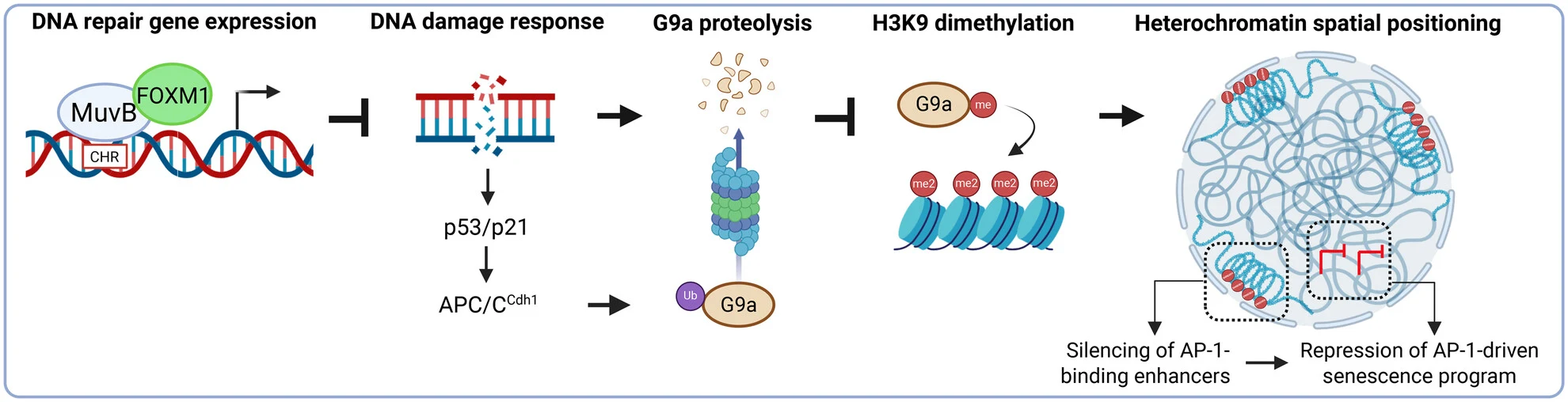
Human dermal fibroblasts—connective-tissue cells from skin—came from apparently healthy donors ranging from newborns to people in their 80s for these lab experiments. The team increased activity of FOXM1, a protein that switches genes on, in aged cells using an engineered active form. They assessed changes after 72 hours.
Restoring FOXM1 activity increased the activity of DNA repair genes and reduced DNA damage. It also partly restored chemical marks associated with heterochromatin, tightly packed DNA, at the edge of the nucleus, the cell’s DNA-containing compartment. The authors found that restoring these marks inactivated DNA switches involved in senescence, a state in which cells stop dividing, and inflammation.
Why it matters
DNA damage contributes to aging. The authors’ model links accumulated damage to changes in DNA packaging that allow senescence and inflammatory gene programs to become active.
Caveats
These experiments tested human skin cells grown in the lab, not aging bodies. They do not show whether increasing FOXM1 activity would benefit people.
The paper
i3S–Instituto de Investigação e Inovação em Saúde Universidade do Porto Porto Portugal
Aging Cell, Nov 16, 2026, Open access, CC BY
Comments
Be the first to comment.