Figure 1
Figure 1From NPJ Digital Medicine · CC BY
Humans

Brain signatures of BMI detect systemic disease better than BMI

Across six human cohorts and a 2.3-year follow-up, neural networks identified brain structural patterns tied to cardiometabolic and pulmonary conditions.

NPJ Digital Medicine

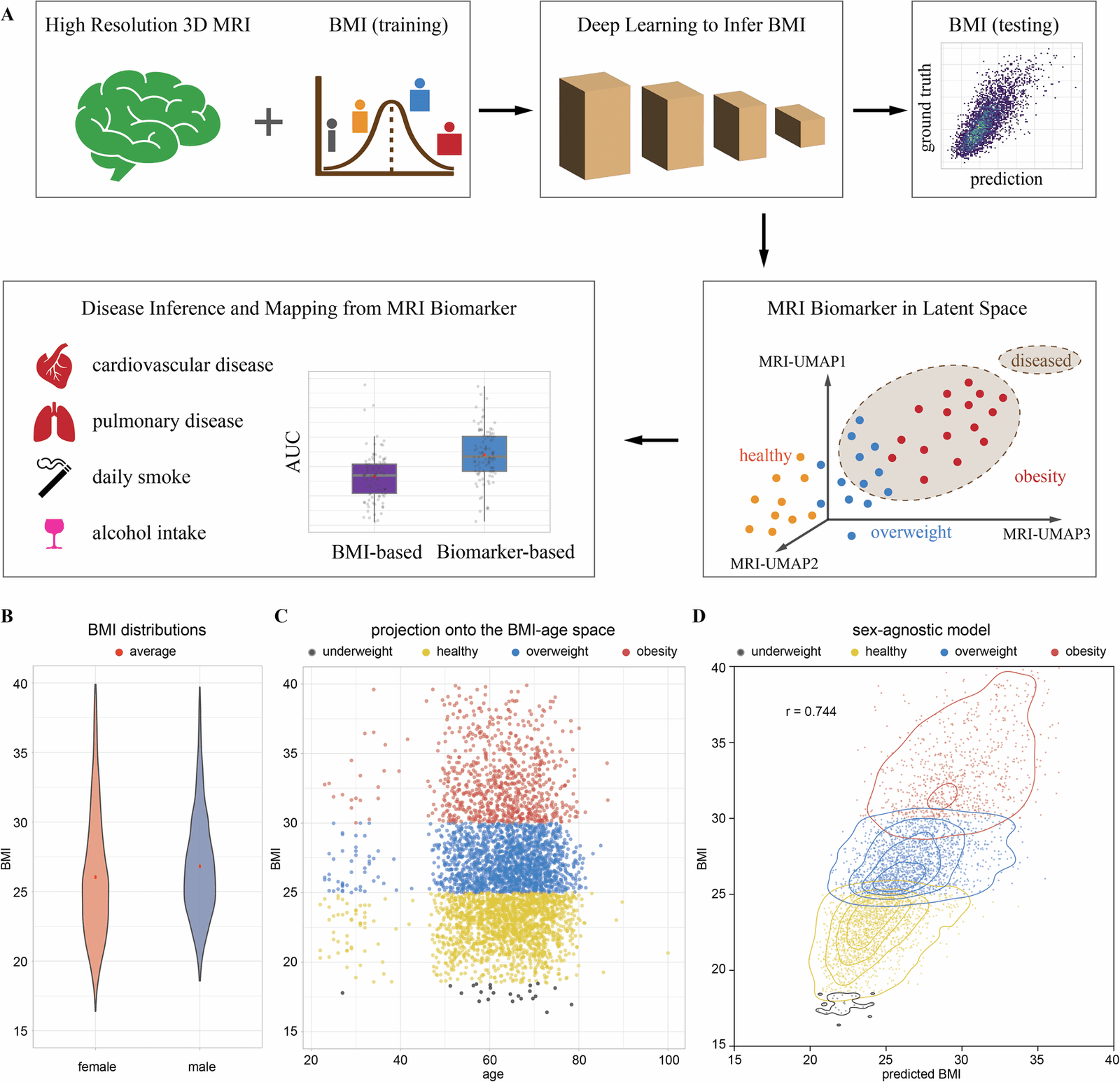
In human participants from six independent cohorts, researchers applied deep learning to T1-weighted MRI scans to isolate structural brain biomarkers of body mass index (BMI). The models achieved strong within-cohort accuracy, although external performance declined. In a longitudinal subset tracked over 2.3 years, the model successfully monitored BMI changes, demonstrating higher sensitivity to BMI increases and in participants with obesity. Brain-derived biomarkers also inferred lifestyle factors and outperformed measured BMI in detecting cardiometabolic and pulmonary disorders that lack a primary neurological cause. These predictions were primarily driven by white matter signals in the cerebellum, corpus callosum, and brainstem, which identified disorders as accurately as whole-brain models.

Why it matters

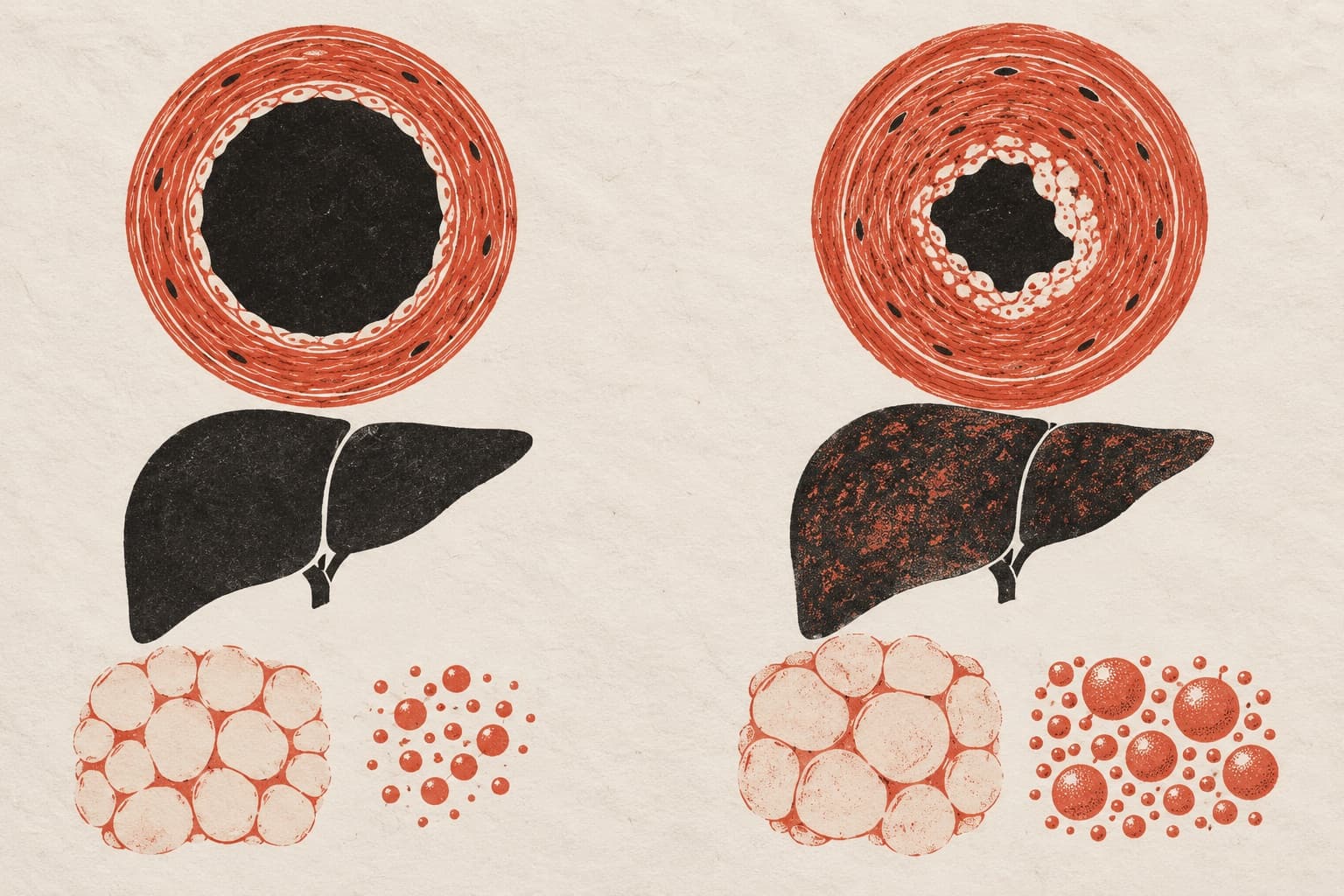
The results suggest that systemic metabolic state and central brain structure share underlying biological mechanisms that track noncommunicable disease risks.

Caveats

The observational models showed reduced performance when tested across independent cohorts and were limited to structural MRI predictions without establishing causal mechanisms.

The paper

Brain signatures of body mass index predict cardiometabolic and respiratory disease status

Li H, Mehta A, Castro E et al.

NPJ Digital Medicine · 3 Oct 2026
arXivIn silicoPreprint

Speech model flags cognitive decline and generates explanations

Tested across six dataset and task conditions, the bilingual framework outperformed three baselines while directly generating natural-language…Tested across six dataset and task conditions, the bilingual framework outperformed three baselines while directly generating natural-language explanations for clinicians. In human speech datasets from individuals with Alzheimer's disease and mild cognitive impairment, researchers…

arXivIn silicoPreprint

Acoustic noise alters speech-based Alzheimer's model predictions

Across three self-supervised learning models tested on ADReSSo speech audio, controlled acoustic interventions systematically shifted diagnostic…Across three self-supervised learning models tested on ADReSSo speech audio, controlled acoustic interventions systematically shifted diagnostic predictions for Alzheimer's disease.

arXivHumansPreprint

Causal discovery platform maps vascular metabolic pathways

In data from 720,000 people, the self-evolving system evaluated 2,031 causal questions and identified blood pressure as a convergence node for…In data from 720,000 people, the self-evolving system evaluated 2,031 causal questions and identified blood pressure as a convergence node for vascular outcomes. In data from over 720,000 human participants across 48 countries, researchers tested an automated discovery platform called…

Scientific ReportsHumans

Miscarriage propensity links to higher type 2 diabetes risk

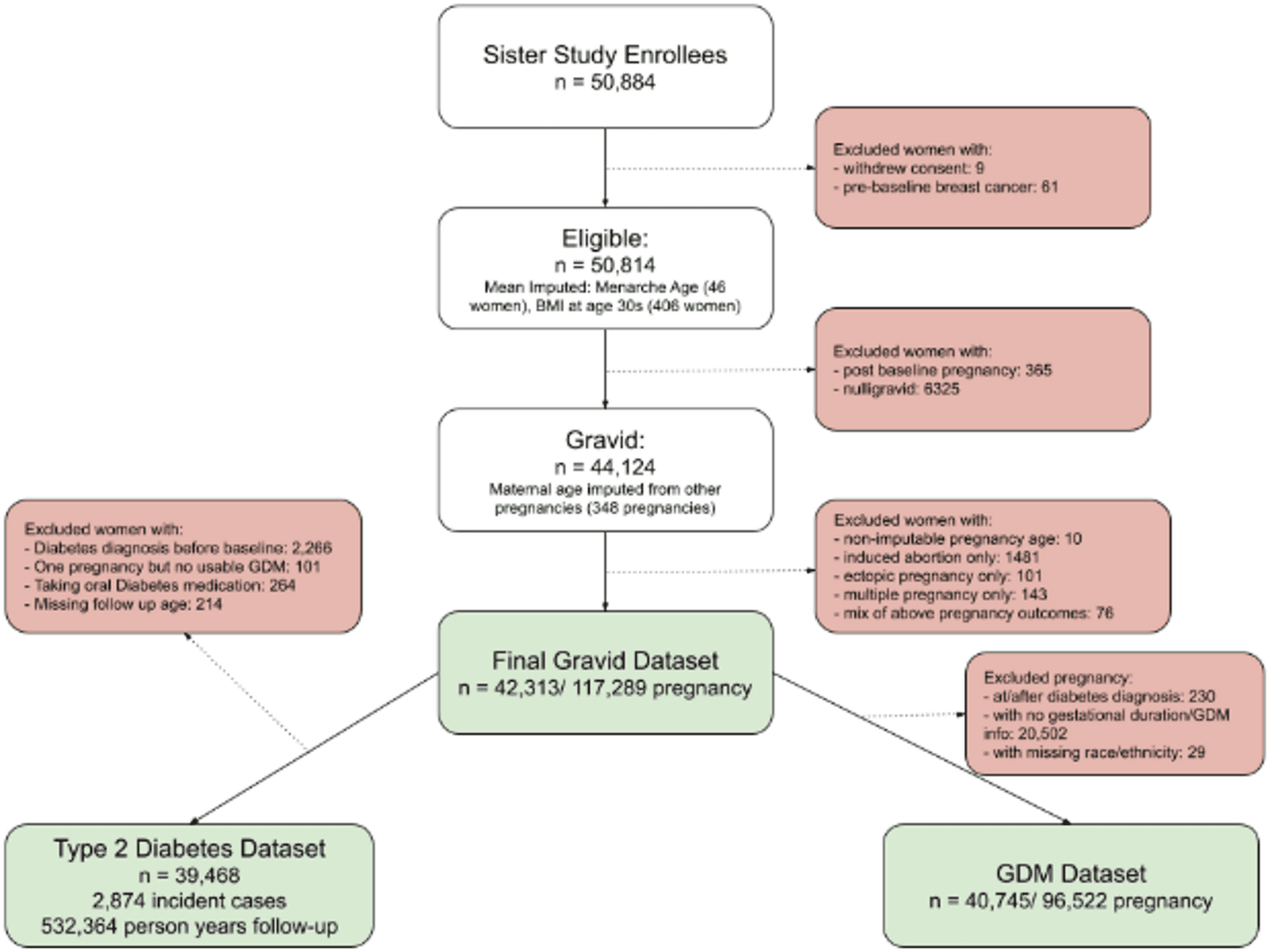
In 39,468 women, each 0.1-unit rise in miscarriage propensity was associated with a hazard ratio of 1.38 for incident type 2 diabetes.In 39,468 women, each 0.1-unit rise in miscarriage propensity was associated with a hazard ratio of 1.38 for incident type 2 diabetes. In 42,313 gravid Sister Study participants, researchers evaluated whether a history-based measure of miscarriage propensity predicts subsequent gestational…

Figure 1