Biological aging linked to syndrome in middle-aged and older Chinese
Biological age acceleration was 1.61 years higher in Chinese middle-aged and older adults with circadian syndrome than in those without it, after adjustment for other factors.
Dose-response
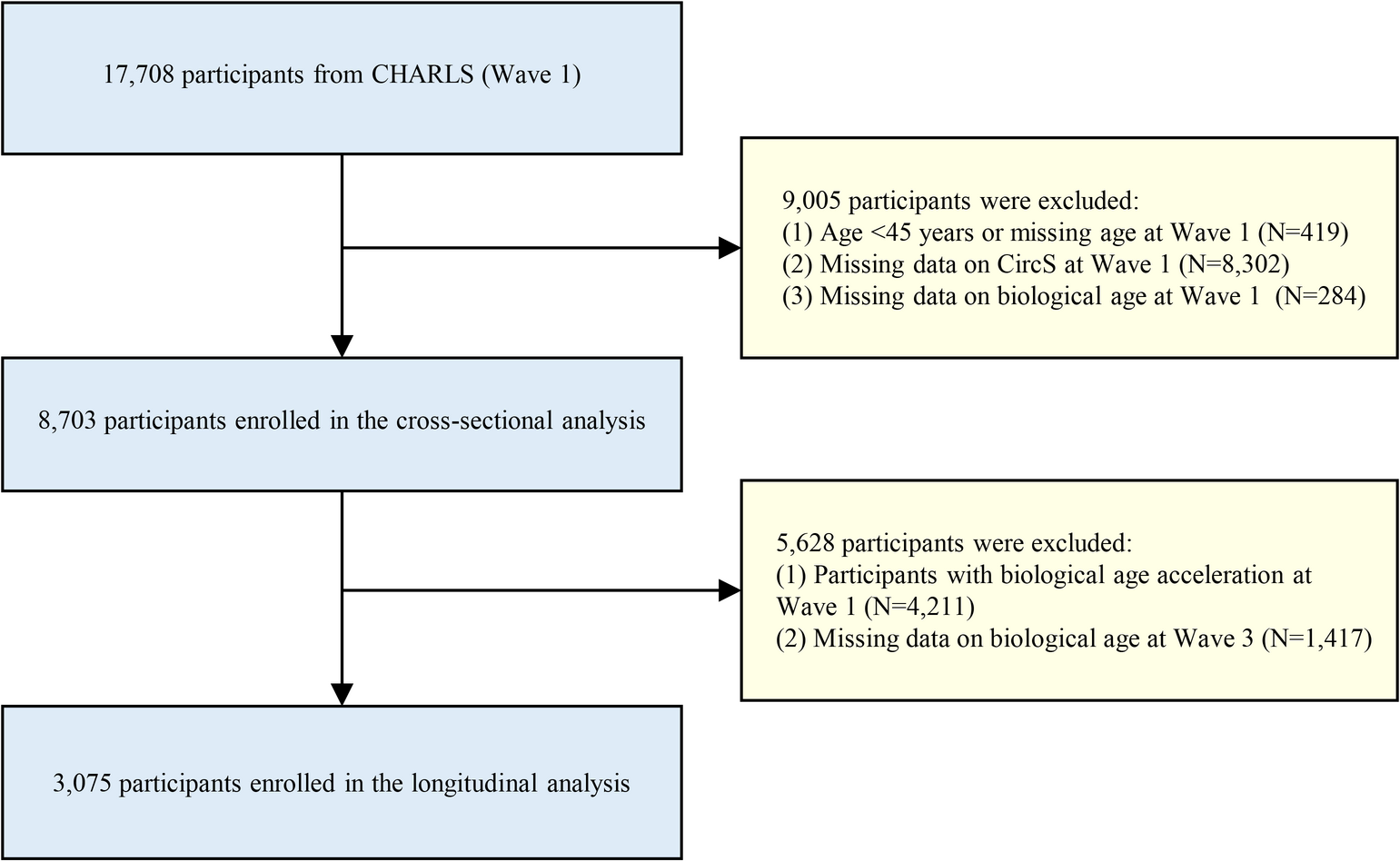
In an observational study, researchers analysed data from 8,703 Chinese middle-aged and older adults at one point in time and 3,075 in a follow-up analysis. Circadian syndrome involves disrupted daily body rhythms and problems with metabolism, how the body processes nutrients. Researchers defined it as at least four of seven specified features.
They estimated biological age and subtracted calendar age to measure biological age acceleration. After adjusting for other factors, they linked the syndrome to higher age acceleration. During follow-up, it was associated with a 55% higher risk of developing age acceleration. More syndrome features were linked to higher levels and risks of age acceleration. Exploratory analysis suggested that estimated glucose disposal rate, a measure of how effectively the body removes sugar from the blood, may partly account for the link during follow-up.
Why it matters
Daily body rhythms and metabolic health may be relevant to efforts to slow biological aging, a possibility these findings suggest warrants further study.
Caveats
The observational design cannot establish that circadian syndrome causes faster aging or that changing daily rhythms would slow it. Biological age was a calculated measure, not a lifespan outcome.
From the paper
- Participants
As shown in Table 1, a total of 8,703 participants were included in the cross-sectional analysis, with a mean age of 59 ± 9 years, of whom 52.8% were women and 3,599 (41.4%) had CircS at baseline.
- Result
In the unadjusted model (Model 1), participants with CircS had a 1.66-year greater biological age acceleration than those without CircS (β = 1.66, 95% CI: 1.43–1.89).
Results, Association between CircS and biological age acceleration in the cross-sectional study
Quoted word for word from the full text on nature.com.
- Circadian clock
- Biological-age acceleration
- Circadian syndrome
- Estimated glucose disposal rate
- Klemera-Doubal method biological age
- Humans
The paper
Nanjing University of Chinese Medicine
Scientific Reports, 10 Oct 2026, Open access, CC BY-NC-ND