Circadian syndrome is linked to digestive disease in older adults
Circadian syndrome was associated with a 25.7% higher risk of digestive disease in 4,771 Chinese adults followed for a median of 84 months.
medRxiv
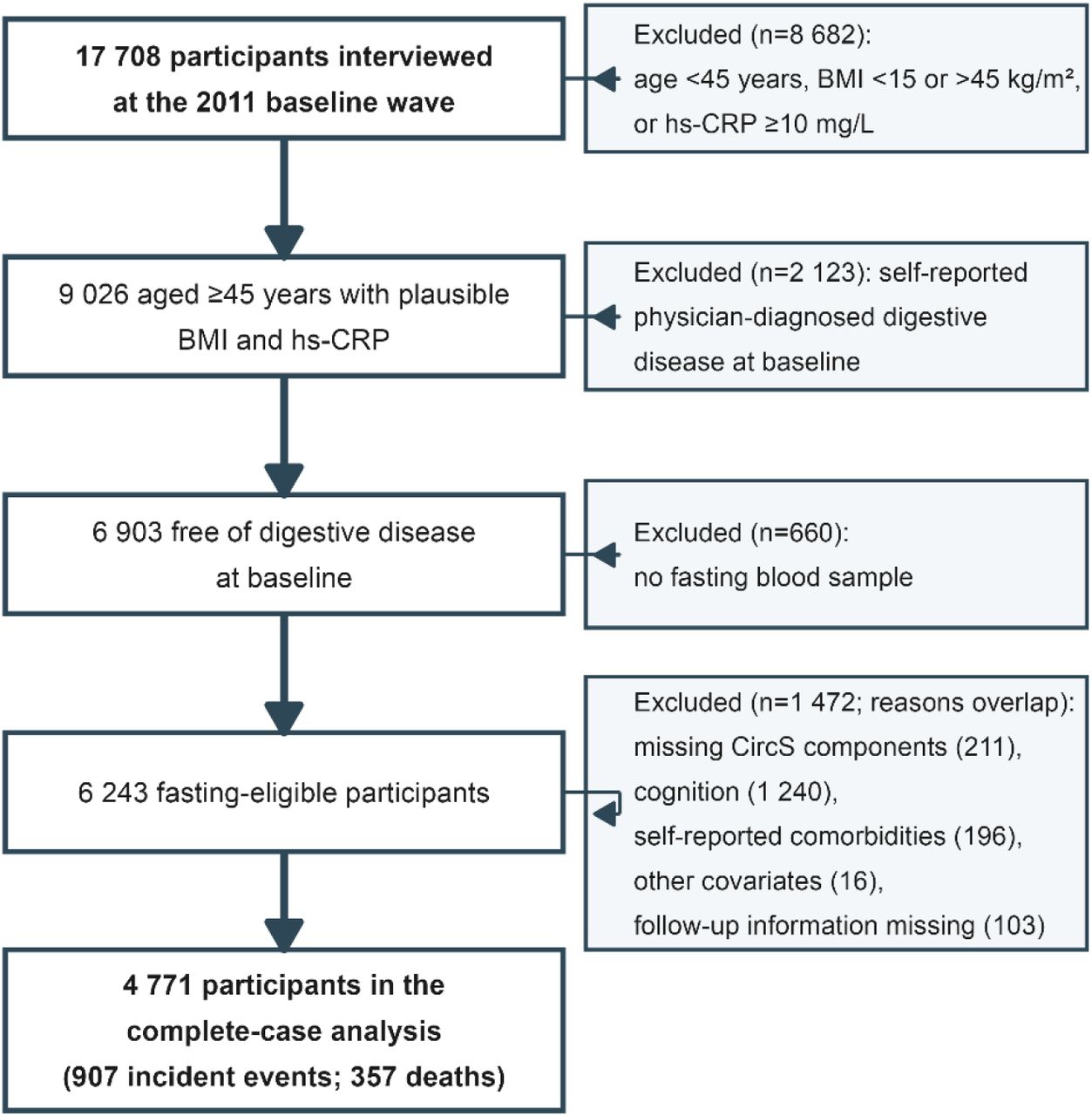
In a prospective cohort of 4,771 Chinese adults aged 45 and older from the China Health and Retirement Longitudinal Study, researchers evaluated whether circadian syndrome relates to incident non-neoplastic digestive disease. Over a median follow-up of 84 months, 907 participants (19.0%) developed digestive disease. Circadian syndrome positivity was associated with a 25.7% higher risk (hazard ratio 1.257). Each additional syndrome component was linked to a 9.1% risk increase, climbing to about 70% higher at five to seven components. When evaluating individual components, only short sleep (hazard ratio 1.178) and depressive symptoms (hazard ratio 1.570) showed independent associations, while metabolic components did not. High-sensitivity C-reactive protein did not mediate the relationship.
Why it matters
Circadian disruption and mood disturbances frequently worsen as adults age. These findings suggest that circadian and emotional factors, rather than traditional metabolic markers, may be linked to age-related digestive vulnerabilities.
Caveats
The observational design cannot establish causality or eliminate unmeasured confounding factors. In addition, this work is a preprint and has not yet been peer-reviewed.
The paper
Chinese People's Liberation Army
medRxiv · 25 Sep 2026 · Preprint, not peer-reviewed