Higher glucose disposal rate linked to lower multimorbidity risk
In two prospective cohorts, each standard deviation increase in estimated glucose disposal rate was associated with a 40% lower risk of multiple cardiometabolic diseases.
Cardiovascular Diabetology
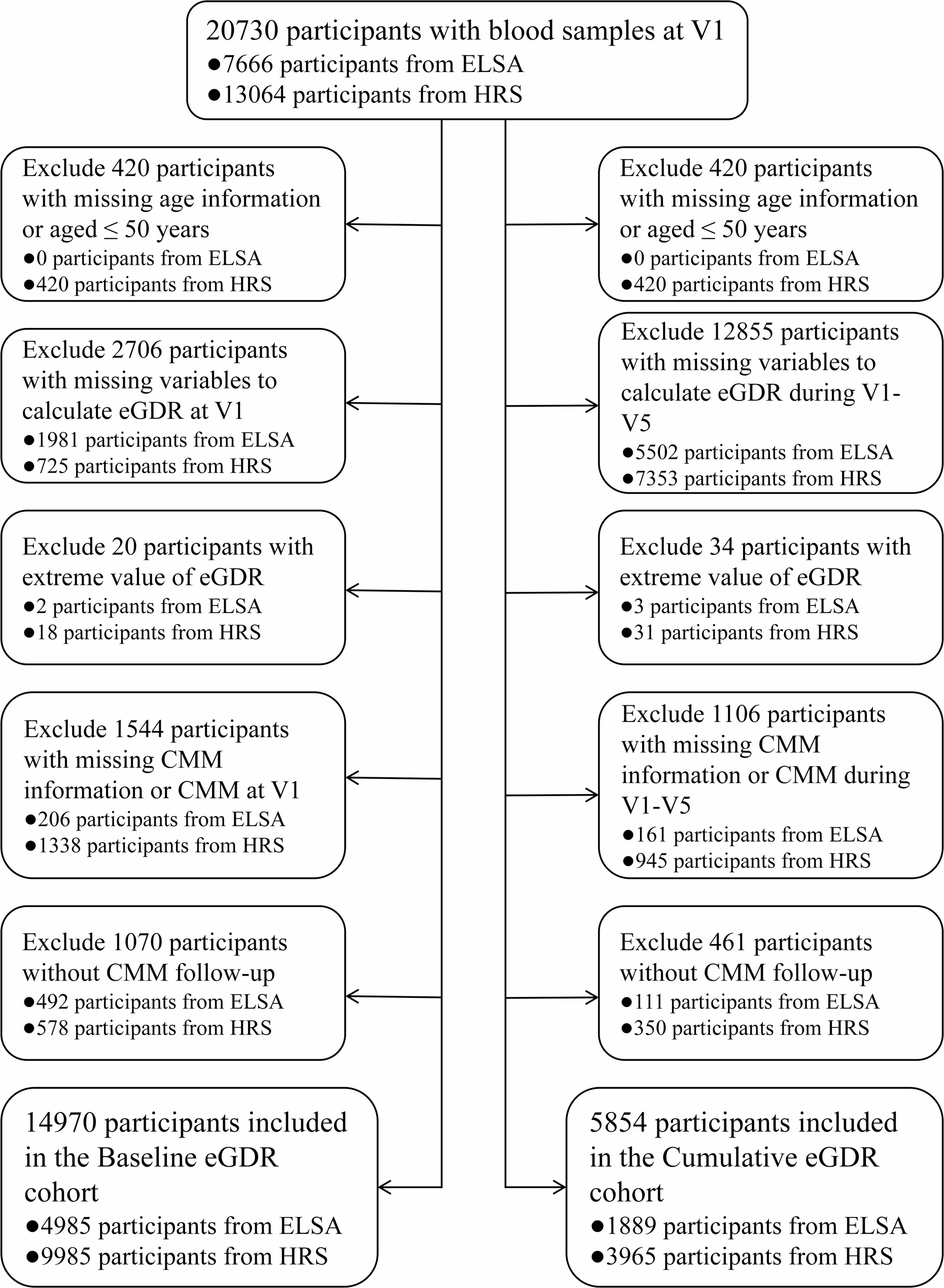
Researchers analysed prospective cohort data from 14,970 middle-aged and older adults in the English Longitudinal Study of Ageing and the Health and Retirement Study. They examined how estimated glucose disposal rate, a measure related to insulin resistance, was associated with incident cardiometabolic multimorbidity, defined as the coexistence of at least two of heart disease, stroke, and diabetes. In 5,854 participants with repeated measurements, they also evaluated cumulative levels and trajectories over time. Over follow-up, 2,218 participants in the baseline cohort developed multimorbidity. Each standard deviation increase in baseline score was linked to a 40% lower risk. Furthermore, participants who maintained a persistently high trajectory had a 79% lower risk than those with persistently low scores. The score modestly improved risk classification, though it did not outperform models containing its individual components separately.
Why it matters
Cardiometabolic conditions frequently cluster together as people age, worsening health and shortening healthy lifespan. Tracking long-term measures of glucose disposal may help clarify how metabolic changes influence the development of multiple age-related illnesses.
Caveats
Because both studies were observational, these findings cannot show whether glucose disposal rates directly influence disease risk. In addition, the composite glucose disposal score did not improve risk prediction over its individual components analysed separately.
The paper
Ji H, Zhao Z, Li D et al.
Cardiovascular Diabetology · 7 Oct 2026 · CC BY