Bile acid from gut microbes disrupts blood stem cells in mice
In mouse experiments, prolonged exposure to a gut microbial bile acid contributed to blood stem cell loss, while a high-fiber diet reduced age-associated decline.
Our read
Interventions- Studied:
- Experiments in mice
- What changed:
- Prolonged DCA administration contributed to blood-forming stem cell loss in mice
- The catch:
- Administered DCA exposure could differ from the natural increases seen during aging
- In the record:
- One of 6 papers on deoxycholic acid on record: none yet with results in people, 5 in animals.
- Why it’s aging research:
- It studies organisms or tissues that aged naturally.
Editor of record: Boris Djordjevic · AgingResearch.News
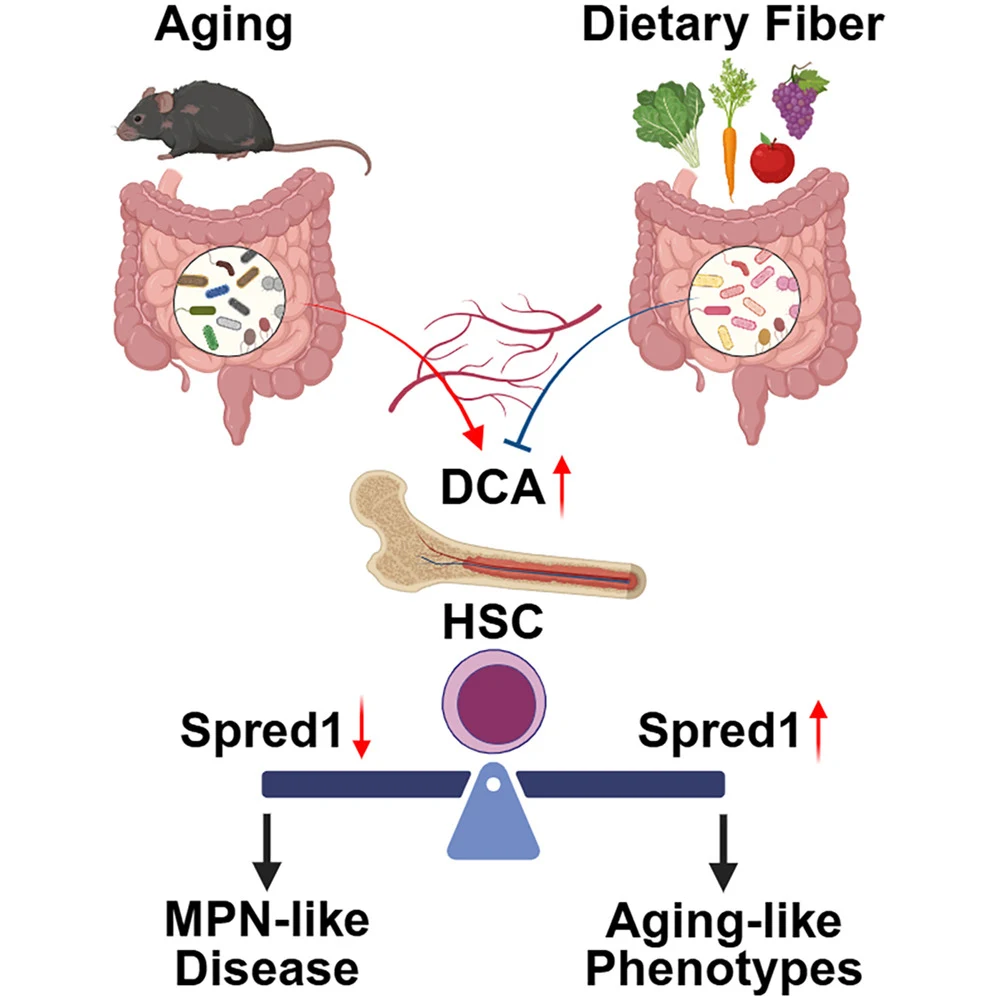
Mice given deoxycholic acid (DCA), a bile acid produced by gut microbes, developed problems with blood-forming stem cells in laboratory experiments. These cells supply new blood cells. Blood DCA levels rose during aging. Prolonged DCA administration increased activity of the Spred1 gene in these stem cells, as also seen during aging, contributing to their loss.
In mice lacking Spred1, DCA triggered a disease resembling a blood cancer. The authors interpreted this as a trade-off between stem cell aging and tumor suppression. Ursodeoxycholic acid, which counteracts DCA, nevertheless promoted an age-associated increase in stem cells biased toward making one broad family of blood cells. By contrast, a high-fiber diet lowered blood DCA levels and reduced the age-associated decline in blood-forming stem cells.
Why it matters
Age-associated changes in blood-forming stem cells raise questions about how diet affects blood production. The authors suggest that dietary interventions targeting gut microbes could help regulate this system.
Caveats
All reported effects were in mice; whether changing bile acids or dietary fiber would have similar effects on blood stem cells in people remains unknown.
Where the evidence stands
High-fiber diet
- 7 independent labs in 5 countries
- Funders: Shanghai Jiao Tong University and others
- 3 of 24 findings with company ties
Ursodeoxycholic acid
- 6 independent labs in 4 countries
- 77 trials, 24 with no results posted
- Funders: Graduate Research and Innovation Projects of Jiangsu Province and others
- 2 of 77 trials sponsored by its developers
Comments
Be the first to comment.