Brain scans improve dementia risk ranking beyond frailty
A simplified score achieved 0.843 on a measure of risk ranking, while a fuller model outperformed frailty alone over 10 years.
Our read
Biomarkers- Studied:
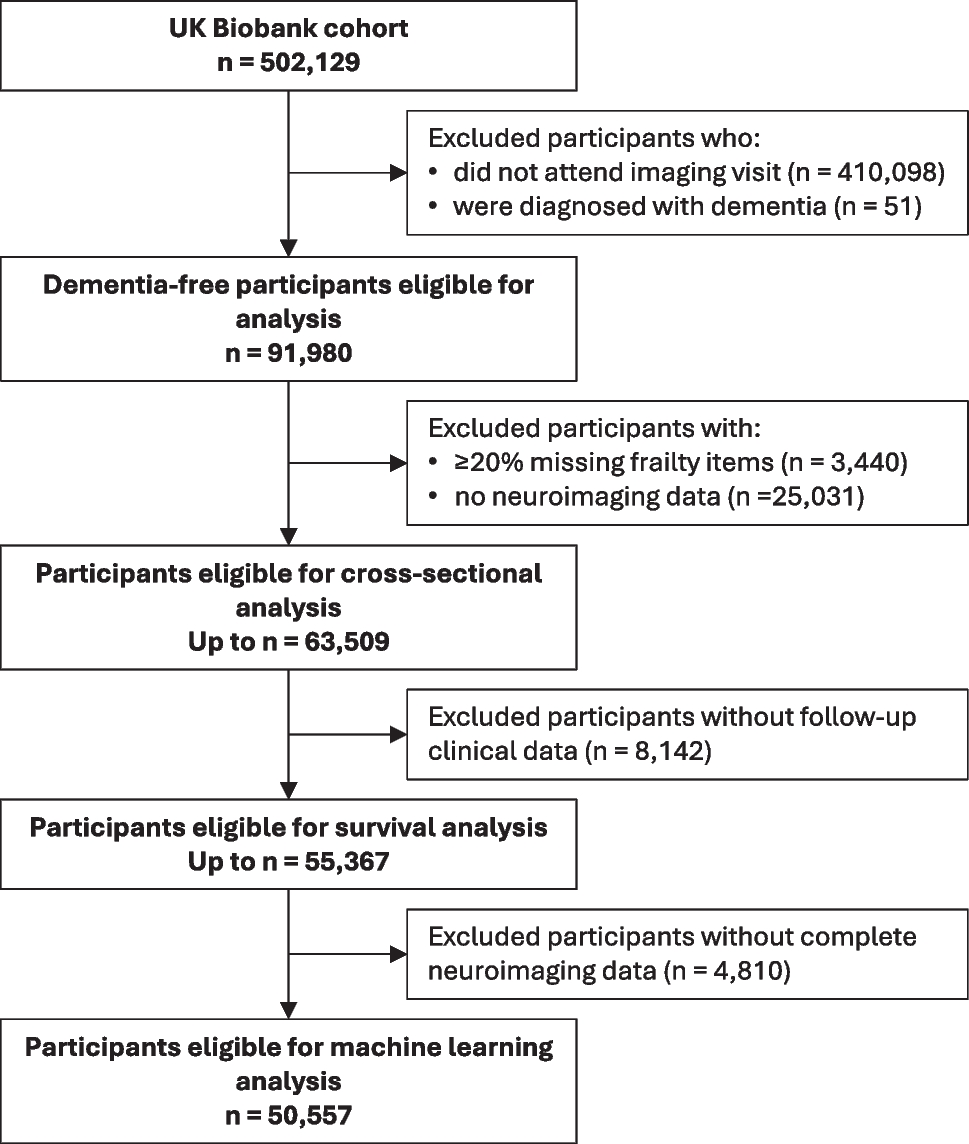
- Cohort study of 63,509 dementia-free UK Biobank participants, 10 years (Independent replication)
- What changed:
- Combining frailty and brain scans improved dementia risk ranking beyond frailty alone, with a ranking score of 0.825
- The catch:
- Dementia risk-ranking performance lacks external validation
- In the record:
- The 674th paper on frailty index with results in people; 2,288 on record in all.
Editor of record: Boris Djordjevic · AgingResearch.News
Among 63,509 dementia-free UK Biobank participants, averaging 65.02 years old and 52.3% female, a population-based cohort analysis examined frailty, brain scans and dementia over 10 years. Higher frailty scores were associated with a greater volume of bright areas in the brain’s white matter, lower brain blood flow, a smaller hippocampus—a memory-related brain region—and a thinner outer brain layer.
A prediction model combining frailty and brain-scan measures distinguished dementia risk better than frailty alone. Researchers then combined the top 10 predictors into a simplified score. It achieved a C-index of 0.843, a measure of how well it ranked dementia risk. Its performance remained strong when the analysis accounted for death as a competing outcome.
Why it matters
The authors suggest that frailty across the body and harmful brain changes may represent parallel but distinct pathways contributing to dementia.
Caveats
The score’s performance in this UK Biobank cohort does not establish how well it would work in other populations. The authors call for external testing and adjustment.


Comments
Be the first to comment.