Subtle white matter changes showed no clear dementia link
In older adults with limited bright white matter abnormalities, higher subtle-abnormality ratings were not linked to dementia (hazard ratio 0.93, comparing rates over time).
Our read
Biomarkers- Studied:
- Cohort study of 1,738 community-dwelling older adults, 10 years
- What changed:
- Dementia risk after 10 years did not differ with dirty-appearing white matter (hazard ratio 0.93)
- The catch:
- 1.5T MRI scans have lower sensitivity to detect dirty-appearing white matter than 3T scans
Editor of record: Boris Djordjevic · AgingResearch.News
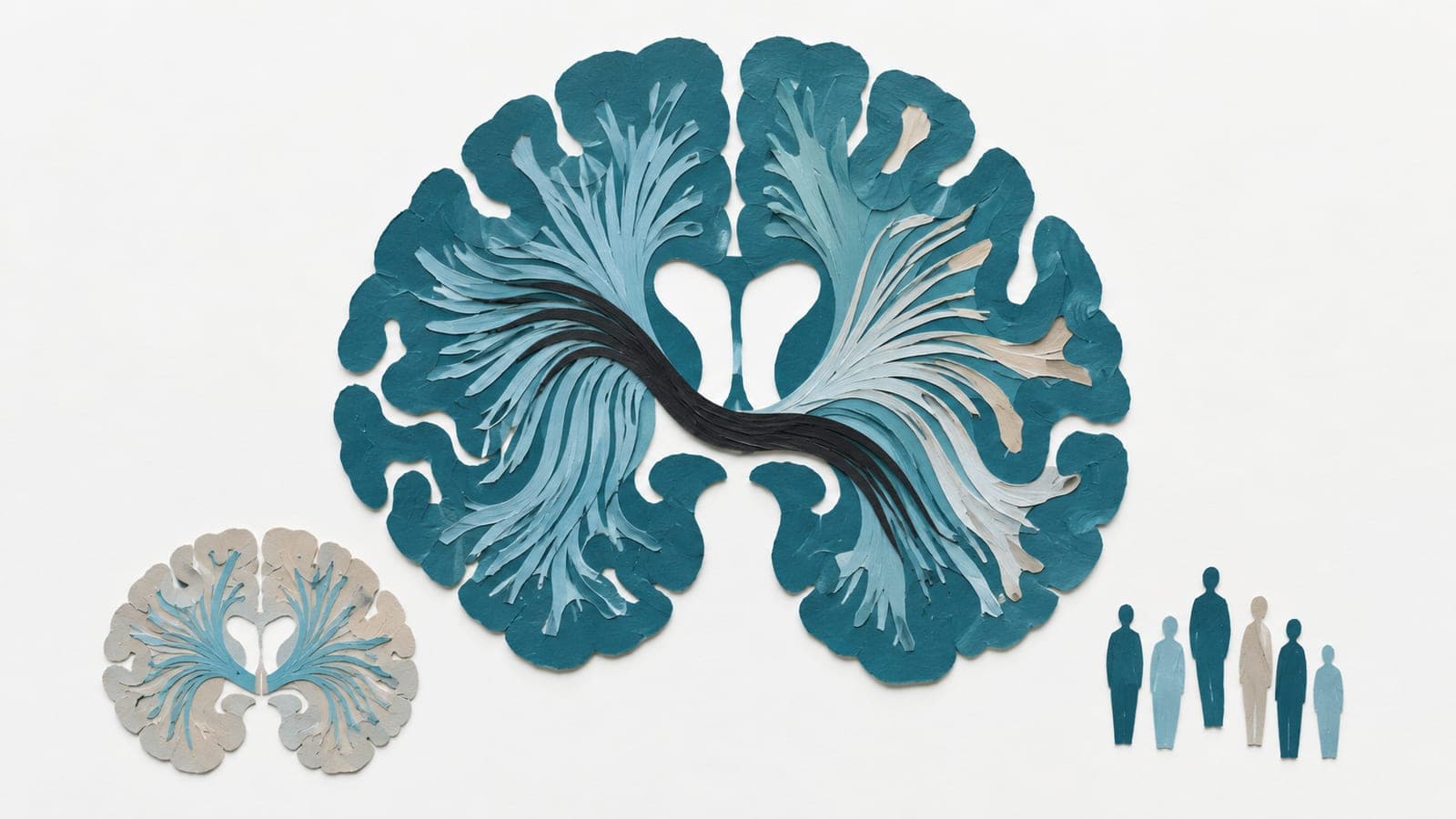
Community-dwelling older adults in Reykjavik, Iceland—2,081 people averaging 74.6 years old, 61% female—were studied in a retrospective observational analysis of a longitudinal cohort. All had limited white matter hyperintensities, bright areas on brain MRI scans. White matter contains nerve fibers connecting brain regions.
Researchers visually rated “dirty-appearing” white matter, subtler scan abnormalities. Higher ratings were not associated with initial memory, skills such as planning, or mental speed, or with their decline after 5.2 years. Nor were they associated with dementia over 10.3 years; the range of likely values included no difference. By contrast, greater volumes of bright white matter areas were linked to poorer initial planning skills and mental speed, greater decline in mental speed, and higher dementia risk. The analyses accounted for age, sex, education and vascular risk factors.
Why it matters
Cognitive decline and dementia are central concerns in later life. The authors concluded that the role of these subtle white matter abnormalities in their development remains unclear.
Caveats
The main analysis selected people with limited bright white matter abnormalities and excluded those with dementia at baseline, limiting its relevance to people with extensive abnormalities or existing dementia. Dementia outcomes were available for 1,738 of the 2,081 participants.
From the paper
- Participants
A total of 278 participants of 1,738 (16%) were diagnosed with dementia at follow-up (eTable 2).
Results, DAWM and WMH in Relation to Dementia Risk After 10 Years
- Result
In the older adults with limited baseline WMH burden, baseline DAWM sum rating was not significantly associated with dementia risk after 10 years (hazard ratio [HR] 0.93 [95% CI 0.84–1.03], p = 0.156).
Results, DAWM and WMH in Relation to Dementia Risk After 10 Years
Quoted word for word from the full text on PubMed Central.
- Dementia
- Memory z score
- Diffusely abnormal white matter
- Executive function z score
- Processing speed Z-score
- Humans
The paper
Leiden University Medical Center
Neurology, May 11, 2026, Open access
Comments
Be the first to comment.