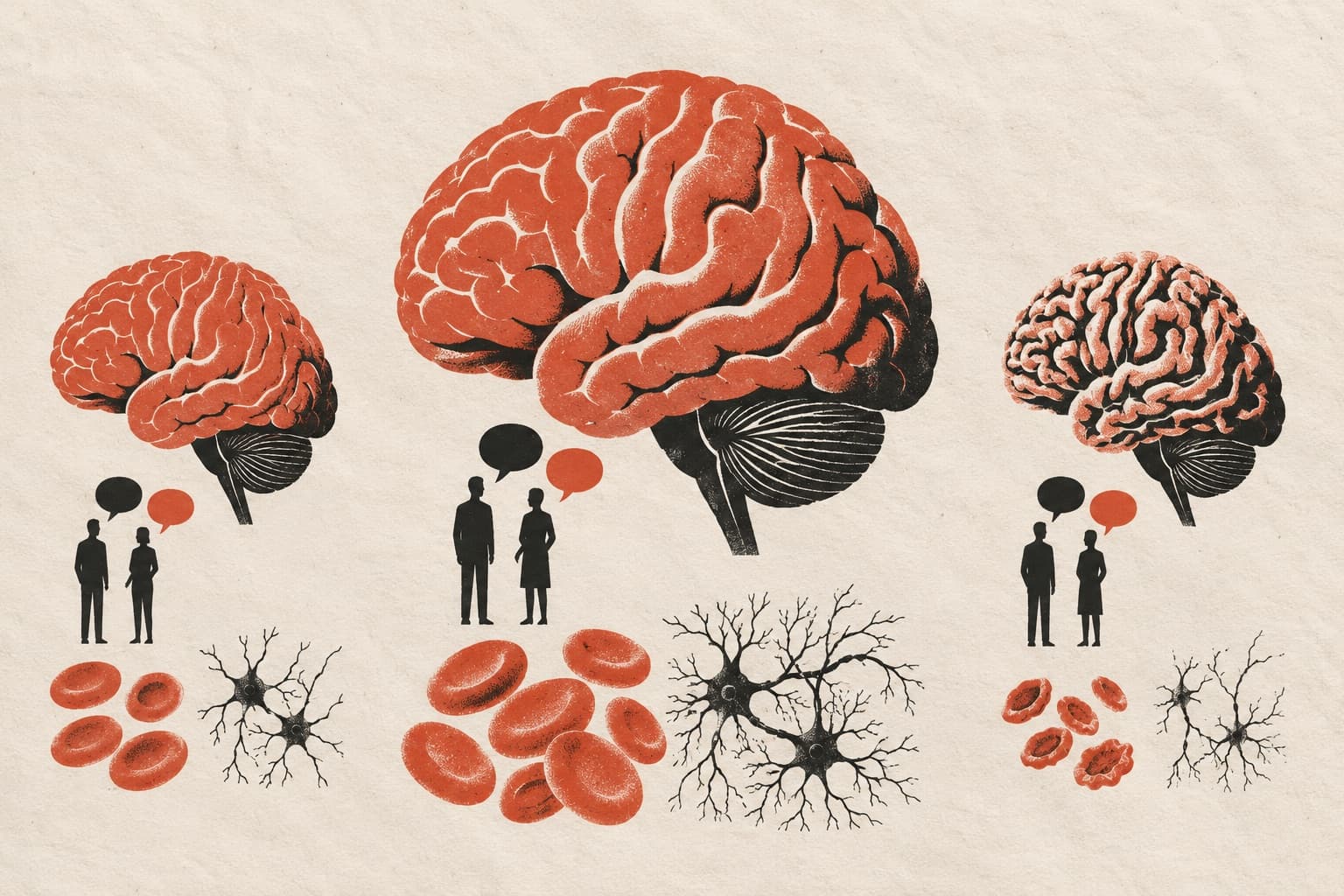
Immune cell profiles predict cognitive decline in older adults
In 4,464 cognitively normal older adults, a higher immune risk score predicted incident cognitive impairment or dementia with a hazard ratio of 1.63 over six years.
Age and Ageing
In 9,008 older adults from the Health and Retirement Study, researchers measured 24 peripheral immune cell subsets using flow cytometry. Among 4,464 participants who were cognitively normal at baseline, they tracked incident cognitive impairment or dementia and cognitive trajectories over six years. Participants who developed cognitive impairment showed depleted naive CD4+ and CD8+ T cells and naive B cells, alongside expanded effector-memory T cells and memory B cells. Naive B cells and CD56hi natural killer cells each independently predicted lower risk of cognitive impairment (hazard ratio 0.92). A composite Immune Risk Score independently predicted incident impairment or dementia (hazard ratio 1.63) and faster decline in global cognition, episodic memory, and working memory. The score correlated more strongly with plasma markers GDF-15, NfL, and GFAP than with amyloid or tau biomarkers.
Why it matters
The findings suggest that peripheral immune aging is linked to long-term cognitive decline and may track more closely with neuroinflammation and neural injury than with classic amyloid-tau pathology. Profiling circulating immune cells could offer a complementary route for assessing cognitive risk in aging populations.
Caveats
The observational design means these associations do not establish that peripheral immune shifts cause cognitive decline. Additionally, peripheral immune signatures measured in blood may not reflect immune cell dynamics inside the brain.