Dementia blood predictors vary by sex and genetic risk
Models distinguishing future dementia cases from others scored 0.85–0.90 in carriers of a dementia-linked gene variant versus 0.74–0.76 in noncarriers.

Our read
Biomarkers- Studied:
- Preprint: cohort study of 43,759 UK Biobank participants, against gene-variant non-carriers
- What changed:
- Dementia prediction was better in gene-variant carriers (AUC 0.85-0.90 versus 0.74-0.76 in non-carriers), with the best performance in female carriers
- The catch:
- Effects of changing blood molecules on dementia risk were not measured
- In the record:
- The 990th paper on APOE with results in people; 3,739 on record in all.
Editor of record: Boris Djordjevic · AgingResearch.News
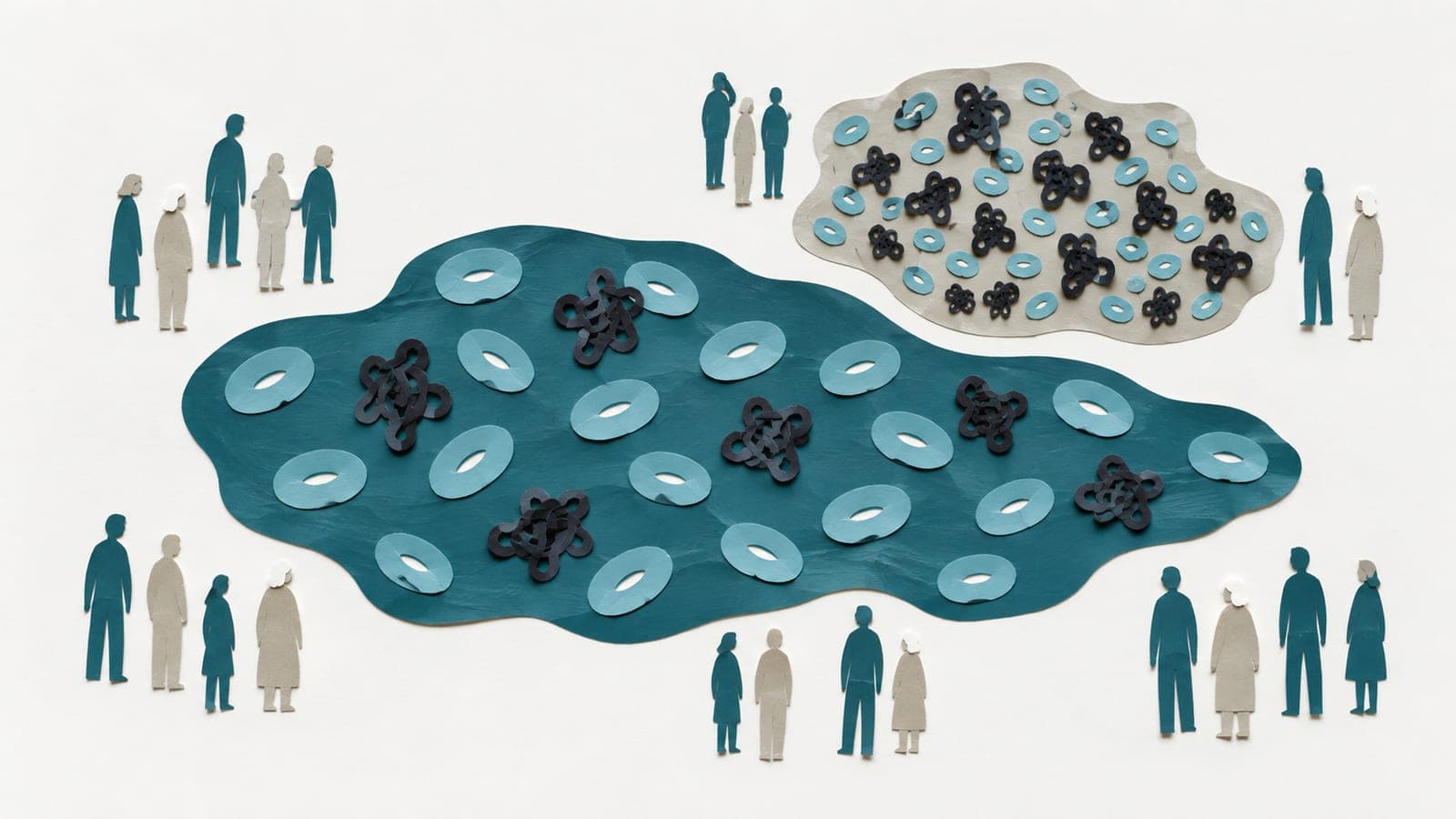
Blood samples from 43,759 UK Biobank participants were analyzed in an observational study of proteins and small molecules that predicted future dementia. The researchers divided participants into four groups by sex and whether they carried APOE ε4, a gene variant associated with dementia risk.
Machine-learning models distinguished future dementia cases best among female carriers. Most leading molecular predictors were specific to particular groups. The association between carrying the variant and dementia also differed by sex. When the UK Biobank models were applied to data from the Global Neurodegeneration Proteomics Consortium, 12 of 17 available leading predictors in female carriers and 10 of 16 in male carriers remained highly ranked.
Why it matters
For dementia, an age-related disease, the findings support searching for blood markers separately by sex and whether people carry this gene variant.
Caveats
The analysis tested prediction, not whether changing the measured molecules would alter dementia risk. The abstract does not give the prediction time frame, and the preprint has not been peer-reviewed.
The paper
Sex shapes plasma molecular signatures of dementia risk across APOE ε4 strata
Queen Mary University of London
medRxiv, Nov 3, 2026, Open access, CC BY, Preprint, not yet peer-reviewed

Comments
Be the first to comment.