Uneven grip strength linked to later dementia in UK adults
Uneven grip strength was linked to a higher relative rate of dementia than normal grip strength (hazard ratio 1.17), with stronger links for weakness.
Our read
Populations- Studied:
- Preprint: study in people
Editor of record: Boris Djordjevic · AgingResearch.News
Among 363,867 UK Biobank participants aged 40–69 at recruitment, an observational cohort study compared normal grip, uneven grip between hands, weakness and uneven grip combined with weakness. Participants had no pre-existing dementia or musculoskeletal disease and were followed for up to 13.7 years.
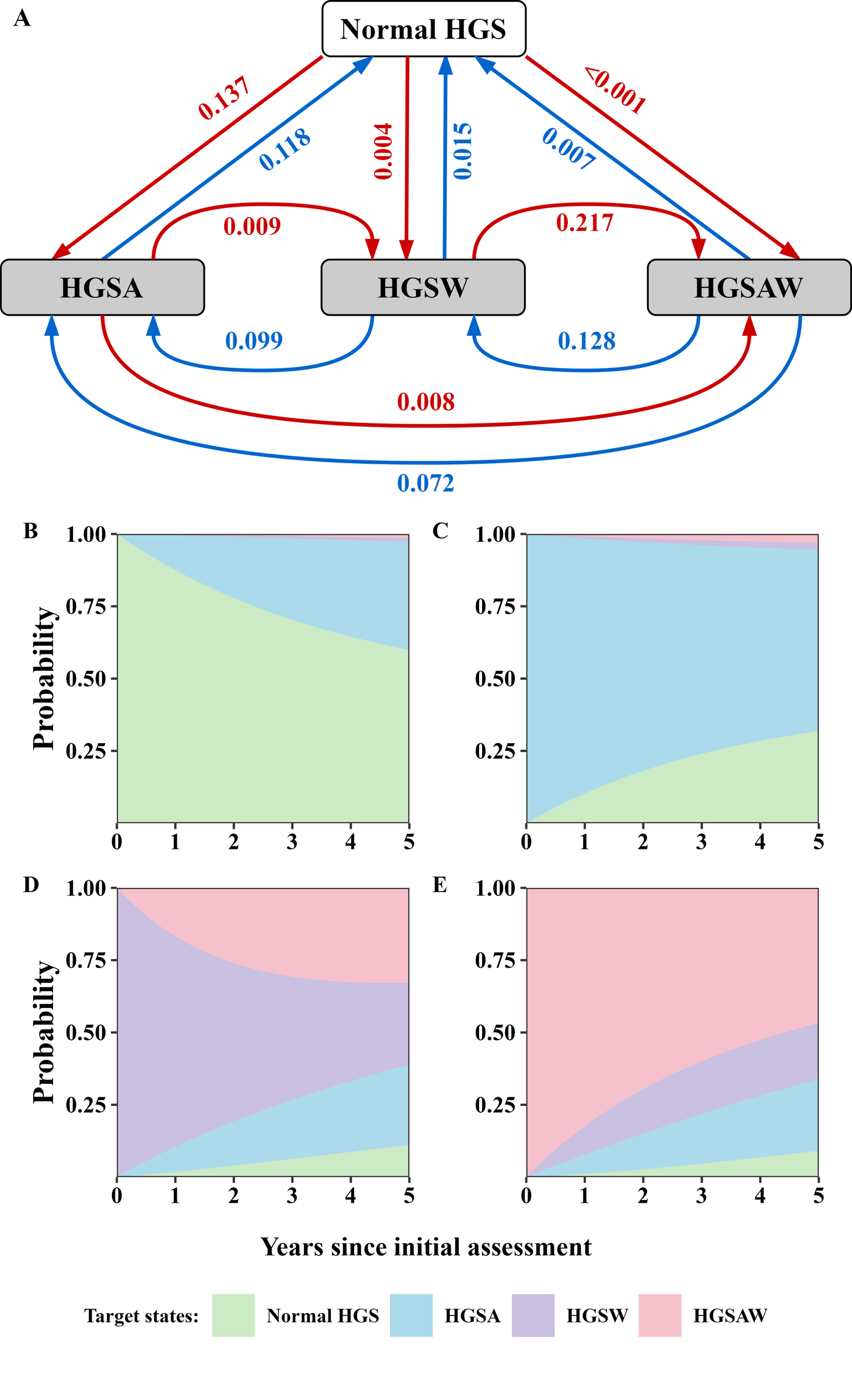
Compared with normal grip, uneven grip was linked to a higher relative rate of dementia (hazard ratio 1.17). The links were stronger for weakness alone (1.60) and weakness combined with uneven grip (1.69), after accounting for demographic, lifestyle and health factors. Among participants with repeated measurements, transitions from normal to uneven grip were more frequent than transitions to weakness. Uneven grip also showed greater reversibility. Weakness, alone or with uneven grip, was linked to poorer general thinking ability; uneven grip alone was not.
Why it matters
Dementia is an age-related disease, and the authors suggest that hand imbalance and weakness may capture overlapping but distinct aspects of functional impairment.
Caveats
Participants were grouped by measured grip strength, not assigned to an intervention, so the links may reflect other health differences or dementia-related changes already affecting grip. The findings do not cover people with the pre-existing dementia, stroke, major nervous system disorders or specified musculoskeletal conditions excluded from the cohort; the report is a preprint, not yet peer-reviewed.
From the paper
- Participants
We analyzed 363,867 UK Biobank participants without pre-existing dementia or musculoskeletal disease, who had baseline handgrip strength (HGS) measurements and up to 13.7 years of follow-up.
- Result
In fully adjusted models, HGSA was associated with increased risk of all-cause dementia (hazard ratio [HR] = 1.17, 95% confidence interval [CI]: 1.11 to 1.24), although associations were stronger for HGSW (HR = 1.60, 95% CI: 1.39 to 1.84) and HGSAW (HR = 1.69, 95% CI: 1.50 to 1.90).
Quoted word for word from the full text on researchsquare.com.
The paper
Shantou University Medical College; Guangzhou First People's Hospital
Research Square, Nov 5, 2026, Open access, Preprint, not yet peer-reviewed

Comments
Be the first to comment.