Ovarian age measures partly shift towards host age in mice
Transplanting ovaries between younger and older mice shifted molecular age estimates in both directions, but the changes remained partial.
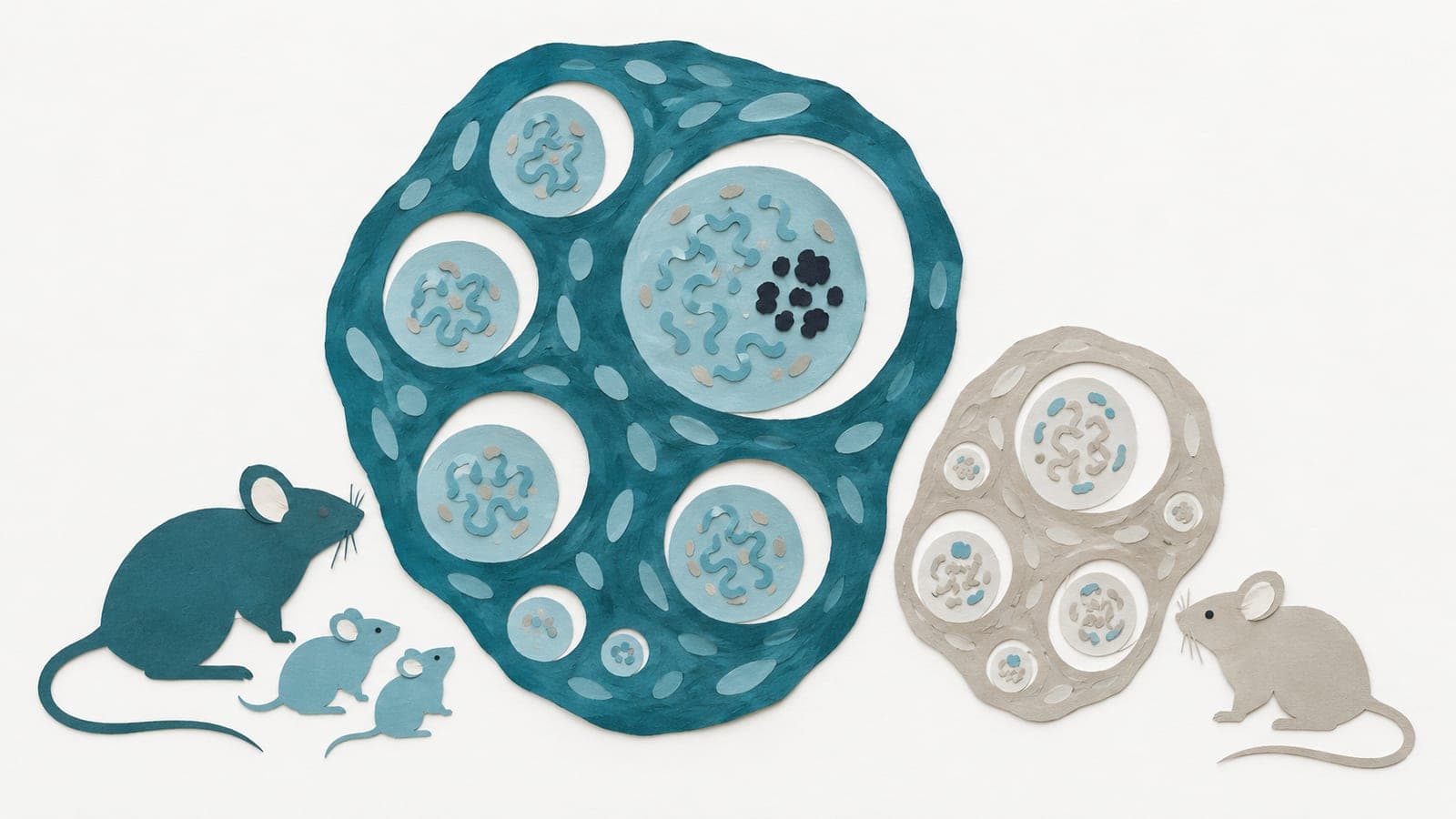
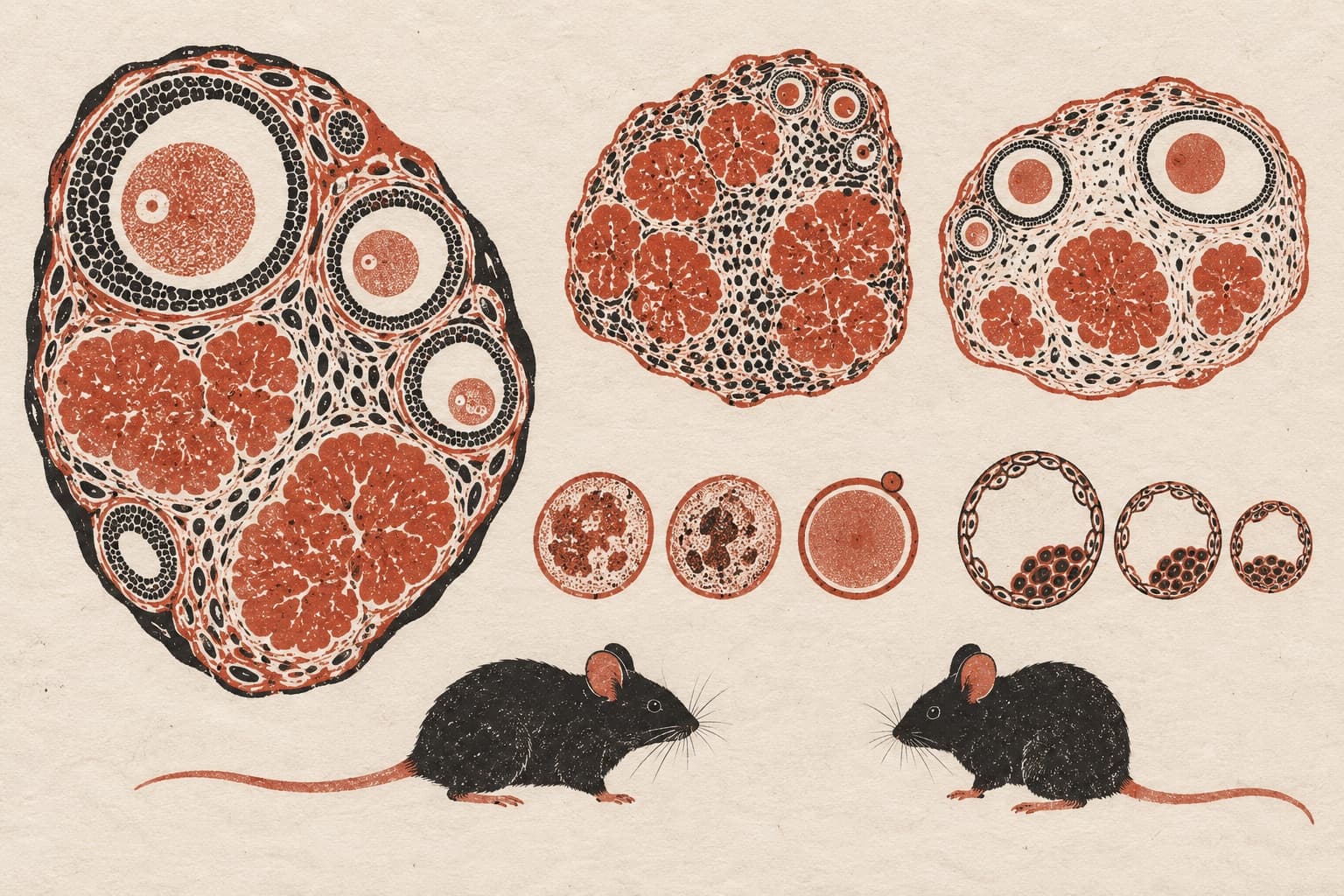
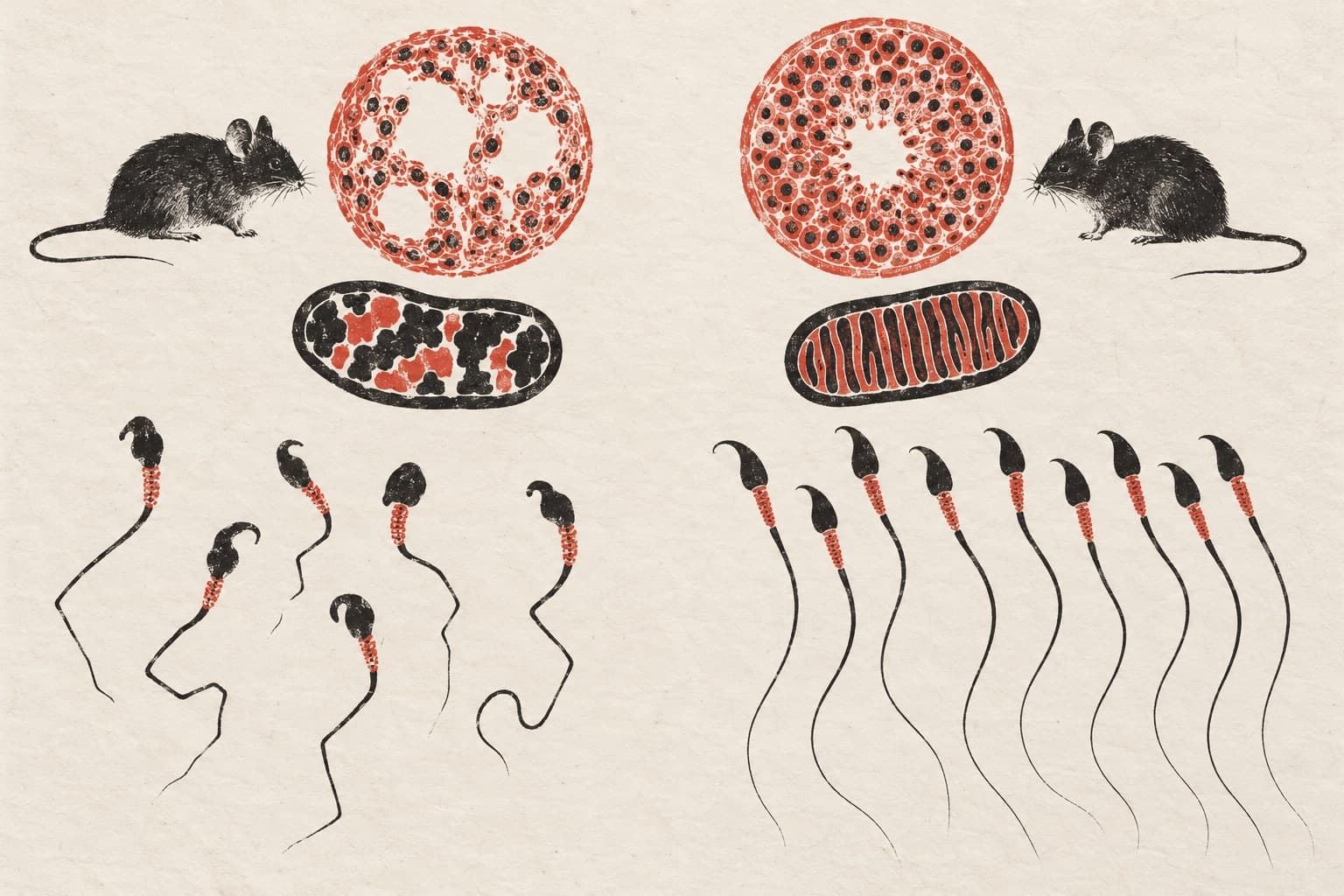
In mouse experiments, researchers transplanted ovaries between younger and older animals and joined pairs of mice so they shared a blood supply. They estimated molecular age from gene activity and chemical marks on DNA. Older ovaries shifted partly towards younger molecular profiles in young hosts. Young ovaries shifted partly towards older profiles in old hosts.
Ovaries taken from 13-month-old C57BL/6J mice supported full-term pregnancies and live births when the ovaries reached 17–18 months of age in young hosts, but not in old hosts. Young ovaries also supported live births in 17–18-month-old recipients. Donor ovary age shifted age estimates based on gene activity in the uterus in both directions. Young ovaries also lowered these estimates in aged liver and brain.
Why it matters
Age-related changes in fertility make it important to understand whether ovarian aging follows a fixed internal course. The authors suggest that influences from the wider body may offer ways to intervene in this process.
Caveats
These experiments were in mice, so they do not show that the same changes would occur in women. The paper is a preprint and has not been peer-reviewed.
The paper
Systemic control and inter-organ communication of ovarian aging
Brigham and Women's Hospital, Harvard Medical School
bioRxiv, 13 Oct 2026, Preprint, not peer-reviewed