Aging clock

Papers on aging clock

703 papers36 new in 30 days

Monday, November 16

bioRxiv

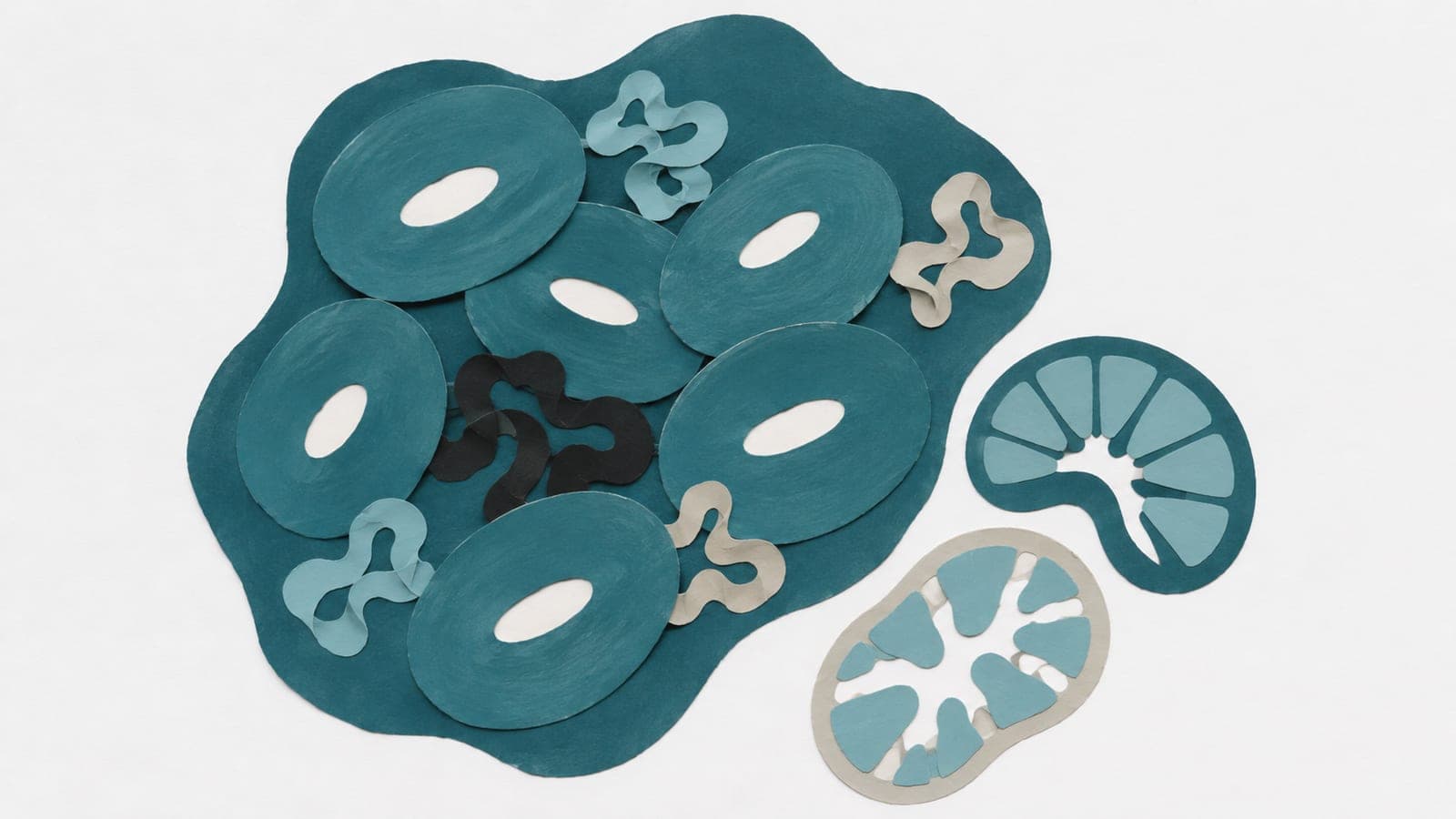
Tumors mix younger- and older-like molecular aging patterns

An analysis of breast cancer and five other cancers found mixed aging patterns, partly resembling those in normal tissue of the same origin.An analysis of breast cancer and five other cancers found mixed aging patterns, partly resembling those in normal tissue of the same origin.

Breast tumor tissue mixes dividing cells and fragmented nuclear fibers above smaller, orderly rings of normal breast cells.
Preprint: computational studyBiomarkers

Sunday, November 15

Saturday, November 14

Research Square

Blood protein scores linked to future age-related disease

In 44,526 UK Biobank participants, 10-year disease incidence differed up to 20-fold between people of the same age with different scores.In 44,526 UK Biobank participants, 10-year disease incidence differed up to 20-fold between people of the same age with different scores.

Blood cells and folded proteins sit beside kidney cross-sections, one dark blue-green with orderly tissue and one gray with disrupted tissue.
Preprint: cohort · 44,526 peopleBiomarkers

Friday, November 13

Inflammation

Signaling protein linked to cell aging in scarred human lungs

Analyses including 1,004 human lung samples linked SLIT2, a signaling protein, to aging-associated changes in connective-tissue cells in a lung-scarring disease.Analyses including 1,004 human lung samples linked SLIT2, a signaling protein, to aging-associated changes in connective-tissue cells in a lung-scarring disease.

Transcriptomic deconvolution reveals fibroblast enrichment across IPF and aging.
Cross-sectional studyNF-κB signaling

Thursday, November 12

bioRxiv

Changes in reproductive cell structures track age in worms

In experiments with Caenorhabditis elegans worms, an image-based clock predicted age from changes in two structures within reproductive cells.In experiments with Caenorhabditis elegans worms, an image-based clock predicted age from changes in two structures within reproductive cells.

A magnified worm contains reproductive cells, with nearby cell clusters showing evenly arranged granules above and more varied groupings below.
Preprint: worm studyBiomarkers
bioRxiv

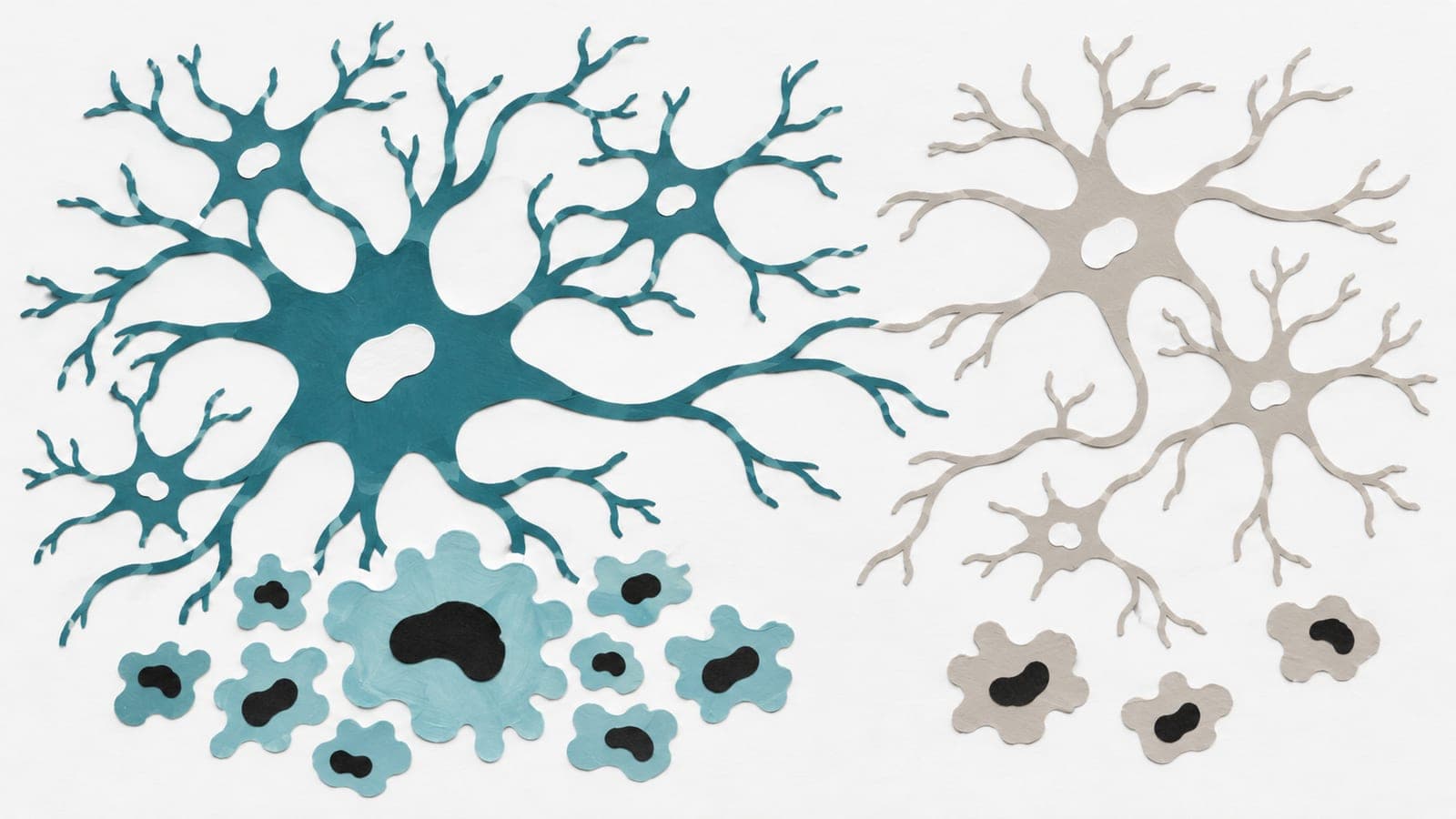
Model sorts disease-linked changes in cell data by aging pattern

Using cross-sectional single-cell cohorts, scCody distinguished disease-associated cellular changes that resembled healthy aging from changes that departed from it.Using cross-sectional single-cell cohorts, scCody distinguished disease-associated cellular changes that resembled healthy aging from changes that departed from it.

Branching dark blue-green and gray neurons face each other above immune cells, clustered densely on one side and sparsely on the other.
Preprint: computational studyAI & data
Philosophical Transactions of the Royal Society of London, Series B

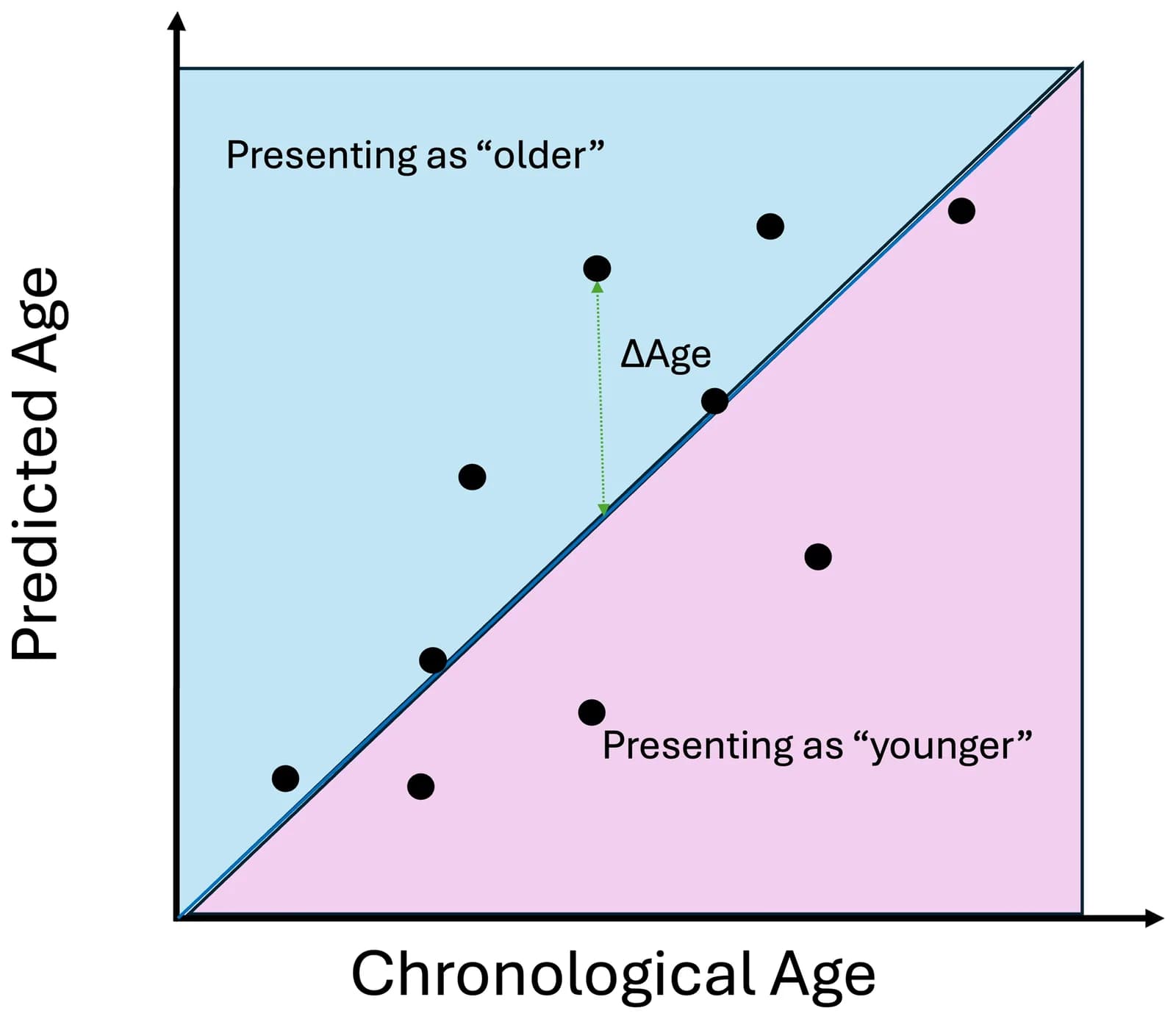
Age clock may track development in wild Soay sheep

Models built from body measurements collected from 1985 to 2024 linked higher predicted ages relative to actual age with better winter survival in adult sheep.Models built from body measurements collected from 1985 to 2024 linked higher predicted ages relative to actual age with better winter survival in adult sheep.

Illustration of the application of biological ageing clocks to estimate ∆age.
Cohort studyBiomarkers

Wednesday, November 11

Tuesday, November 10

GeroScience

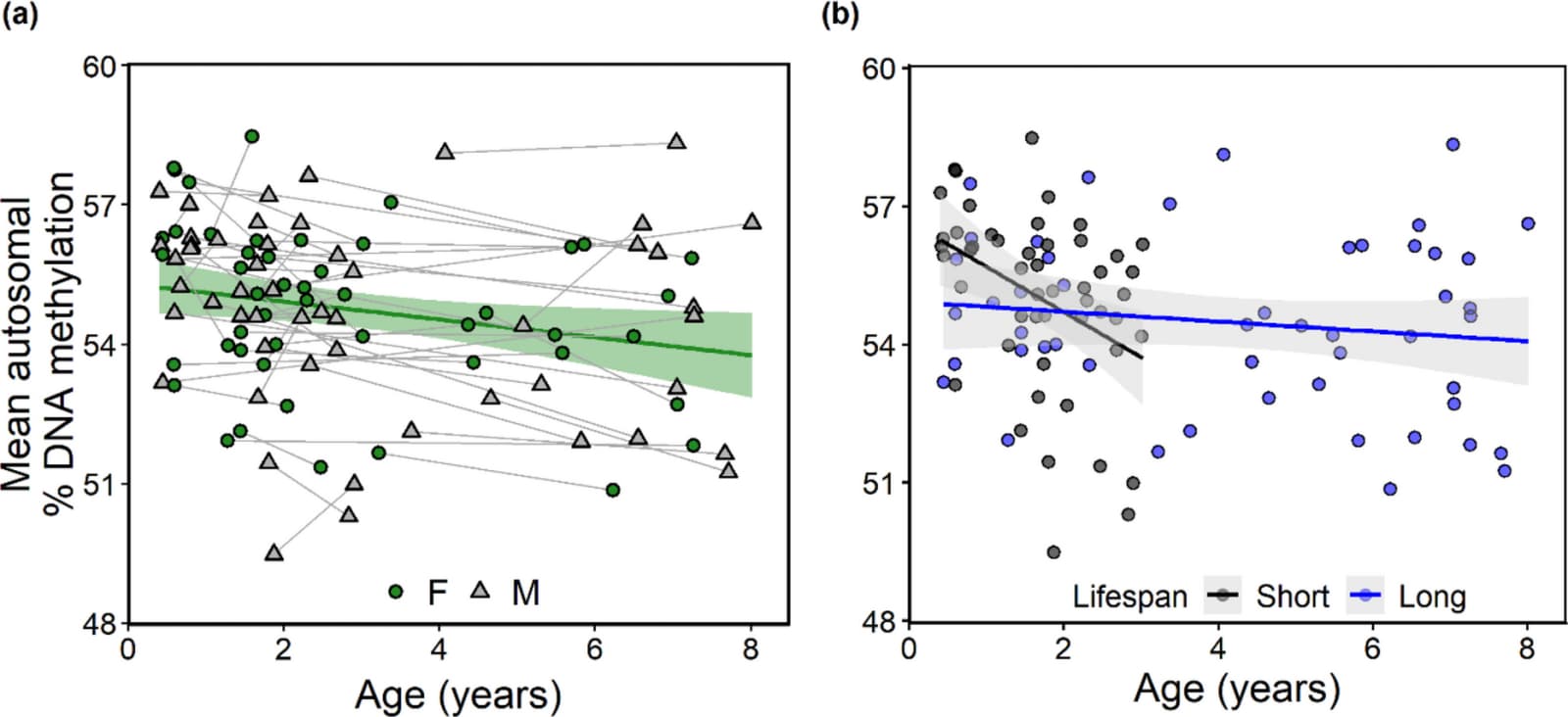
DNA clock predicted remaining lifespan in zebra finches

A longitudinal study of 50 captive adults linked faster increases in DNA-based age to shorter lifespans.A longitudinal study of 50 captive adults linked faster increases in DNA-based age to shorter lifespans.

Figure from GeroScience
Cohort studyBiomarkers

Monday, November 9

AHA Scientific Sessions 2026 Abstract

Exenatide lowered protein-based age scores in people

Over 12 months, exenatide lowered six organ-related age scores and limited a liver score’s rise compared with placebo in people with type 2 diabetes.Over 12 months, exenatide lowered six organ-related age scores and limited a liver score’s rise compared with placebo in people with type 2 diabetes.

Heart cross-sections, one large and dark blue-green, one smaller and gray, sit beneath blood cells with sparse versus dense protein fragments.
Randomized trial · 3,973 peopleExenatide

Saturday, November 7

AHA Scientific Sessions 2026 Abstract

Protein-based age measures differ by heart failure type

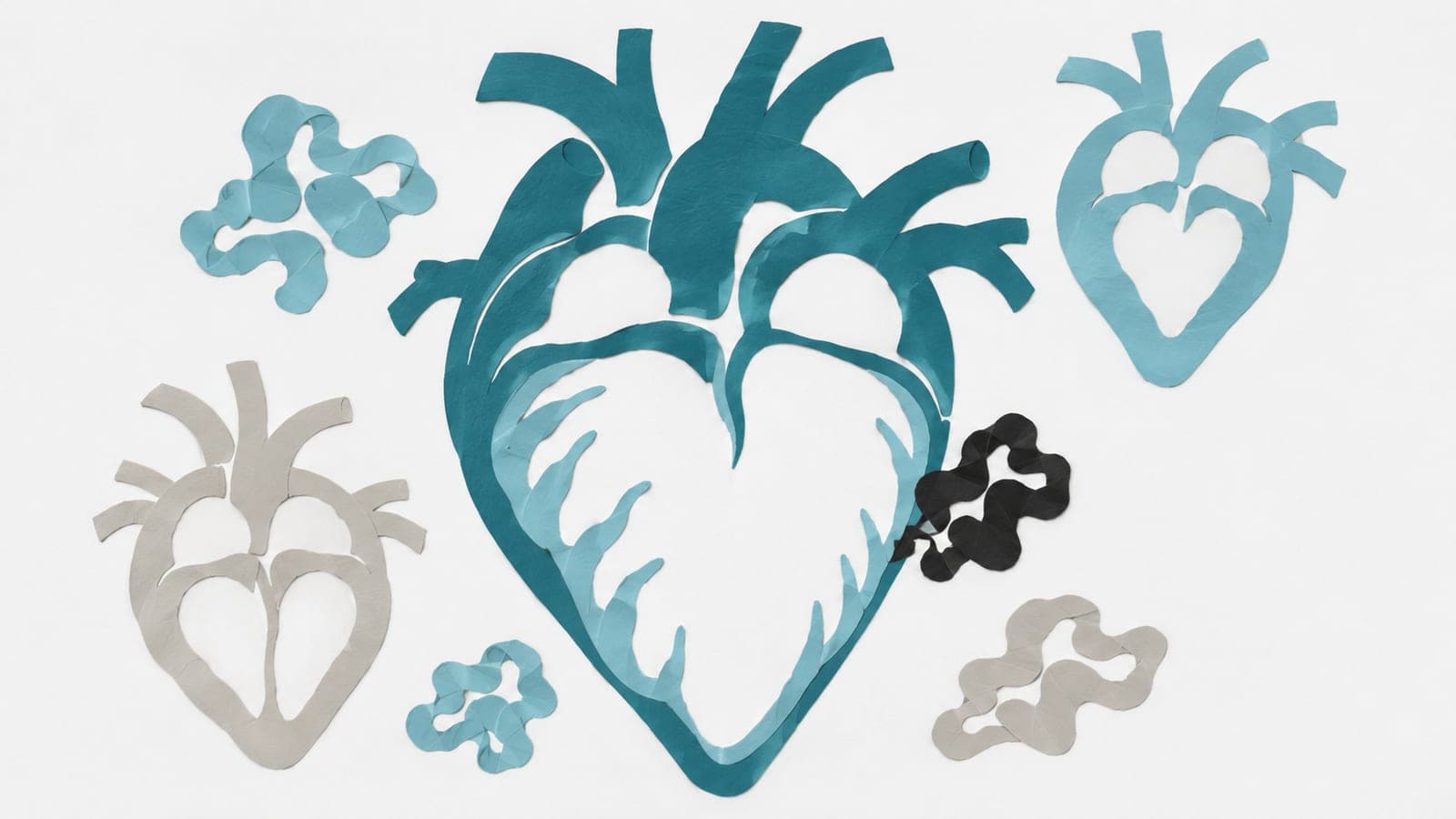
A retrospective comparison of 269 people with one heart failure form, 275 with another and 186 controls found different protein-based aging patterns.A retrospective comparison of 269 people with one heart failure form, 275 with another and 186 controls found different protein-based aging patterns.

A heart cutaway with enlarged chambers and thin walls sits beside smaller, thicker-walled hearts and scattered folded proteins.
Cohort studyHeart failure

Thursday, November 5

Wednesday, November 4

Tuesday, November 3

Monday, November 2

Metabolism

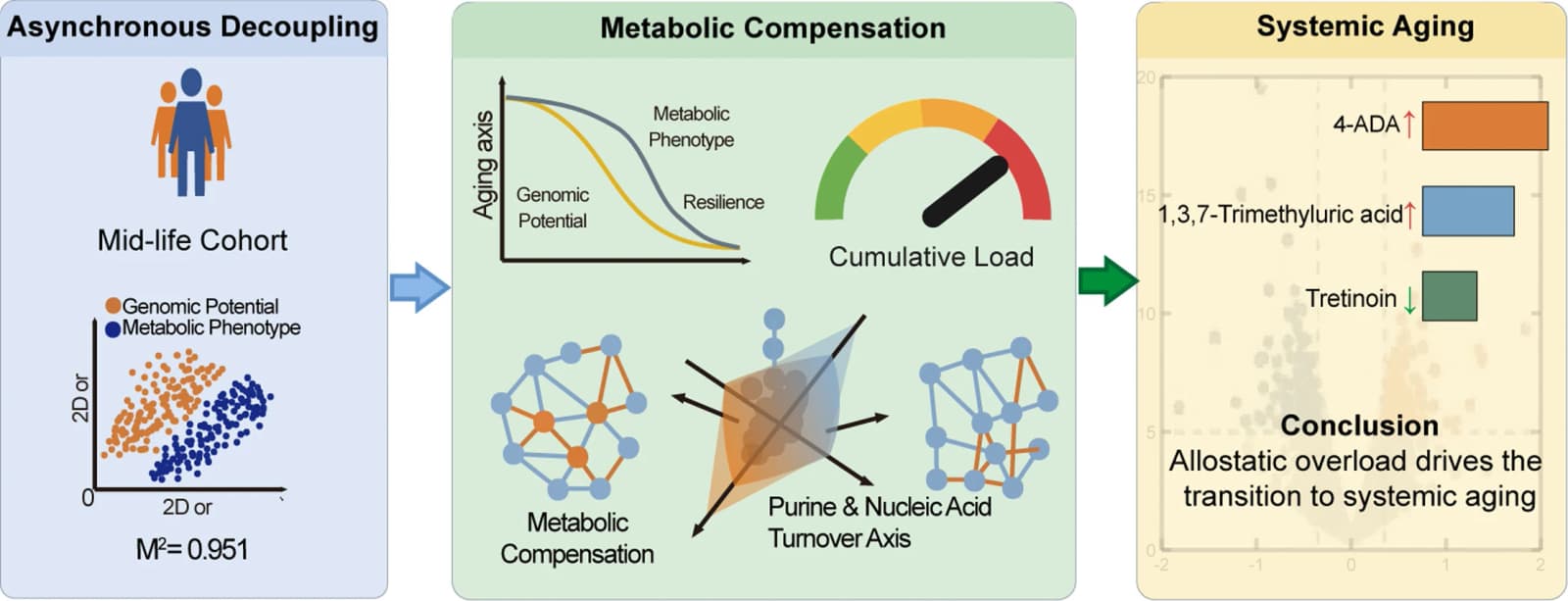
Gut microbes and metabolism fell out of step in midlife

Paired measurements in 99 people showed greater variation in microbial than metabolic profiles, suggesting the body may initially buffer microbial changes.Paired measurements in 99 people showed greater variation in microbial than metabolic profiles, suggesting the body may initially buffer microbial changes.

Figure from Metabolism
Cohort · 99 peopleBiomarkers

Sunday, November 1

Friday, October 30

Briefings in Bioinformatics

Blood aging clock maps aging-like changes in COVID-19

People with COVID-19 had blood gene-activity age estimates averaging 9.34 years above a healthy-aging reference after correction for each cohort’s baseline.People with COVID-19 had blood gene-activity age estimates averaging 9.34 years above a healthy-aging reference after correction for each cohort’s baseline.

Figure from Briefings in Bioinformatics
Cross-sectional · 469 peopleCOVID-19

Thursday, October 29

bioRxiv

Age-linked protein patterns differ among organs in mice

Models built from protein measurements in eight mouse organs tracked age in independent groups but transferred poorly from one organ to another.Models built from protein measurements in eight mouse organs tracked age in independent groups but transferred poorly from one organ to another.

Organ-specific proteomic clocks predict chronological age.
Preprint: computational studyBiomarkers

Tuesday, October 27