Gut microbes and metabolism fell out of step in midlife
Paired measurements in 99 people showed greater variation in microbial than metabolic profiles, suggesting the body may initially buffer microbial changes.
Edited by Boris Djordjevic · AgingResearch.News
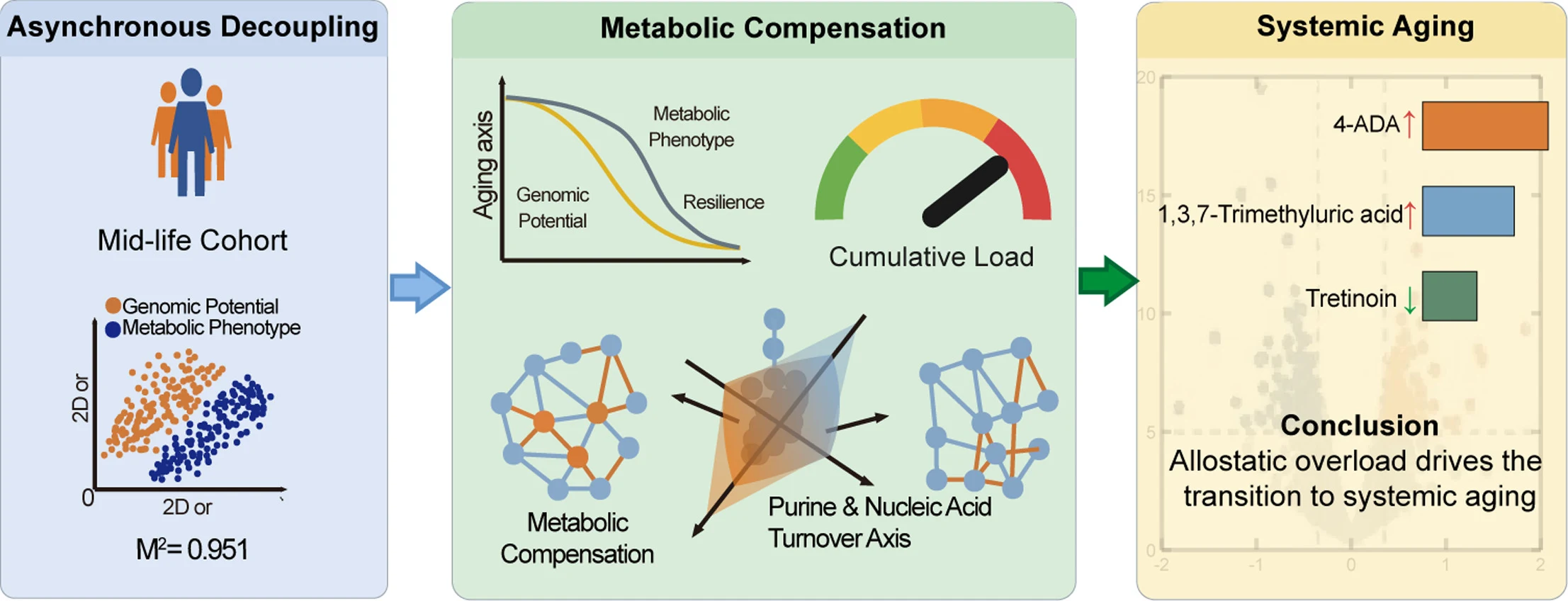
An observational study analyzed gut microbial data from 4,551 people, including 1,868 in midlife, aged 35–65. Researchers trained a model to estimate age from the genetic material of gut microbes. The model explained less of the variation in age in midlife than across the full cohort.
In 99 people with paired microbial and metabolic measurements, the two sets of profiles diverged. Microbial profiles showed greater variation than profiles of metabolites, small molecules involved in the body's chemical reactions. The authors proposed that microbial decline preceded whole-body aging and was initially buffered by metabolic adjustments. They suggested that, when accumulated physiological strain exceeded the body's ability to compensate, increases in certain metabolites might accelerate whole-body aging.
Why it matters
Age estimates based on gut microbes raise a question about biological aging: whether microbial changes track the body's changing metabolism throughout adulthood.
Caveats
These observational associations cannot establish that microbial decline precedes or accelerates whole-body aging. The key paired analysis involved 99 people.


Comments
Be the first to comment.