Explainable Machine Learning-Based Diabetes Prediction Using Clinical Features: A Comparative Evaluation of Ensemble and Boosting Algorithms A Comparative Study with Explainable Artificial Intelligence Analysis
Abstract
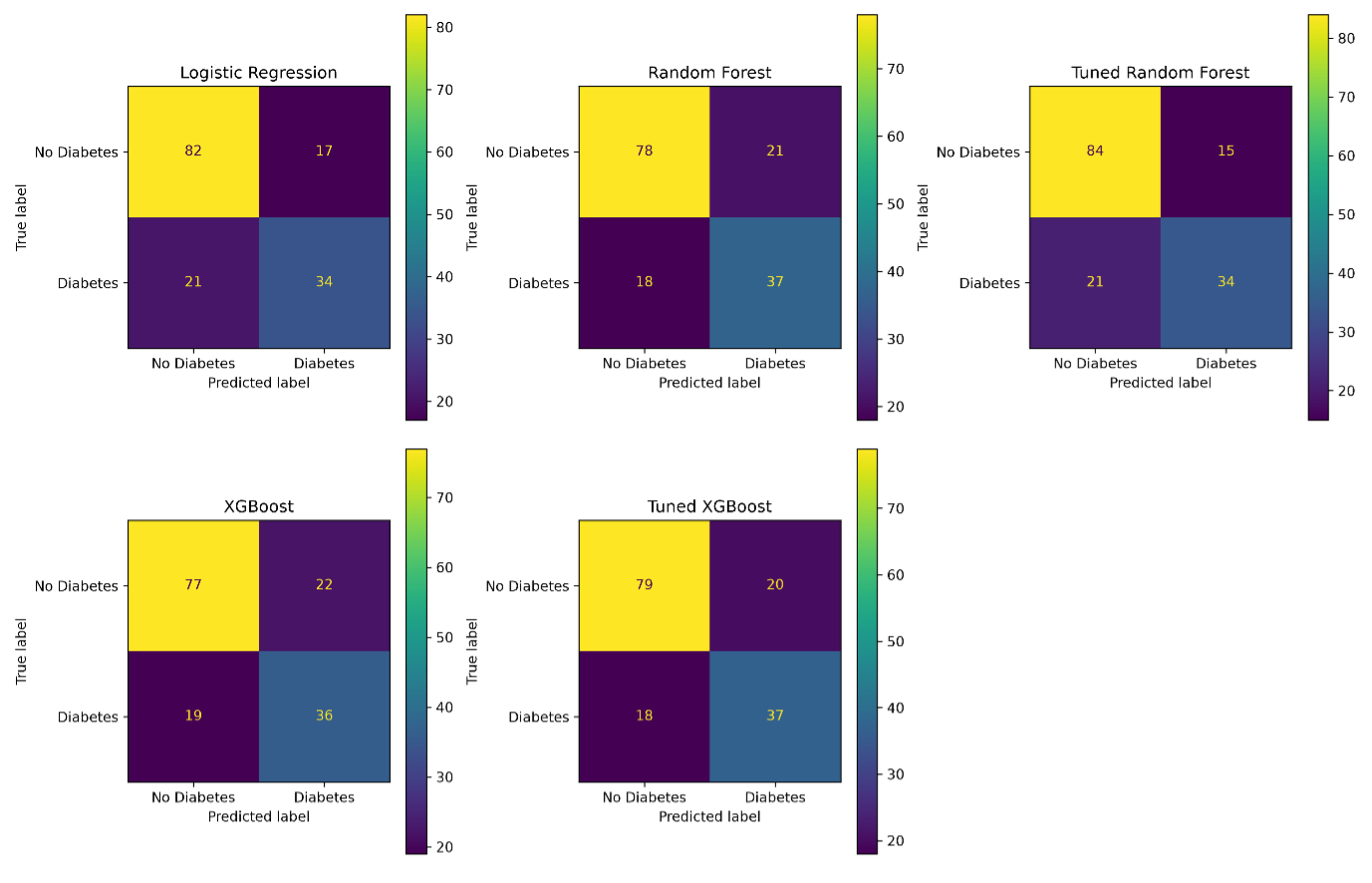
Diabetes mellitus is a chronic metabolic disorder that requires early detection and effective management to reduce health complications. Machine learning approaches have demonstrated potential for identifying complex patterns in clinical data and improving disease prediction. This study presents a comparative analysis of multiple machine learning algorithms for diabetes prediction using clinical features. The Pima Indians Diabetes dataset containing 768 patient records and eight predictive variables was utilized in this study. Data preprocessing involved handling physiologically invalid zero values through median imputation. Five classification algorithms, including Logistic Regression, Random Forest, optimized Random Forest, XGBoost, and optimized XGBoost, were developed and evaluated using accuracy, precision, recall, F1-score, and ROC-AUC metrics. The optimized Random Forest achieved the highest overall accuracy of 76.62%, while Random Forest and optimized XGBoost demonstrated superior sensitivity for identifying diabetic cases. Furthermore, SHAP-based explainable artificial intelligence analysis revealed that glucose level, body mass index (BMI), and age were the most influential predictors contributing to model decisions. The findings highlight the potential of machine learning and explainable AI techniques for supporting diabetes risk prediction and clinical decision-support.
The paper
Daffodil International University
Research Square, 11 Oct 2026, Preprint, not peer-reviewed