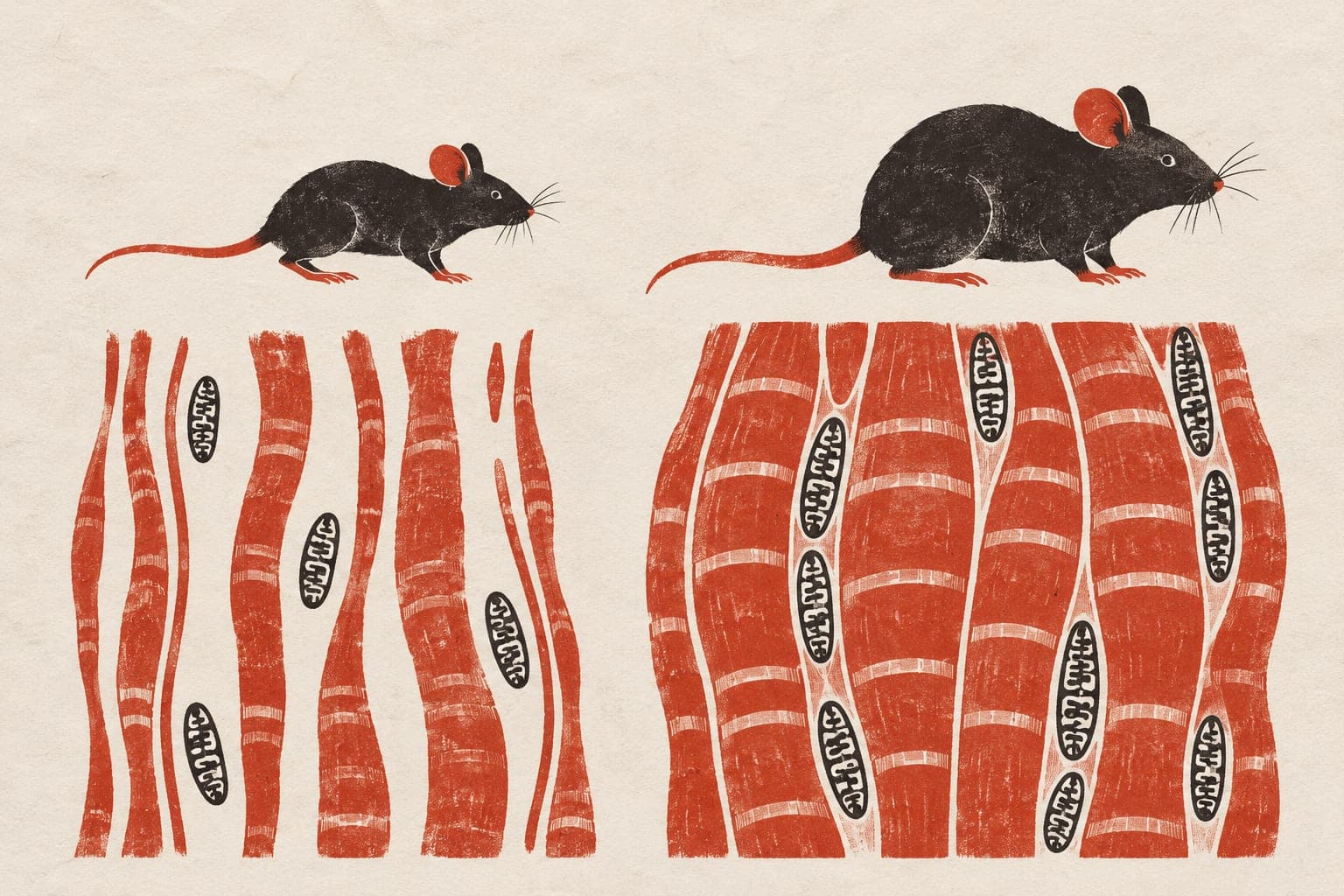
Cardiolipin decline drives muscle fiber shifts in mice
Deleting cardiolipin synthase in young mice induced age-like fiber shifts, while restoring its expression reversed atrophy and rescued premature mortality.
Nature Aging
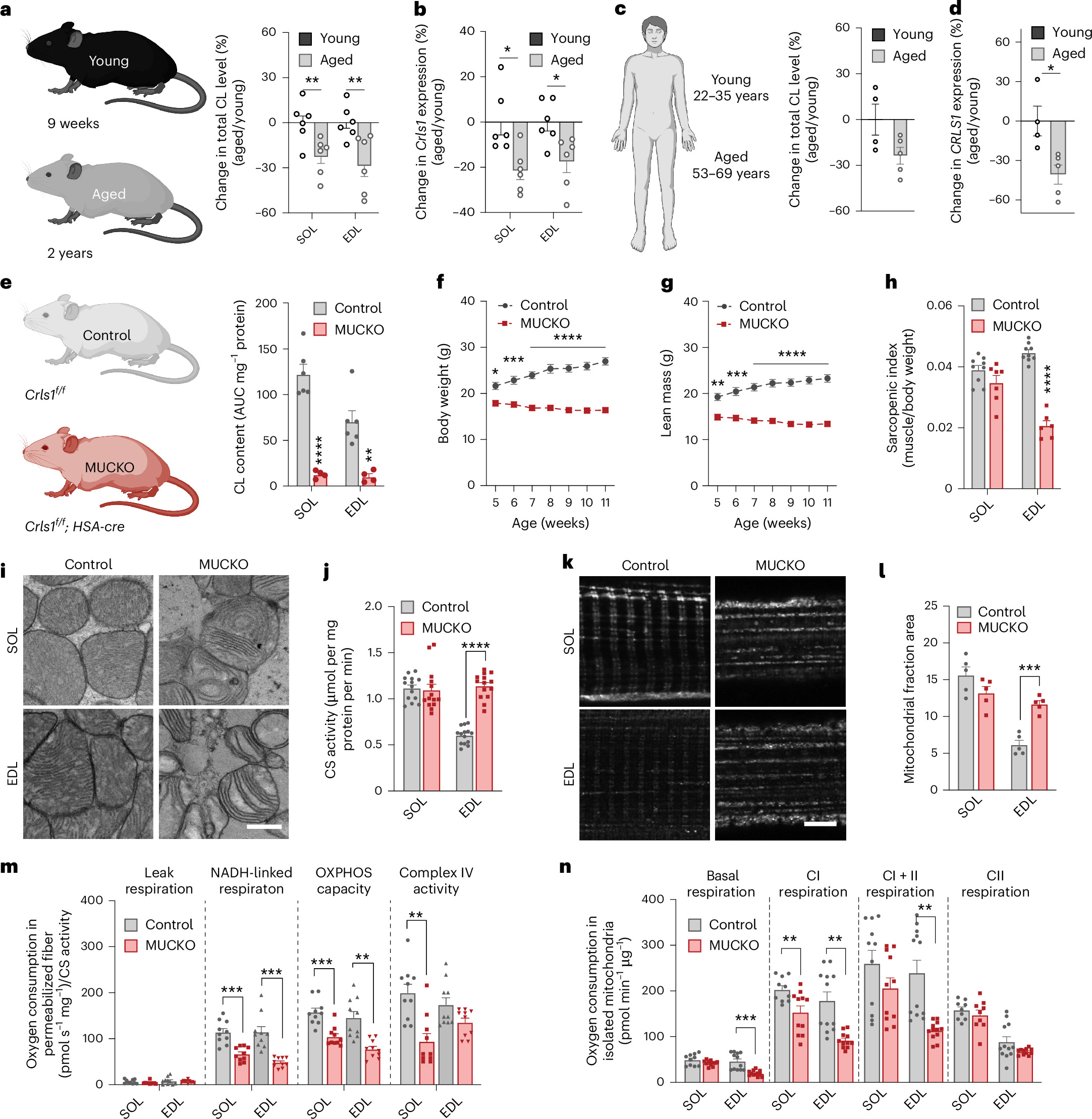
In mice and human skeletal muscle, researchers investigated how the mitochondrial membrane lipid cardiolipin coordinates age-related fiber remodeling. By deleting cardiolipin synthase 1 in young mice to mimic the loss of muscle cardiolipin seen in aging, the authors reproduced key aging hallmarks, including a shift from glycolytic to oxidative fibers. This transition was mediated by mitochondria-to-nucleus signaling through the nuclear receptor estrogen-related receptor γ, which drove reactive oxygen species-sensitive glucose uptake and glycolytic rerouting to sustain antioxidant defenses. Restoring cardiolipin synthase 1 expression in adult knockout mice reestablished cardiolipin levels, initiated the reversal of muscle atrophy, and fully rescued premature mortality.
Why it matters
The findings describe a cell-autonomous lipid pathway that connects mitochondrial dysfunction to fiber-type remodeling in skeletal muscle. This mechanism identifies cardiolipin regulation as a possible therapeutic target for age-related muscle decline and myopathies.
Caveats
Most causal findings rely on an inducible genetic knockout in mice rather than naturally aged animals. Although human muscle was examined to link cardiolipin to aging, whether targeting this pathway can treat muscle aging in humans remains untested.
The paper
Show 46 more authors
Tao Ma, Taewook Kang, Dipsikha Biswas, Ruben Zapata Perez, Vincent Anton, Lucile Dollet, Lasse Kruse Markussen, Nanami Senoo, Iuliia E. Karavaeva, Astrid Linde Basse, Oksana Dmytriyeva, Tara A. TeSlaa, Jesper Foged Havelund, Amy M. Ehrlich, Marta Moreno‐Torres, Caio Yogi Yonamine, Nicoline R. Andersen, Ida Blom, Francisco García‐Carrizo, Piyarat Siripoksup, Magnus Asping, Thomas S. Nielsen, Marcus Nygård, Anders Bue Klein, Andrey Tvardovskiy, Trine S. Nicolaisen, Marcus Nygård, Klaus Qvortrup, Clara Prats, Joshua D. Rabinowitz, Christoffer Clemmensen, Lykke Sylow, Juleen Rae Zierath, Jonas T. Treebak, Tim Julius Schulz, Trisha Jean Grevengoed, Steven Michael Claypool, Julien Prudent, Rob C. I. Wüst, Susanne Mandrup, Riekelt H. Houtkooper, Kei Sakamoto, Nils Joakim Færgeman, Martin R. Larsen, Katsuhiko Funai, Steen Larsen,University of Southern Denmark · University of Copenhagen
Nature Aging · 29 Sep 2026