Early life stress accelerates epigenetic aging in zebra finches
Corticosterone treatment shifts DNA methylation profiles in young chicks toward those of older birds and reshapes longevity pathways.
bioRxiv
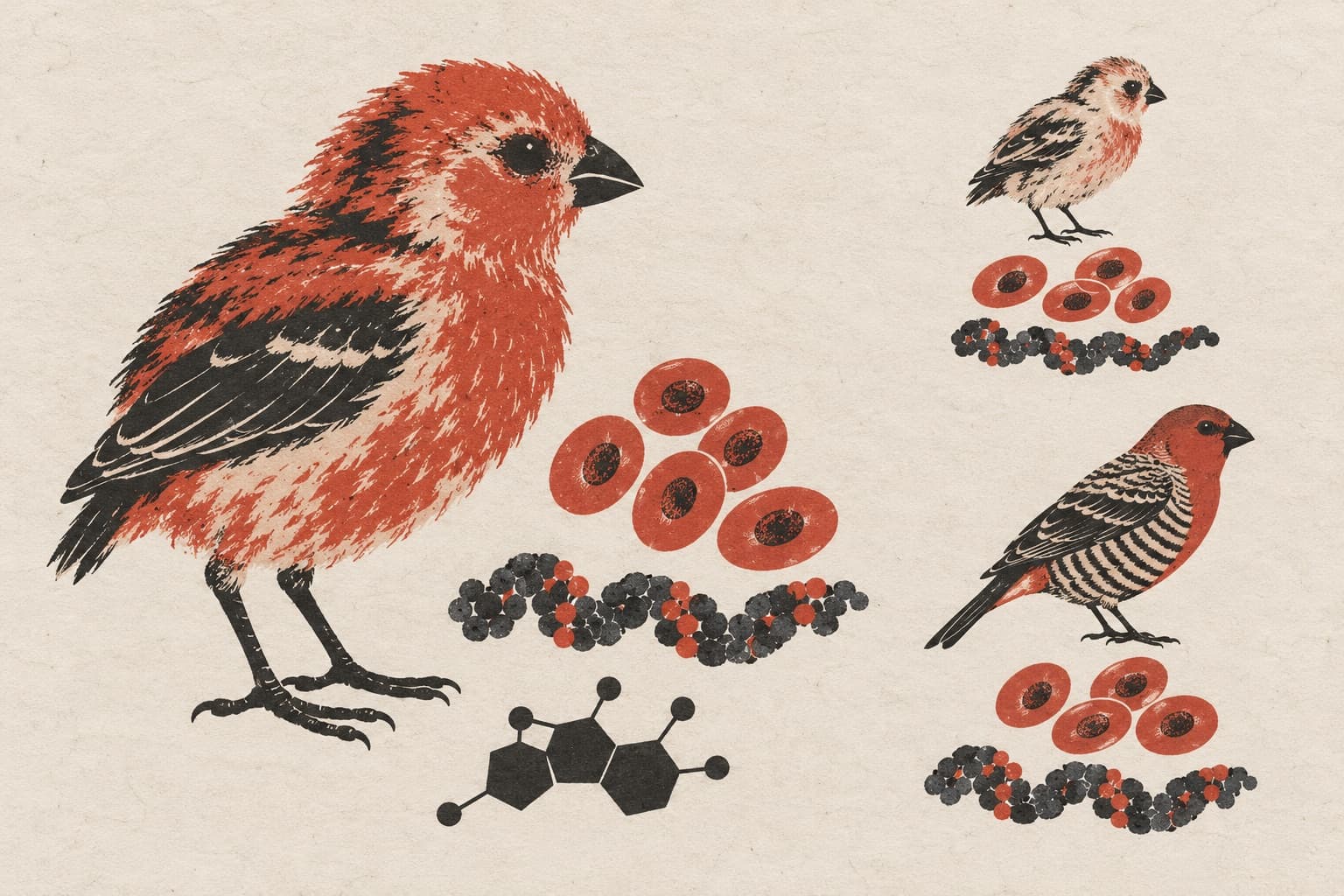
In zebra finch chicks (Taeniopygia guttata), experimental early-life stress accelerates epigenetic aging, according to a new preprint. Researchers developed an epigenetic clock from blood DNA methylation profiles using reduced representation bisulfite sequencing. They tested the effects of corticosterone, an experimental treatment known to reduce lifespan. Corticosterone-treated 29-day-old chicks shared differentially methylated loci with untreated aged birds and clustered with six-month-old birds. The transcriptional repressor ZBTB16 emerged as a top age-correlated gene and showed the strongest epigenetic alteration following corticosterone exposure. Elevated developmental stress also caused rapid epigenetic remodeling of metabolic pathways involved in aging and longevity.
Why it matters
The findings show that developmental stress can immediately alter epigenetic aging trajectories through conserved stress-survival pathways.
Caveats
The study was conducted in zebra finches, and the manuscript is a preprint that has not yet been peer-reviewed.
- Early-life stress
- Psychological stress
- DNA methylation
- Epigenetic regulation of gene expression
- Corticosterone
- T. guttata
The paper
Increased stress in early life epigenetically rewires pathways related to aging and longevity
Show 7 more authors
Robert Gillespie, Edward R. Ivimey‐Cook, Riccardo Marioni, Emma J. A. Cunningham, Tamir Chandra, Tom J. Little, Monaghan Pat,University of Edinburgh · University of Glasgow
bioRxiv · 2 Oct 2026 · CC BY-NC-ND · Preprint, not peer-reviewed