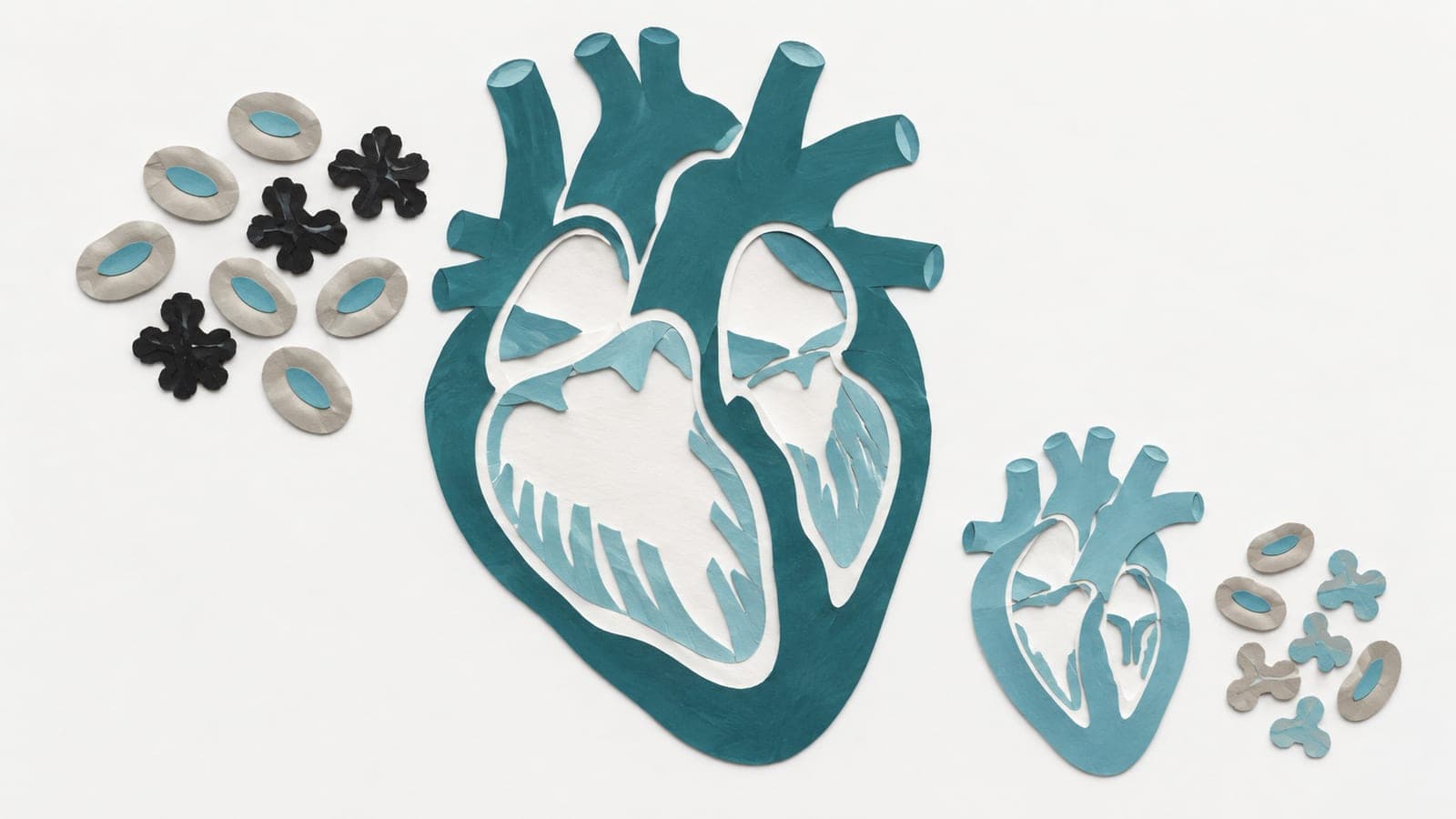
Heart shape scores improved prediction of a heart rhythm disorder
In people with preserved heart pumping, adding scores to standard measurements improved the concordance index, a measure of predictive accuracy, by 0.068.
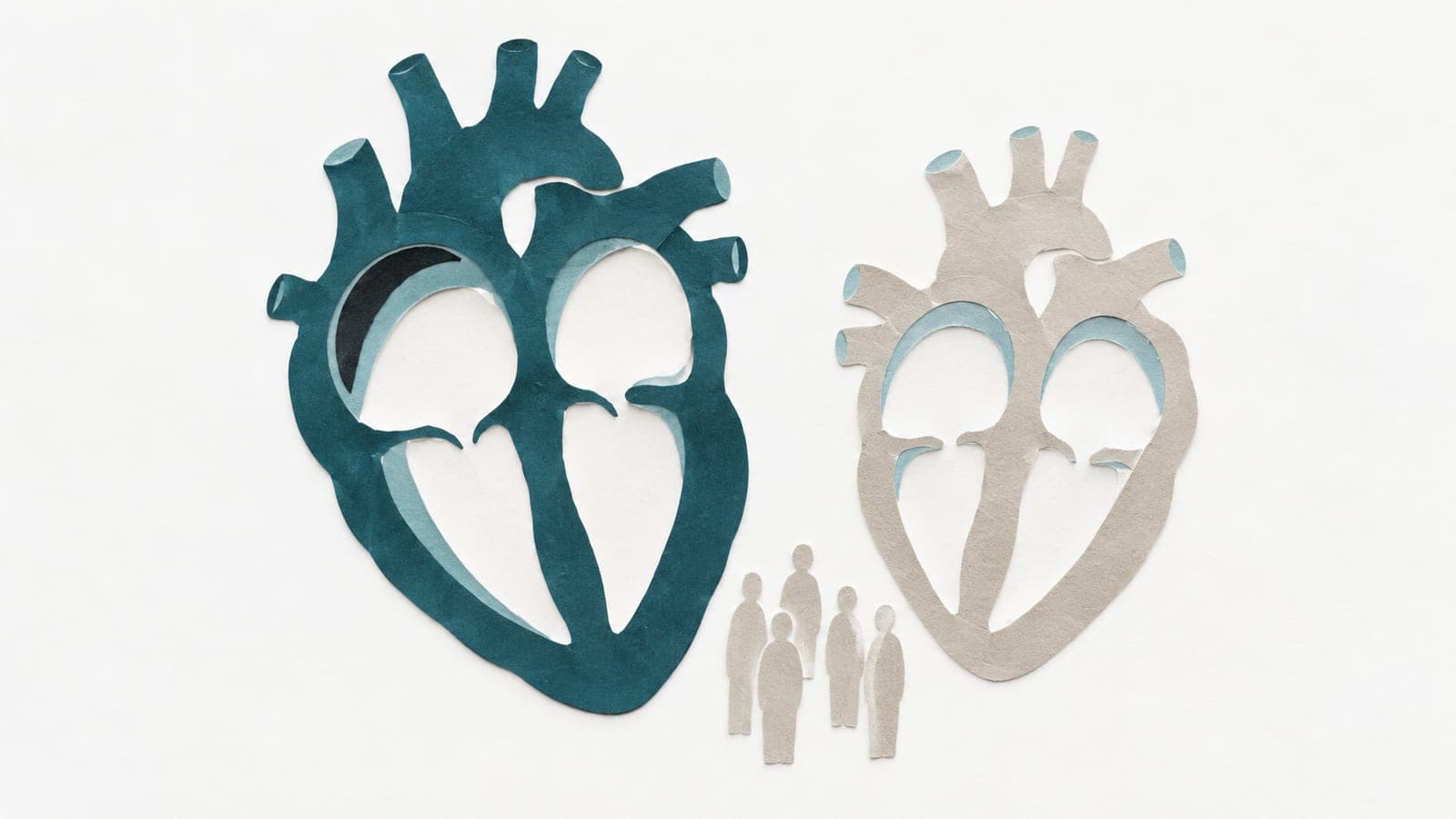
In an observational analysis of 52,365 UK Biobank participants, researchers compared heart shape and movement with computer-generated “digital twins” representing expected healthy function for each person’s age, sex and body build. They proposed this approach as a way to capture differences missed by standard heart measurements.
Scores measuring departures from those twins improved prediction of atrial fibrillation, an irregular heartbeat, beyond standard measurements. The strongest gain occurred among people whose ejection fraction—the share of blood the heart’s main pumping chamber pushes out with each beat—was at least 50%. A separate UK Biobank analysis, using a different representation of heart shape in up to 39,376 participants, found a smaller improvement for stroke risk in this preserved-pumping group, but none for atrial fibrillation.
Why it matters
The framework addresses how to assess cardiovascular disease risk while accounting for expected differences in healthy heart function across ages.
Caveats
This observational analysis assessed risk prediction, not whether heart-shape differences caused disease. The paper is a preprint and has not been peer-reviewed.
The paper
University College London
medRxiv, 13 Oct 2026, CC BY, Preprint, not peer-reviewed