Mother’s age shapes offspring avoidance behavior in worms
Experiments in worms linked older mothers to offspring with weaker nerve-cell responses and less avoidance of a chemical social signal.
Limit: Avoidance of cues other than the tested social pheromone was not measured
Edited by Boris Djordjevic · AgingResearch.News
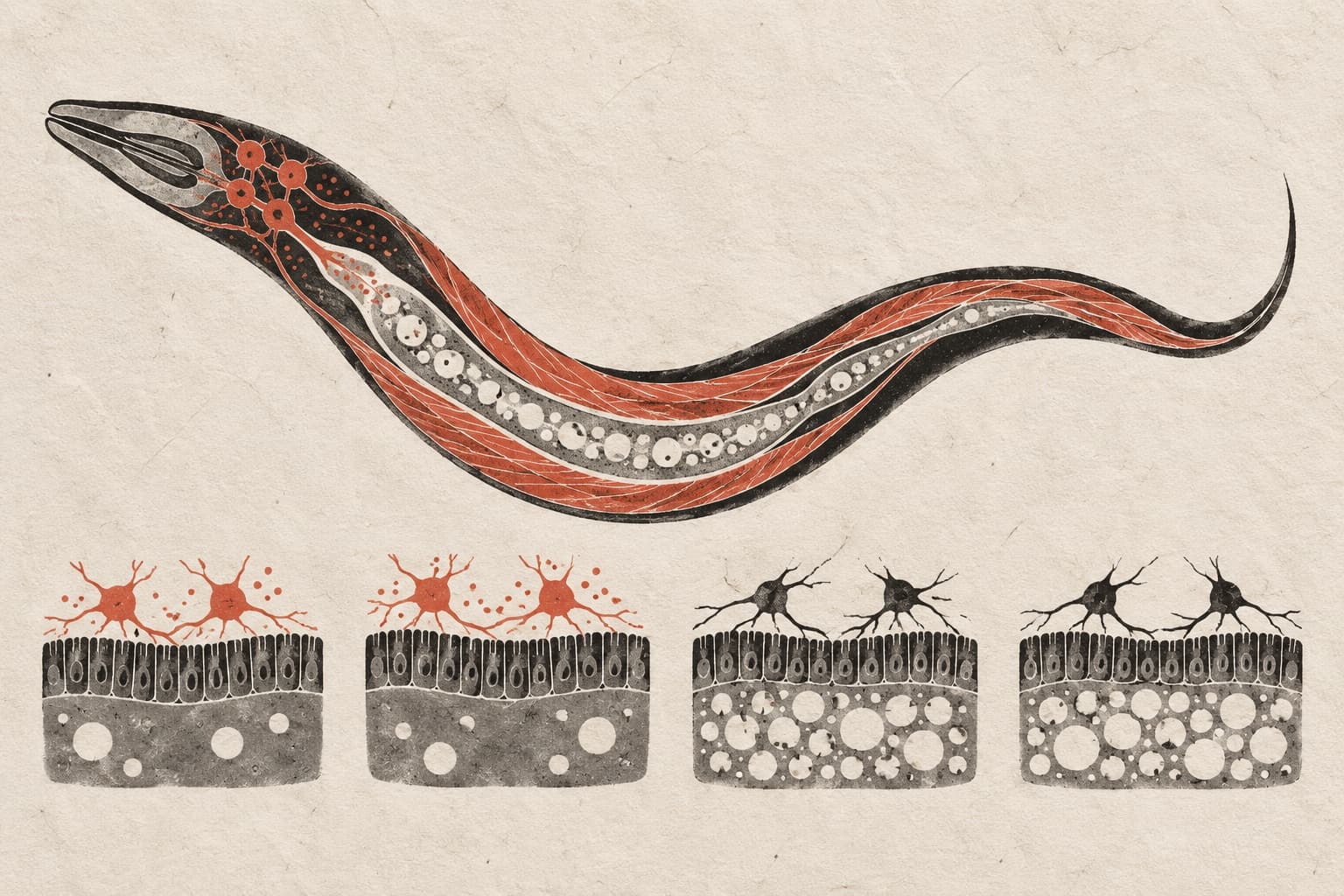
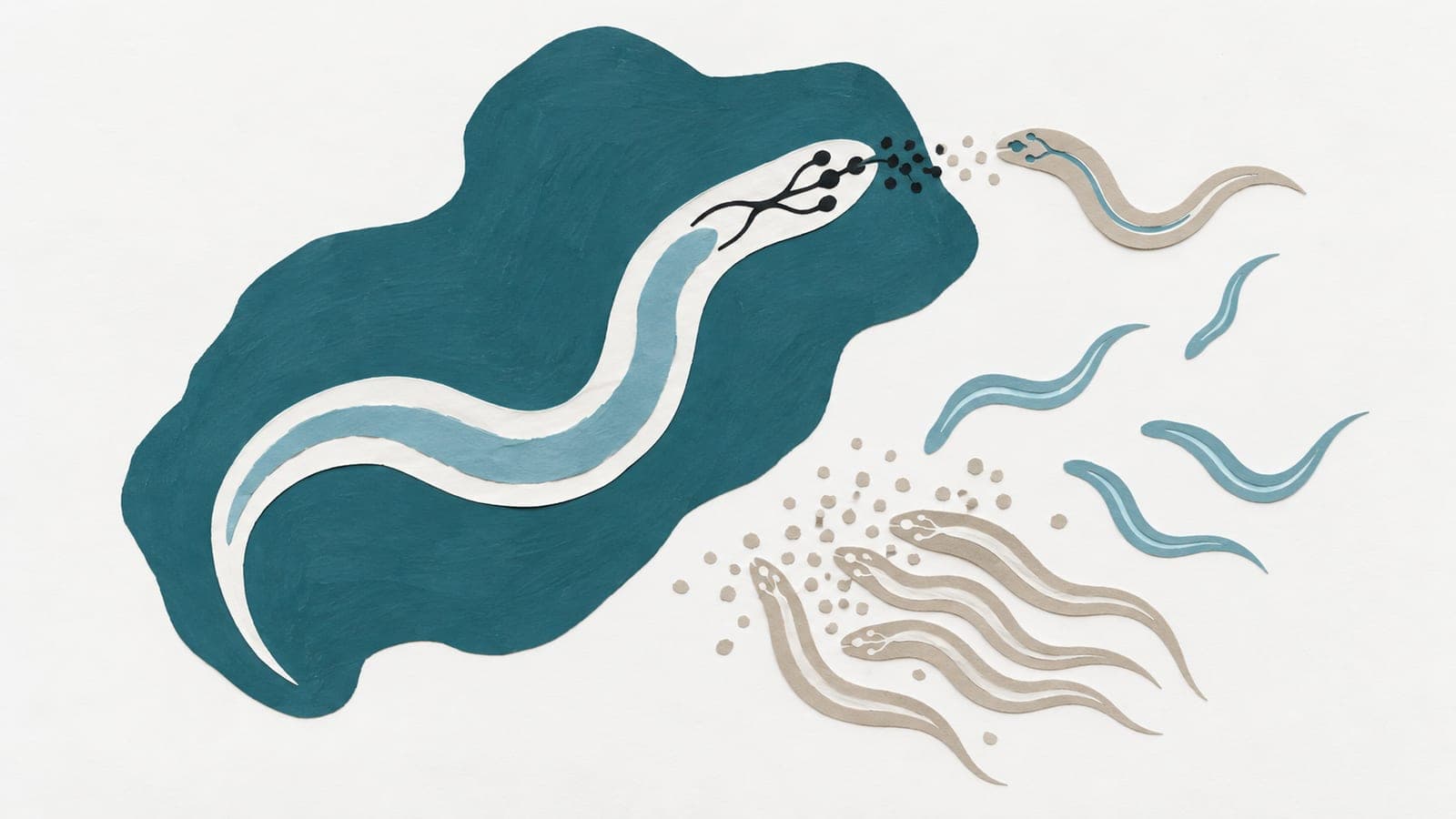
In experiments with Caenorhabditis elegans worms, researchers studied how maternal age affected offspring responses to a pheromone, a chemical social signal. Offspring of young mothers showed stronger activity in pheromone-sensing nerve cells and avoided the signal more strongly. Offspring of older mothers showed weaker nerve-cell responses and less avoidance.
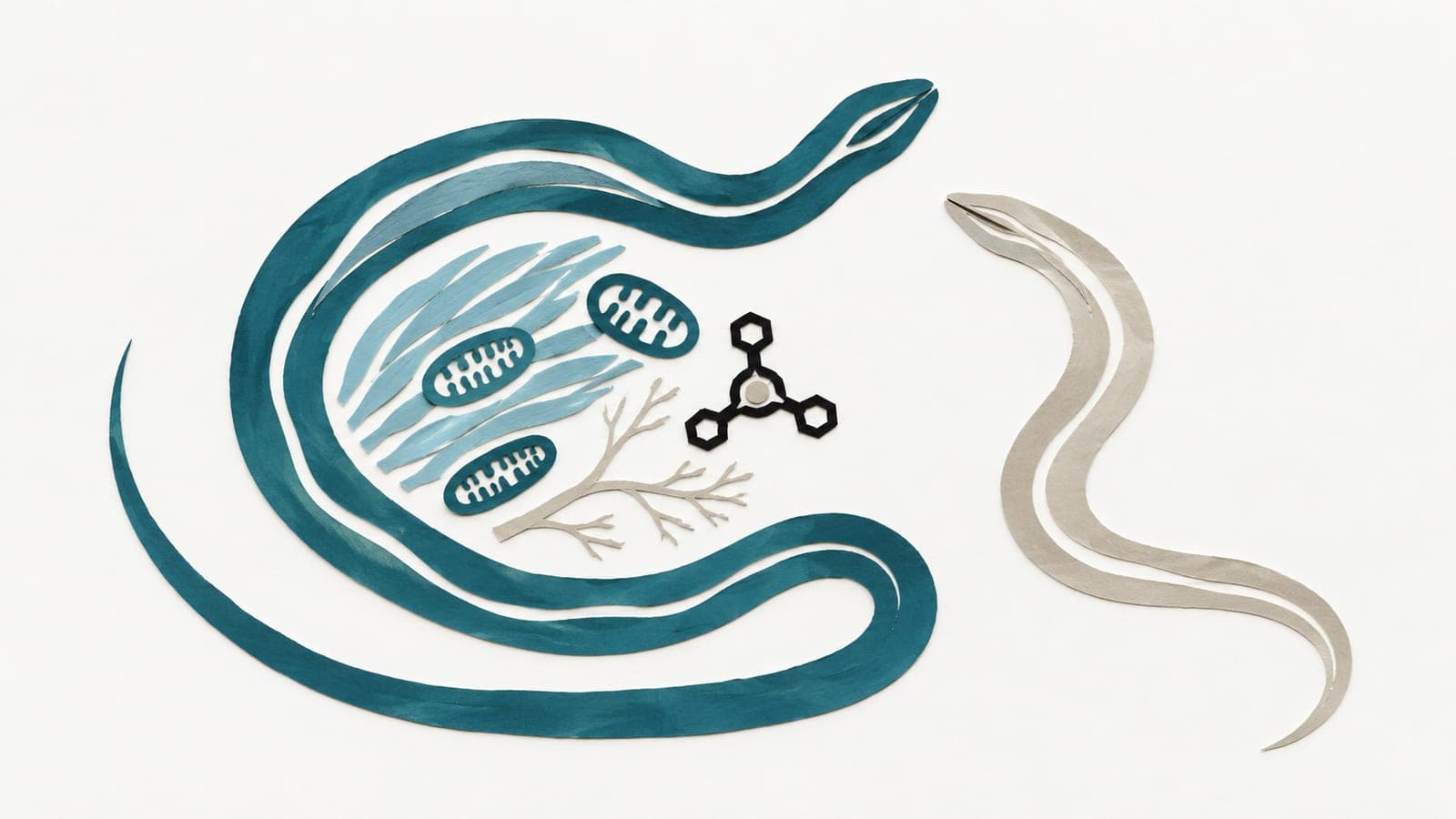
The researchers identified a pathway involving small RNA molecules and neuropeptides, molecules that nerve cells use to communicate. A regulator called ERI-1 promoted activity of a neuropeptide gene by suppressing a small RNA molecule. Signaling between two sets of nerve cells set pheromone sensitivity. Despite early developmental disadvantages, offspring of young mothers dispersed more readily from crowded environments rich in the pheromone.
Why it matters
The work addresses how maternal physiology connects aging in one generation with nervous-system function in the next. The authors interpret the greater dispersal of young mothers’ offspring as offsetting their early-life disadvantages.
Caveats
These experiments tested worms’ responses to a specific chemical social signal. They do not establish how maternal age affects social behavior in people.
The paper
Maternal age modulates progeny social behavior via a small RNA-neuropeptide axis
Daegu Gyeongbuk Institute of Science and Technology (DGIST)
Genes & Development, Oct 29, 2026