Early-life stress affected brain aging differently in mice
Experiments in mice at 12 and 18 months found different behavioural and memory changes in males and females exposed to prenatal stress.
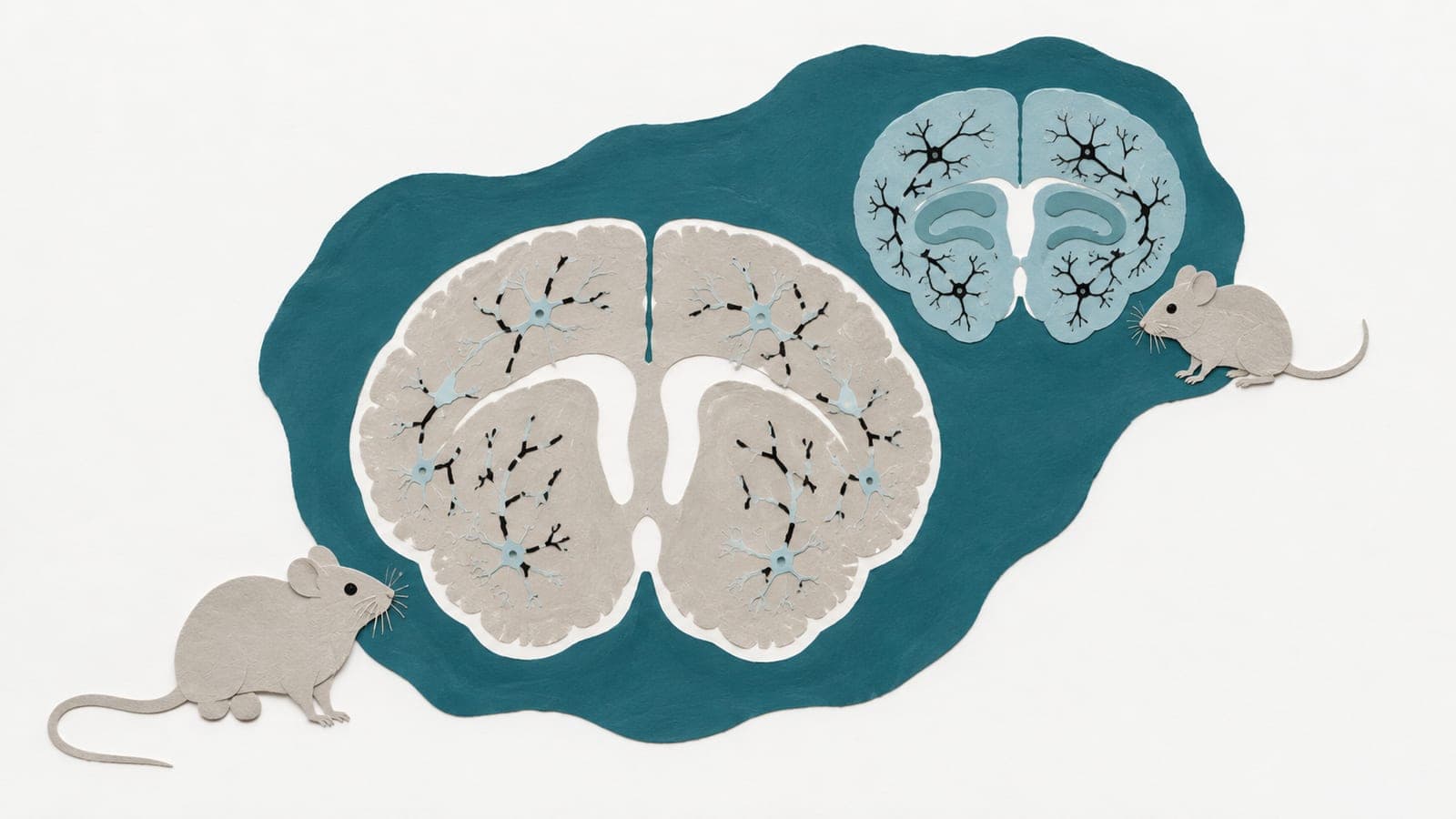
In an experiment in C57BL/6J mice, researchers exposed pregnant mothers to unpredictable mild stress and assessed their offspring at 12 and 18 months. Stressed mothers provided fragmented, unpredictable care after birth, without losing their capacity to care for their young. Male and female offspring had lower birth weights and grew rapidly after birth.
At 12 months, males exposed to prenatal stress showed anhedonia, a reduced ability to experience pleasure. By 18 months, they showed overactivity, repetitive behaviour and persistent problems remembering locations. Females were less active and less anxious at 12 months. They developed anhedonia at 18 months but maintained memory that depends on the hippocampus, a brain region involved in memory. Both sexes retained cognitive flexibility, the ability to adapt thinking when circumstances change.
Why it matters
The work supports accounting for sex when studying how conditions before and shortly after birth influence brain aging across the lifespan.
Caveats
This mouse experiment does not establish whether the same patterns occur in people. The paper is a preprint and has not yet been peer-reviewed.