Lower insulin-like signaling in young worms can extend life
Experiments in worms found that reducing insulin-like signaling during development could improve reproduction and survival, but lifespan and fitness benefits depended on temperature.
Edited by Boris Djordjevic · AgingResearch.News
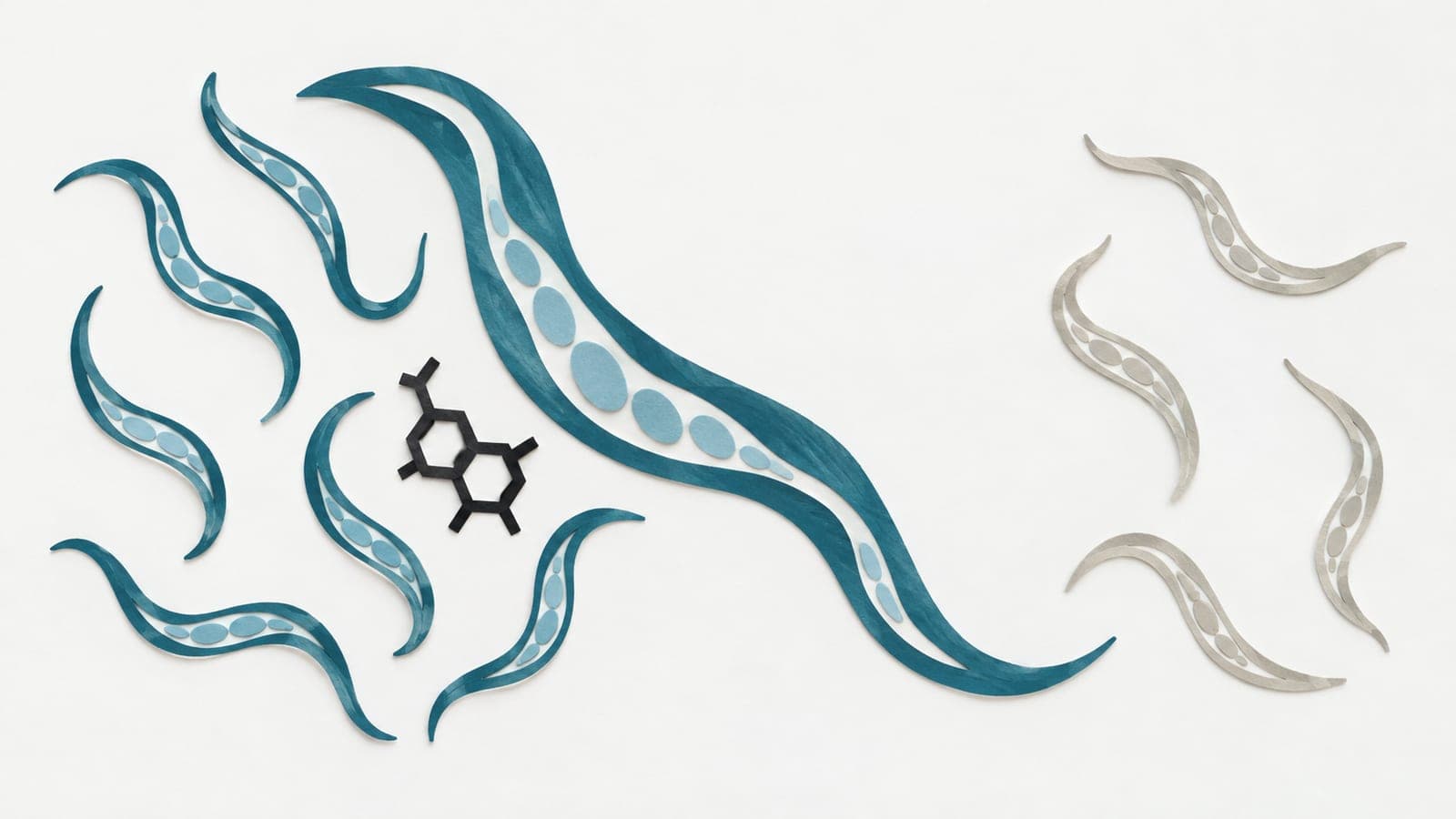
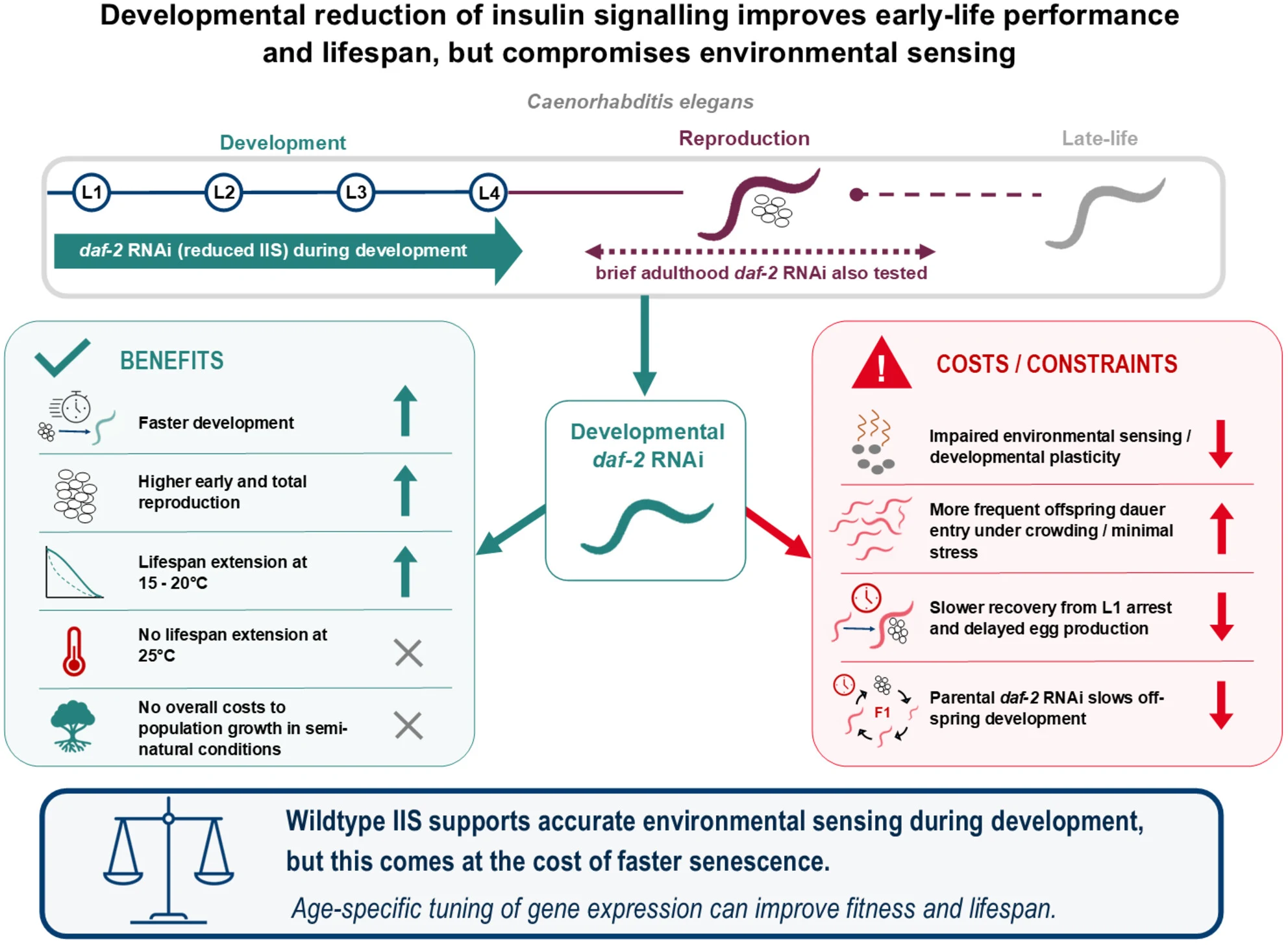
In experiments with Caenorhabditis elegans worms, researchers lowered the activity of daf-2, a gene involved in cells’ responses to insulin-like chemical messages. They reduced this signaling during development and studied the worms in laboratory and semi-natural conditions.
Reduced signaling could improve development, reproduction and survival. It could also improve individual fitness and population growth. However, lifespan and fitness improved only at some temperatures. Benefits to parents also came with slower development in their offspring. Reduced signaling interfered with the worms’ ability to sense their surroundings and adjust their development in response to stress. The authors concluded that accurate environmental sensing during development comes at the cost of faster aging.
Why it matters
The authors suggest that competing demands across ages and environments help explain why evolution retains signaling systems that can accelerate aging.
Caveats
These were experiments in worms, not people. The lifespan and fitness benefits occurred only at some temperatures, limiting how broadly the findings apply even within this species.