Compound reduced muscle scarring in aged male mice
Experiments in aged male mice found that ginsenoside Rg2 also improved muscle mass, strength and exercise endurance while reducing age-associated weight gain.
Limit: Only 8 mice per group in the animal experiment
Edited by Boris Djordjevic · AgingResearch.News
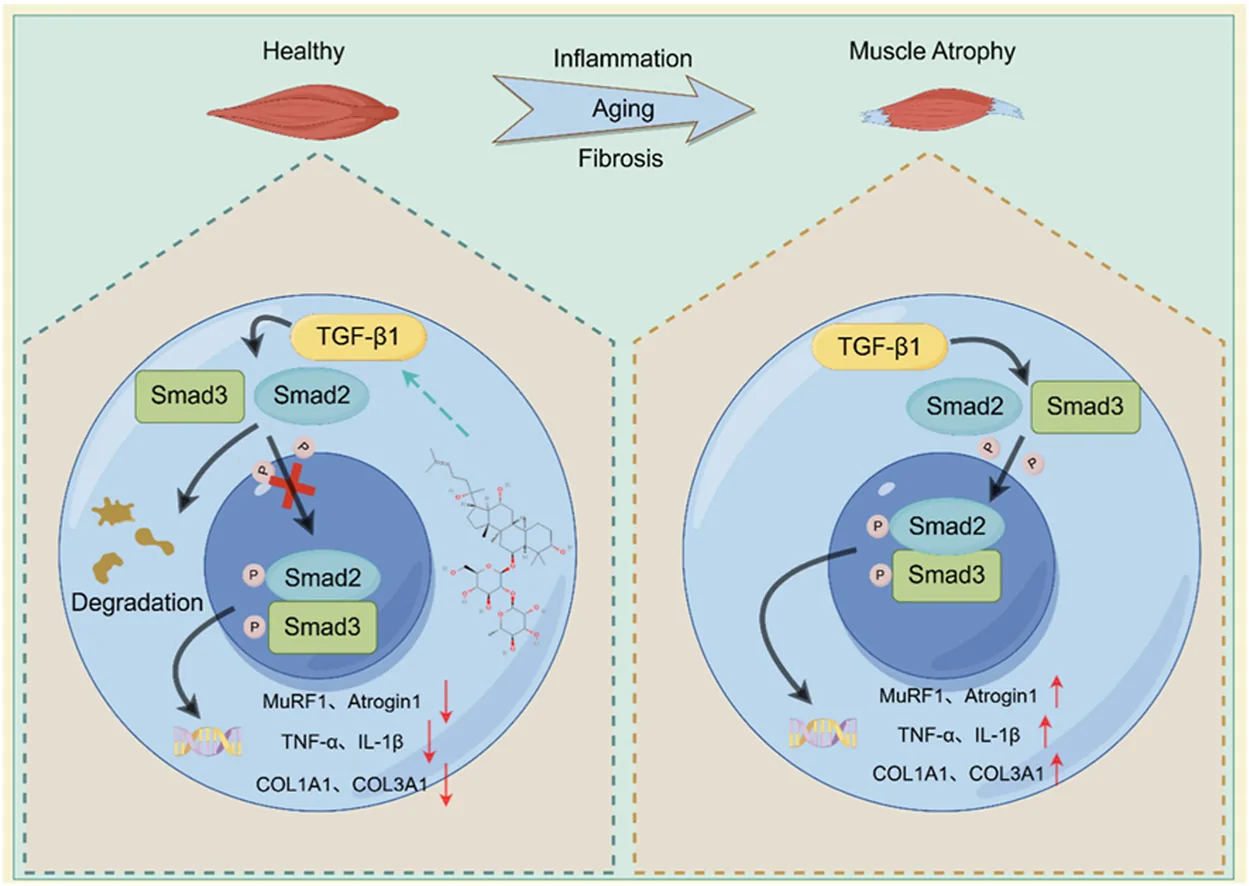
In aged male mice, researchers tested whether the compound ginsenoside Rg2 could ease sarcopenia, an age-related decline in muscle mass and strength. They measured grip strength and examined muscle tissue. Rg2 reduced fibrotic remodeling—the buildup and reorganization of scar-like tissue—and improved muscle mass, strength and exercise endurance. It also reduced age-associated weight gain.
The researchers also tested Rg2 in muscle cells grown in the lab. In both systems, Rg2 interacted with TGF-β1, a protein involved in scarring, and reduced a chemical modification of proteins that relay its signals. The authors suggested that Rg2 alleviated fibrosis and improved the inflammatory, scarring-related environment in aging skeletal muscle.
Why it matters
Sarcopenia can involve chronic inflammation and scarring as well as muscle decline. The findings suggest that this tissue environment may be a useful target for research into aging muscle.
Caveats
The experimental benefits were found in aged male mice, not established in people or female mice. The abstract does not report sample sizes, doses, treatment duration or effect sizes.
The paper
Guangzhou University of Chinese Medicine; Second Affiliated Hospital of Guangzhou Medical University
Journal of Ginseng Research, Jul 14, 2026, Open access


