Activin A is linked to muscle stem cell shifts in human aging
Transcriptomic profiling of human skeletal muscle paired with cell experiments identified inflammatory macrophages and Activin A signaling as candidate regulators of altered muscle stem cells.
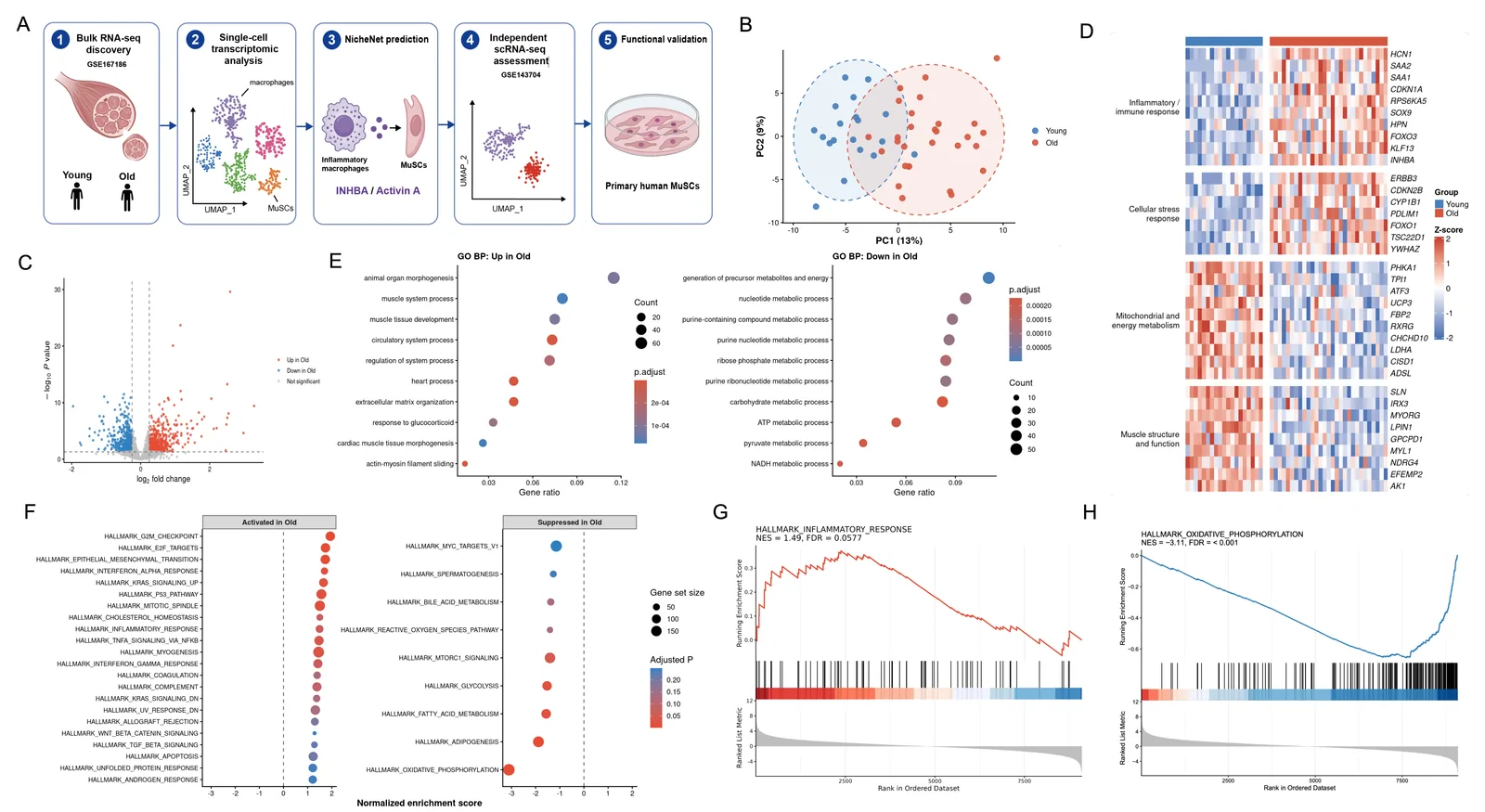
Analyzing bulk and single-cell RNA-sequencing data from human skeletal muscle, researchers characterized age-associated cellular shifts, including inflammatory activation, diminished metabolic programs, and increased macrophage-associated signatures. Inflammatory macrophages from aged muscle showed the highest SenMayo senescence scores, while early-primed muscle stem cells displayed age-associated remodeling involving inflammatory, interferon-related, and extracellular matrix programs.
Ligand-target modeling prioritized inhibin subunit beta A (INHBA), or Activin A, as a candidate signal connecting inflammatory macrophages to this stem cell remodeling, a pattern supported in an independent older adult cohort. In cultured primary human muscle stem cells, Activin A suppressed myogenic regulators and induced Activin-responsive genes, changes that were attenuated by the ALK4/5/7 inhibitor SB431542.
Why it matters
The findings suggest a candidate mechanism by which immune niche remodeling may contribute to declining regenerative capacity in aging human muscle.
Caveats
The initial signaling links were derived from observational, cross-sectional transcriptomic datasets, and functional tests were limited to primary cell cultures outside their native tissue context.
From the paper
- Limitation
The transcriptomic datasets were cross-sectional and derived from independent cohorts, and NicheNet provides predictive rather than causal evidence.
Quoted word for word from the full text on PubMed Central.
The paper
Chinese Academy of Medical Sciences & Peking Union Medical College
International Journal of Molecular Sciences, Sep 17, 2026, Open access, CC BY


