Bisphenol A caused aging-like injury in lab-grown human bladder cells
Experiments in primary human bladder-lining cells found that silencing the gene for ACSL4, a protein, or adding vitamin C lessened the chemical’s effects.
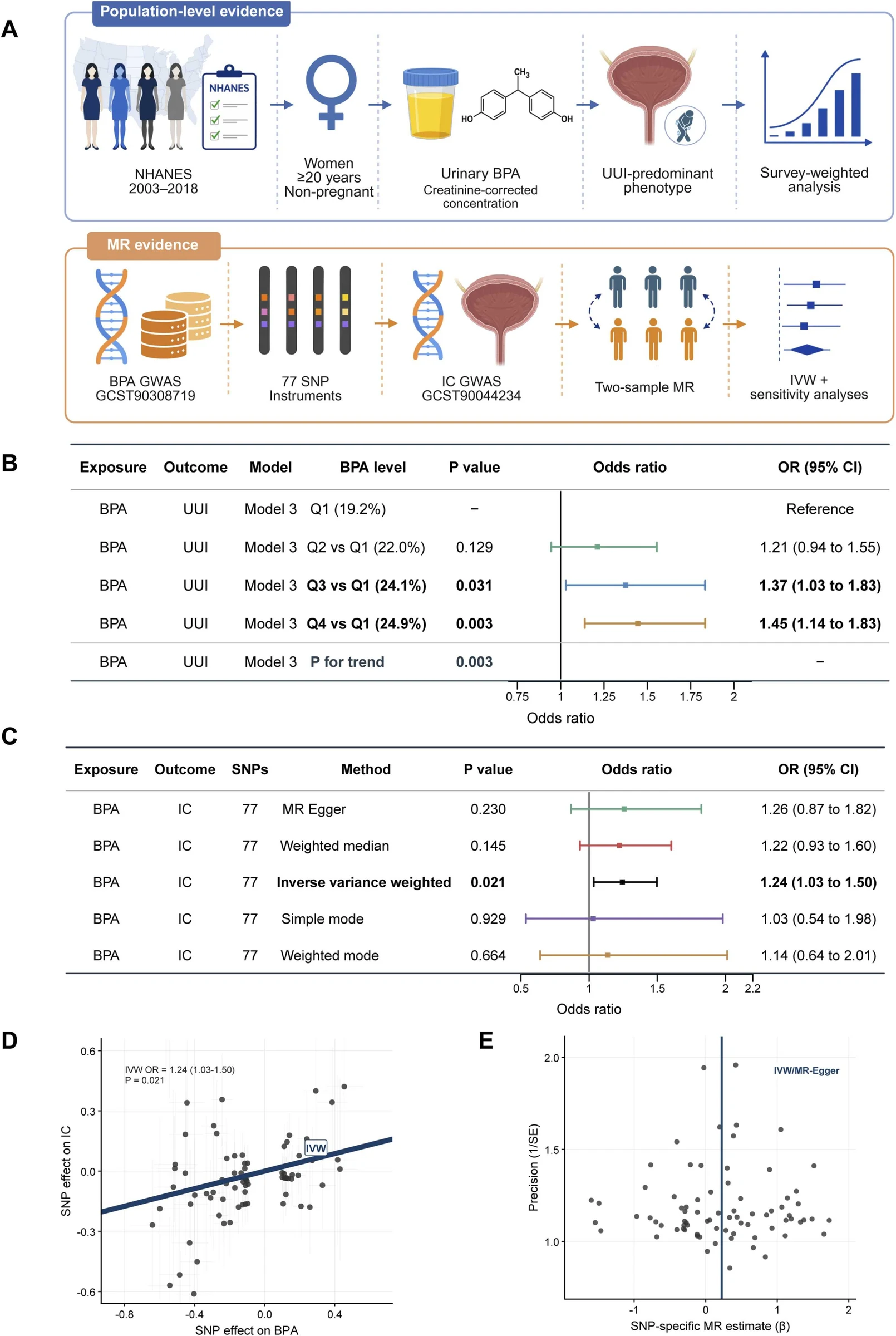
Limit: Aging-associated cell changes do not measure accelerated aging over a lifespan
Edited by Boris Djordjevic · AgingResearch.News
In experiments in primary human urothelial cells—the cells that line the bladder—bisphenol A increased iron buildup, damage to fats and signs associated with senescence, a state in which cells stop dividing. It also increased inflammatory signaling and weakened the cells’ barrier function. The chemical increased production of ACSL4, a protein. Silencing the gene for this protein or adding vitamin C lessened these changes.
In mice, a compound called PRGL493 and vitamin C each reduced several bladder abnormalities caused by bisphenol A. The researchers described the injury pattern as relevant to selected features of Hunner-type interstitial cystitis, an inflammatory bladder condition.
Why it matters
Persistent bladder-lining injury is a feature of Hunner-type interstitial cystitis. The work examines whether iron-related stress and processes associated with cell aging offer clues to that injury.
Caveats
The injury experiments used cells grown in the lab and mice; they do not establish that bisphenol A causes this bladder condition in people. Aging-associated cell changes are not evidence of accelerated aging over a lifespan.
Vitamin C is part of Rhonda Patrick's supplement routineMore supplements
The paper
Ecotoxicology and Environmental Safety, Oct 27, 2026, Open access


