Aged mice showed less growth of pregnancy-supporting uterine tissue
An experiment in young and aged virgin mice isolated uterine effects from ovarian and embryonic factors and found reduced tissue growth in older animals.

Limit: Lifelong ovarian aging could affect uterine growth despite controlled hormone treatment
Edited by Boris Djordjevic · AgingResearch.News
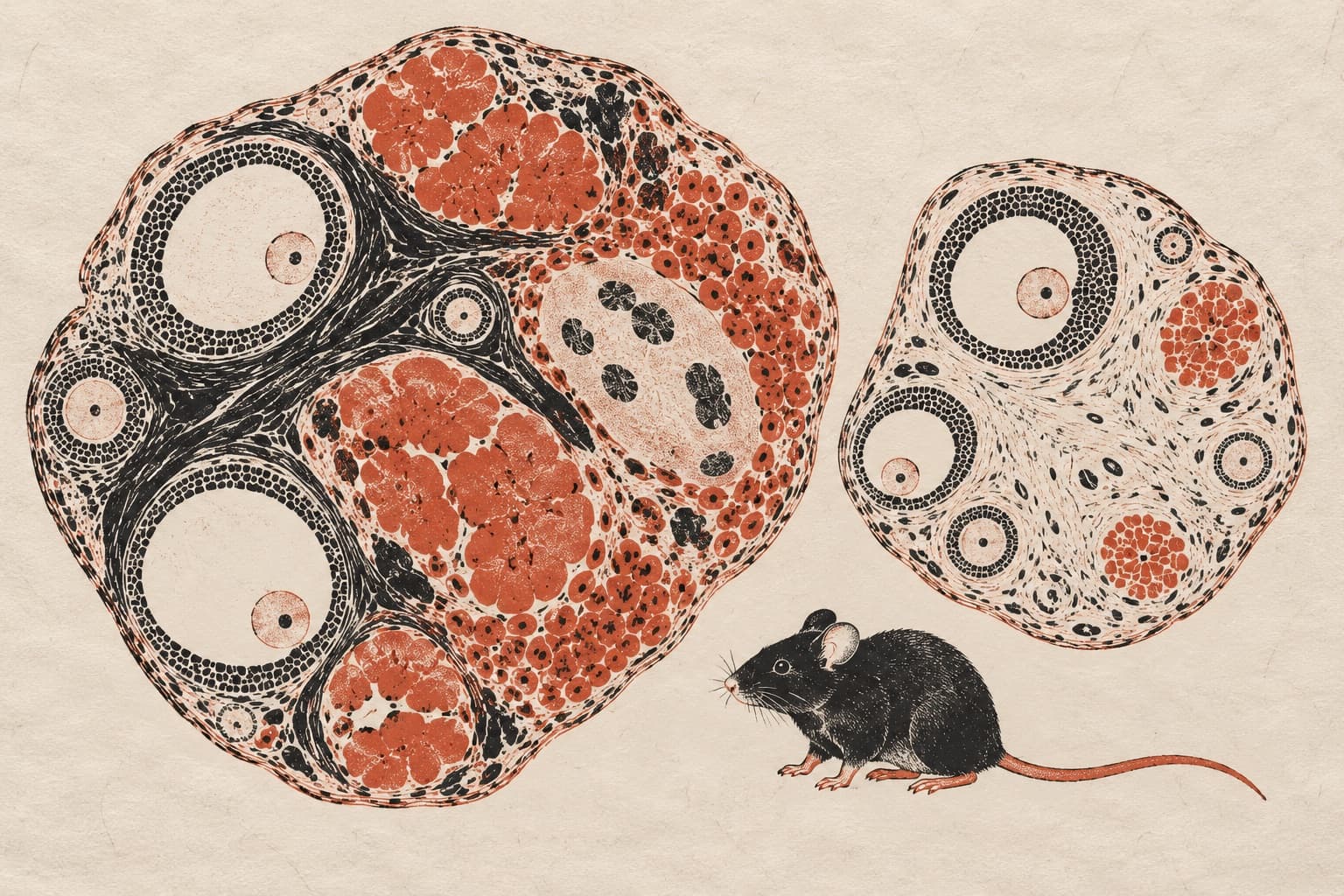
In an animal experiment, researchers compared young and aged virgin mice using an artificial model of decidualization, the process that prepares the uterine lining to support pregnancy. The model isolated uterine effects from those of the ovaries and embryos.
Aged mice showed markedly reduced expansion of this tissue. Their uteri showed altered levels and locations of proteins that sense progesterone, a hormone that helps prepare the uterus for pregnancy. Activity of genes responsive to that hormone was lower. Tissue analysis found increased accumulation of collagen, a structural protein, and impaired remodeling of the material surrounding cells. Separately, connective-tissue cells taken from aged uteri had less capacity to multiply and showed weaker activation of genes associated with decidualization.
Why it matters
The uterus must adapt to support pregnancy after an embryo implants. This work addresses how reproductive aging may disrupt that adaptation independently of aging eggs.
Caveats
The experiment artificially triggered uterine changes rather than following pregnancies, so it did not test pregnancy outcomes. The findings came from mice and cells taken from their uteri, not people.
From the paper
- Limitation
Although variability in decidual responsiveness was observed among aged mice, the current study was not designed to determine the biological basis of this variability.
Quoted word for word from the full text on link.springer.com.