Blood proteins offer a selective view of human tissue aging
Levels of 50 muscle proteins and 17 ovarian proteins correlated with their levels in blood plasma in an observational study of adults aged 20–87.
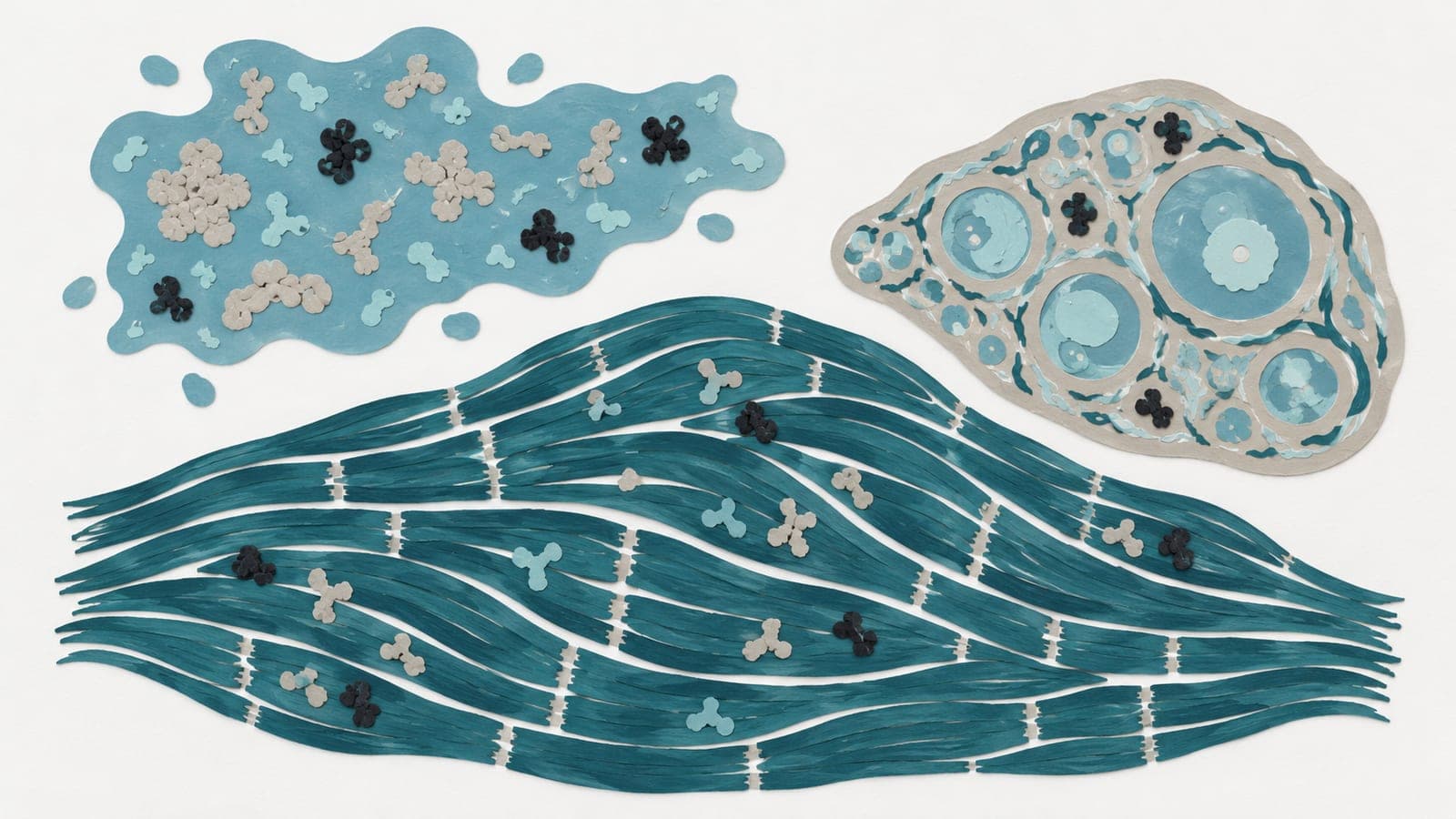
Limit: Tissue concordance estimates used only 56 muscle pairs and 24 ovary pairs
Edited by Boris Djordjevic · AgingResearch.News
Researchers profiled 5,415 proteins in an observational study of 178 adults aged 20–87. They analyzed blood plasma, the liquid part of blood, and tissue samples, including 56 matched plasma–muscle pairs and 24 matched plasma–ovary pairs. Only 50 muscle proteins and 17 ovarian proteins showed significant correlations between their levels in tissue and plasma.
Protein patterns associated with age also differed by sex and tissue. Female plasma showed immune and inflammation-related patterns. Male plasma showed patterns involving blood vessels and the material surrounding cells. Ovarian tissue showed patterns involving remodeling of collagen, a structural protein. The researchers concluded that plasma offered a selective, context-dependent view of tissue aging.
Why it matters
For efforts to measure human aging through blood proteins, the findings suggest a need to account for tissue and sex rather than assume a single body-wide signal.
Caveats
The observational associations do not show whether the proteins cause age-related changes. The tissue comparisons covered muscle and ovary, not all organs, and the preprint has not been peer-reviewed.
- Inflammation
- Apoptosis
- Cellular senescence
- Protein abundance and pathway signatures
- Protein coordination
- Humans
The paper
Buck Institute for Research on Aging, Novato, CA, USA; Thorne HealthTech, New York, NY, USA
bioRxiv, Oct 24, 2026, Open access, Preprint, not peer-reviewed