Reduced fat breakdown shifts muscle and fat loss in fasting mice
In a 10-week experiment, male mice with impaired fat breakdown lost more lean mass and less fat than control mice during intermittent fasting.

10 weeks
Limit: The experiment examined enzyme knockout effects, not ordinary differences in fat breakdown
Edited by Boris Djordjevic · AgingResearch.News
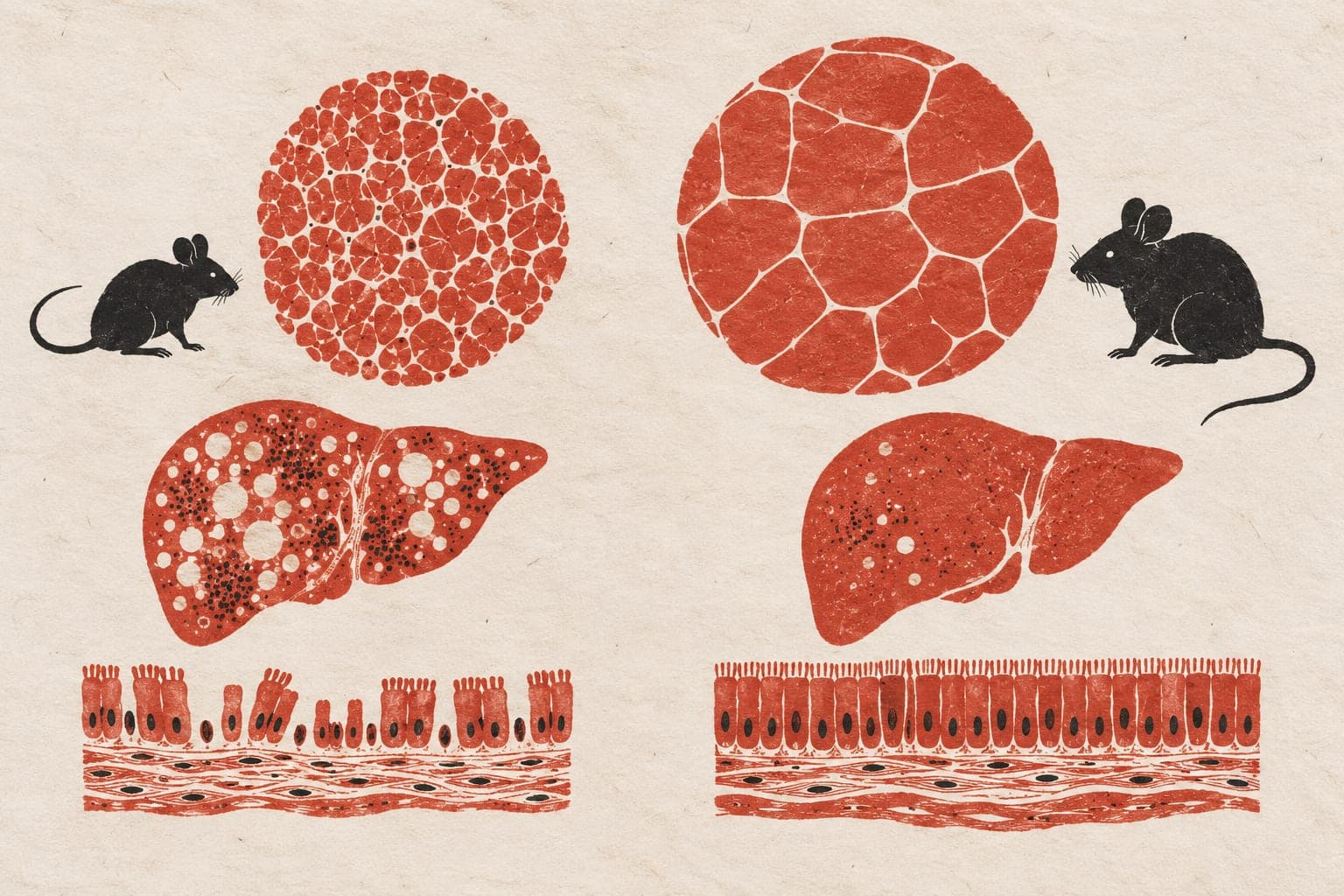
Male mice genetically altered to impair fat breakdown in fat cells and their littermate controls underwent a 10-week intermittent-fasting experiment. The alteration disabled a fat-cell enzyme that breaks down stored fat. Each week included two nonconsecutive 24-hour fasts and five days when the mice could eat freely.
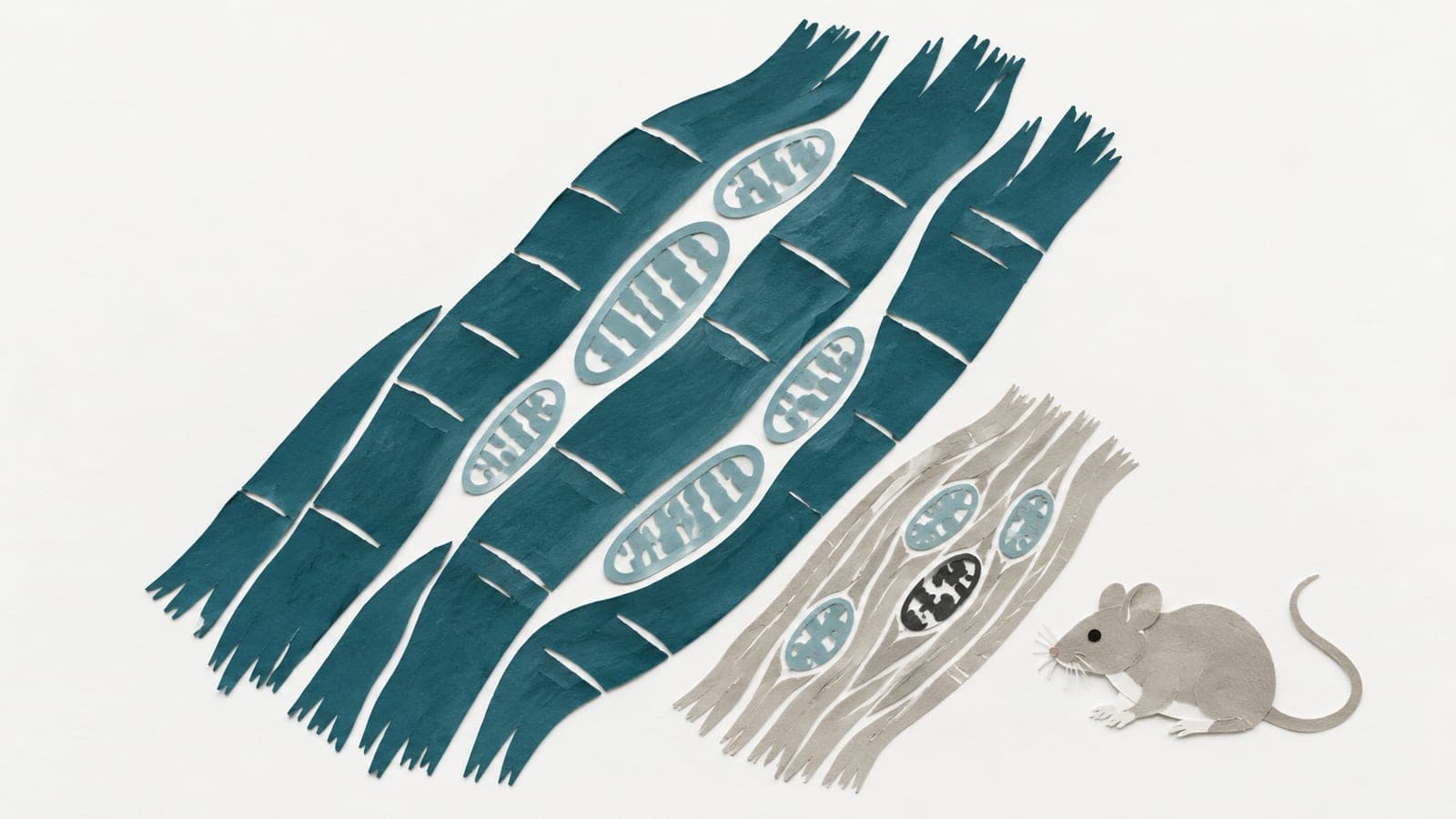
On a standard diet, the altered mice lost more lean mass—body mass other than fat—and less fat than controls. They also had smaller muscle fibers. When fed a high-fat diet, obese altered mice still had smaller muscle fibers than controls, whether they fasted intermittently or ate freely.
Why it matters
The work bears on how fasting might reduce fat while preserving muscle, a question relevant to healthy-aging research.
Caveats
The experiment disabled a fat-cell enzyme, rather than testing ordinary differences in fat breakdown. It studied only male mice and did not test aging or effects in people.
The paper
Adipocyte Lipolysis is a Determinant of Skeletal Muscle Size During Fasting and Feeding
McMaster University
American Journal of Physiology Endocrinology and Metabolism, Oct 19, 2026