Loss of the lipid enzyme PNPLA7 impairs skeletal muscle and mitochondria in mice
Researchers identified PNPLA7 as an essential regulator of phosphatidylcholine catabolism necessary for maintaining mouse muscle fiber size and endurance.
Cell Reports
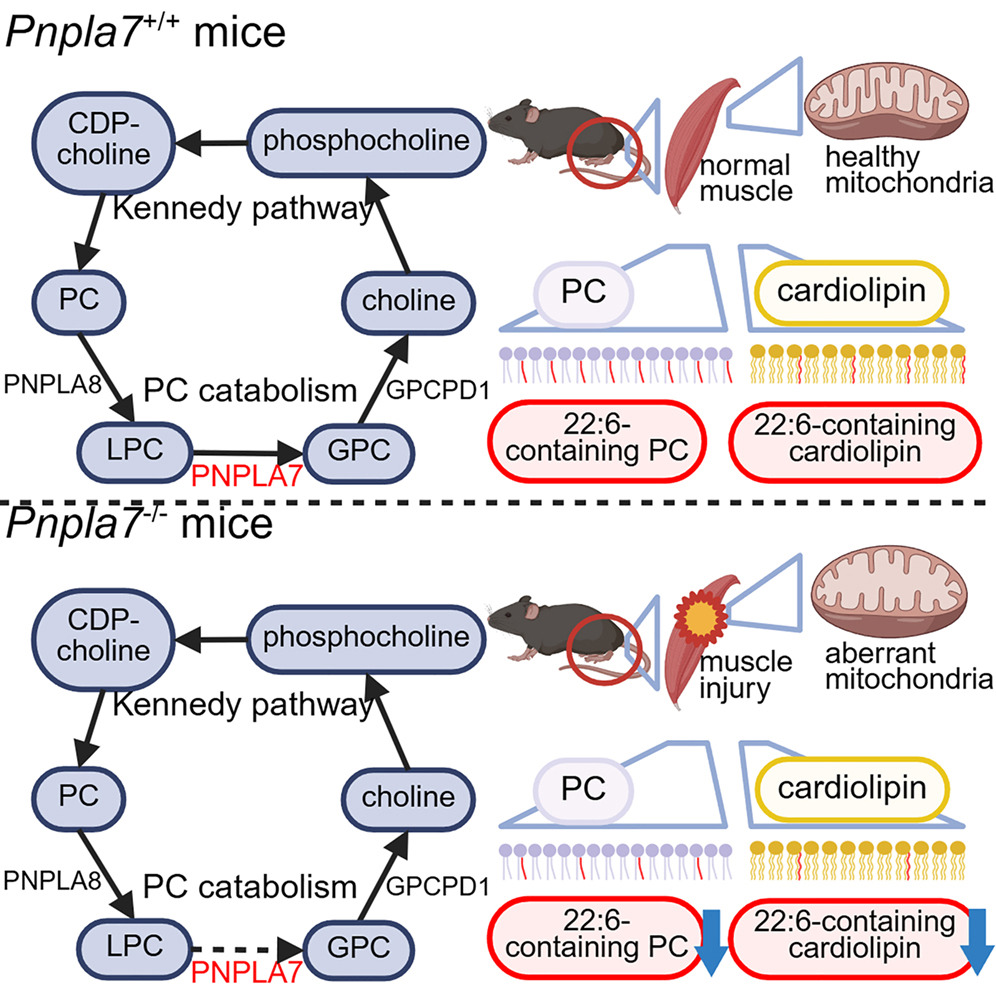
In mice and cultured mouse myoblasts, researchers examined the role of PNPLA7 in phosphatidylcholine turnover and skeletal muscle health. Deleting Pnpla7 in myoblasts blocked the conversion of lysophosphatidylcholine to glycerophosphocholine and choline. In mice, both global and muscle-specific Pnpla7 deficiency caused thinner quadriceps muscle fibers and abnormal mitochondrial structure. These animals also exhibited reduced endurance capacity. With age, the deficient mice showed decreased expression of genes linked to mitochondrial function, fatty acid beta-oxidation, and slow-twitch fibers. Before these muscle defects appeared, the researchers detected shifts in phospholipid composition, including lower levels of docosahexaenoic acid-containing phosphatidylcholine and mitochondrial cardiolipin. The findings identify PNPLA7 as a critical checkpoint enzyme for muscle homeostasis.
Why it matters
Disturbed lipid turnover can drive skeletal muscle decline. Pinpointing PNPLA7 clarifies how impaired phospholipid metabolism contributes to deteriorating mitochondrial health and reduced physical endurance with age.
Caveats
The study was conducted exclusively in mice and cell cultures, so the findings may not translate directly to human muscle aging.
- PNPLA7
- Fatty acid β-oxidation
- Lipid and ceramide metabolism
- Docosahexaenoic acid-containing phosphatidylcholine
- Cardiolipin
- Mice
The paper
Show 14 more authors
Takayoshi Higashi, Yuki Nagasaki, 弘泰 佐藤, Mai Kawaguchi, Yasumasa Nishito, Jonguk Park, Kenji Mizuguchi, Koji Hosomi, Jun Kunisawa, Kaori Saito, Keiko Kato, Tomoyoshi Soga, Tetsuya Hirabayashi, Sumito Ogawa,The University of Tokyo · Japan Agency for Medical Research and Development
Cell Reports · 30 Sep 2026