Young plasma particles increased bone mass in mice
Experiments in female mice with surgically induced osteoporosis found that young plasma exosomes, tiny membrane-enclosed particles, increased bone mass and favored anti-inflammatory immune cells.
Limit: Mice were euthanized after 4 weeks of treatment, preventing assessment of lasting bone gains
Edited by Boris Djordjevic · AgingResearch.News
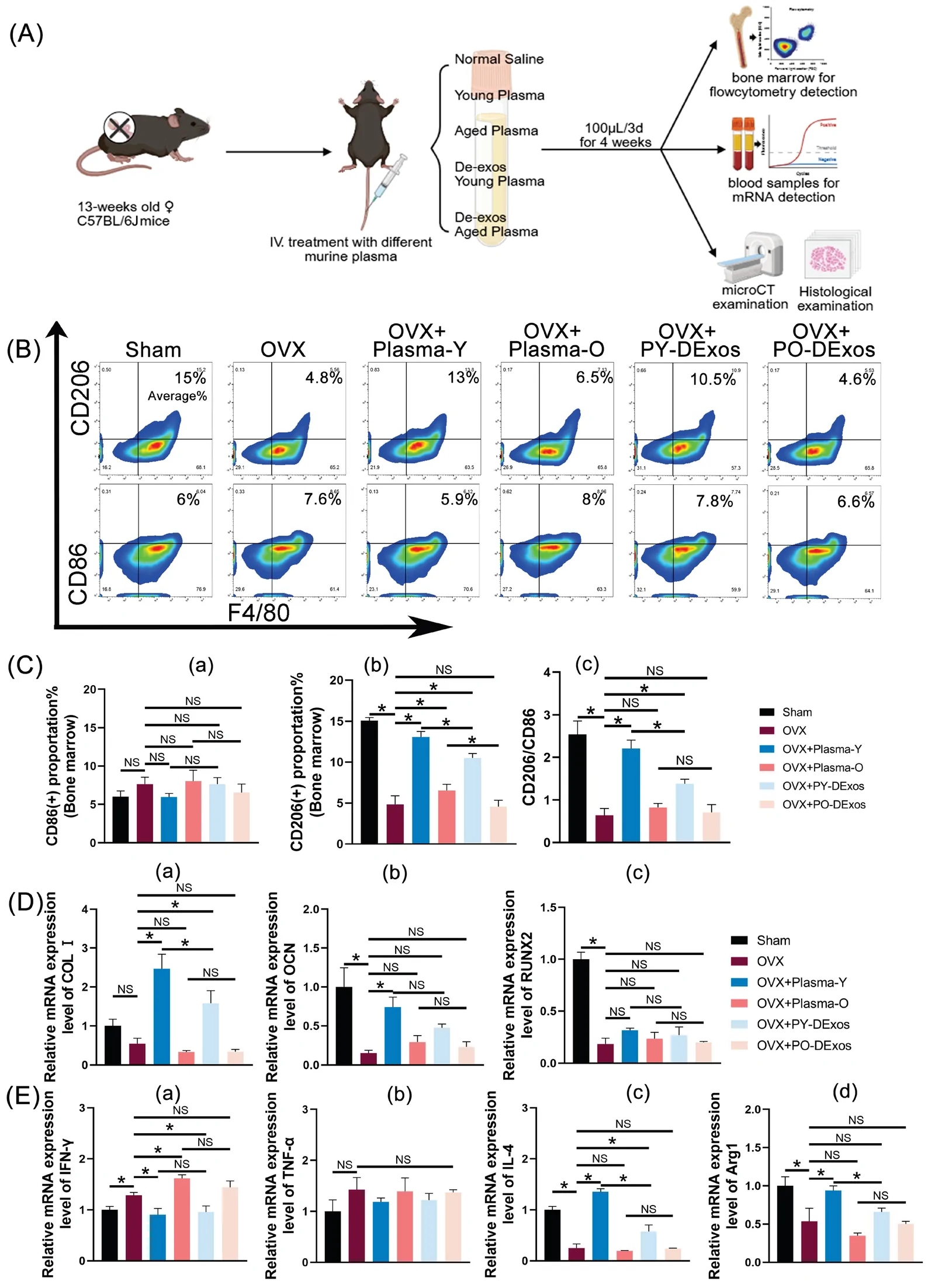
In 13-week-old female mice with their ovaries removed to model osteoporosis, treatment with young blood plasma improved bone mass, increased anti-inflammatory M2 macrophages, and raised bone-forming gene activity. These benefits were largely lost when exosomes, tiny membrane-enclosed particles, were removed from the plasma. When administered in mice, young plasma exosomes increased bone mass, raised markers of bone formation, and expanded blood progenitor cells. In lab experiments using exosomes from healthy human donors aged 18 to 35, the particles entered mouse bone marrow cells, stimulated stem cells to form bone, and pushed macrophages toward an anti-inflammatory state. The researchers identified YOD1, a protein carried in young exosomes, as a key driver. Delivering YOD1 activated mTOR signaling in macrophages to promote anti-inflammatory polarization and enhanced bone formation in stem cells through Hippo signaling.
Why it matters
Osteoporosis is an age-related disease involving bone loss. The work provides an experimental basis for investigating approaches that target the immune environment within bone.
Caveats
The experiments used surgically induced osteoporosis in mice and mouse cells grown in the lab, rather than naturally aged animals. They did not test benefits or harms in people with osteoporosis.
From the paper
- Limitation
Furthermore, although no obvious toxic or side effects of human-derived exosomes were observed in OVX mice, differences in immune compatibility in the xenogeneic model may have affected the results.
Quoted word for word from the full text on PubMed Central.
The paper
International Journal of Biological Sciences, Sep 18, 2026, Open access