Honokiol promotes bone formation and fracture repair in mice
In mice with bone loss or fractures, honokiol promoted bone formation predominantly linked to sirtuin 3, while broader effects appeared only partly dependent on the enzyme.
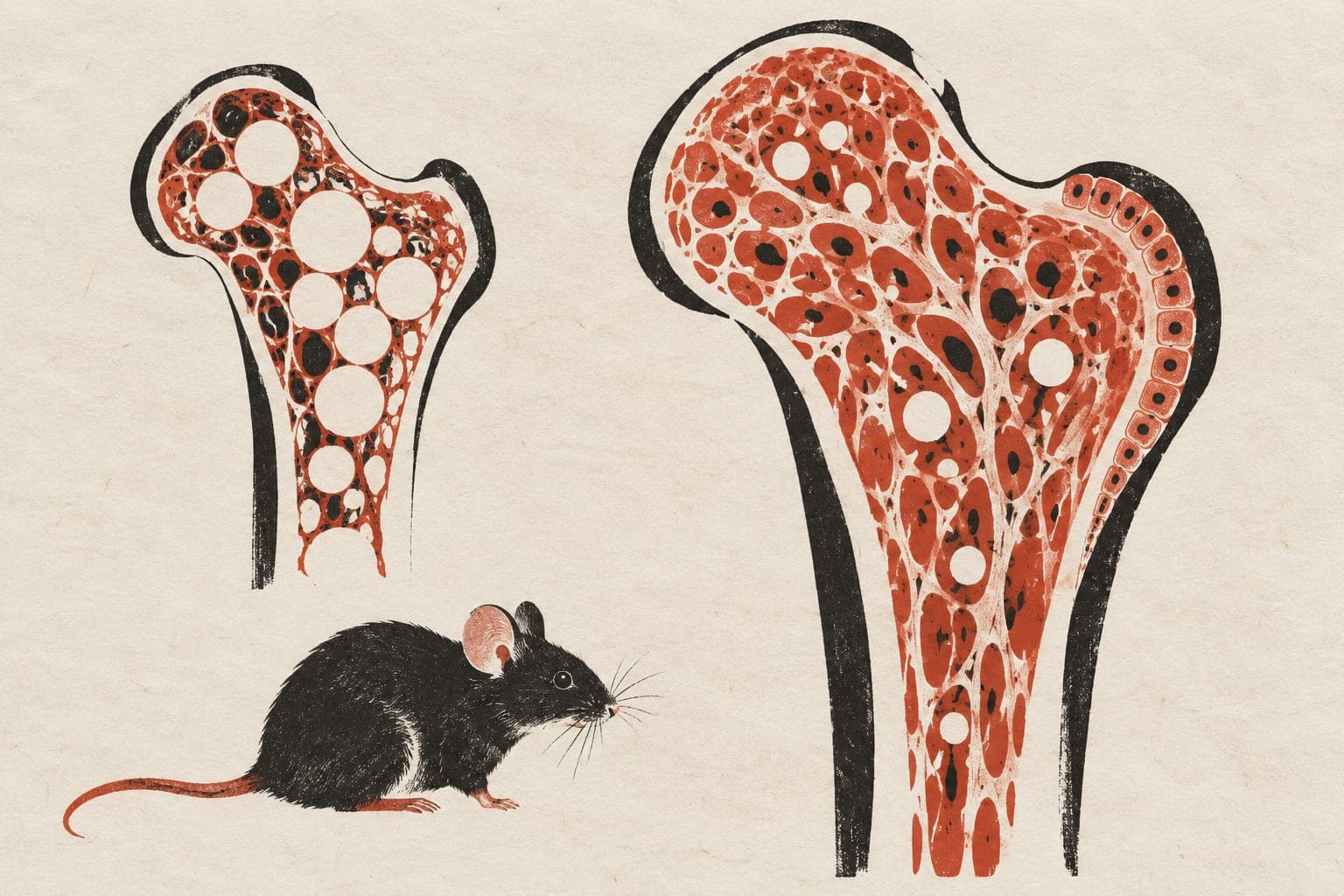
In experiments using mice and cultured mouse cells, researchers investigated whether honokiol, a natural plant compound, promotes bone remodelling and fracture repair through sirtuin 3. In cultured cells, honokiol increased sirtuin 3, enhanced bone mineralisation, and suppressed the development of fat cells and bone-resorbing cells. Knocking down sirtuin 3 markedly reduced bone formation, while effects on fat and bone-resorbing cells were only partly reduced. In mice with ovaries removed to model osteoporosis, honokiol improved bone architecture, bone-cell activity, and bone strength, while lowering marrow fat. In mice with fractured thigh bones, honokiol increased mineralised callus formation and biomechanical recovery. Locally inhibiting sirtuin 3 weakened these benefits, particularly for bone-forming and structural endpoints, with broader effects appearing only partly sirtuin 3-dependent.
Why it matters
Osteoporosis and bone fractures are major skeletal challenges that become more common with aging. Exploring whether sirtuin 3 pathways support bone-building processes bears on efforts to understand and target impaired bone remodelling.
Caveats
The results come from lab experiments in mice and cultured cells, which may not reflect human biology. The researchers did not evaluate honokiol in people or examine its long-term safety.
The paper
The First Affiliated Hospital
Pharmaceutical Biology, 9 Oct 2026