Shared genetic factor links small vessel brain disease traits
The combined genetic analysis identified 14 DNA regions, including two not detected in analyses of any individual trait.
Limit: The analysis did not measure whether cellular senescence causes small vessel disease
Edited by Boris Djordjevic · AgingResearch.News
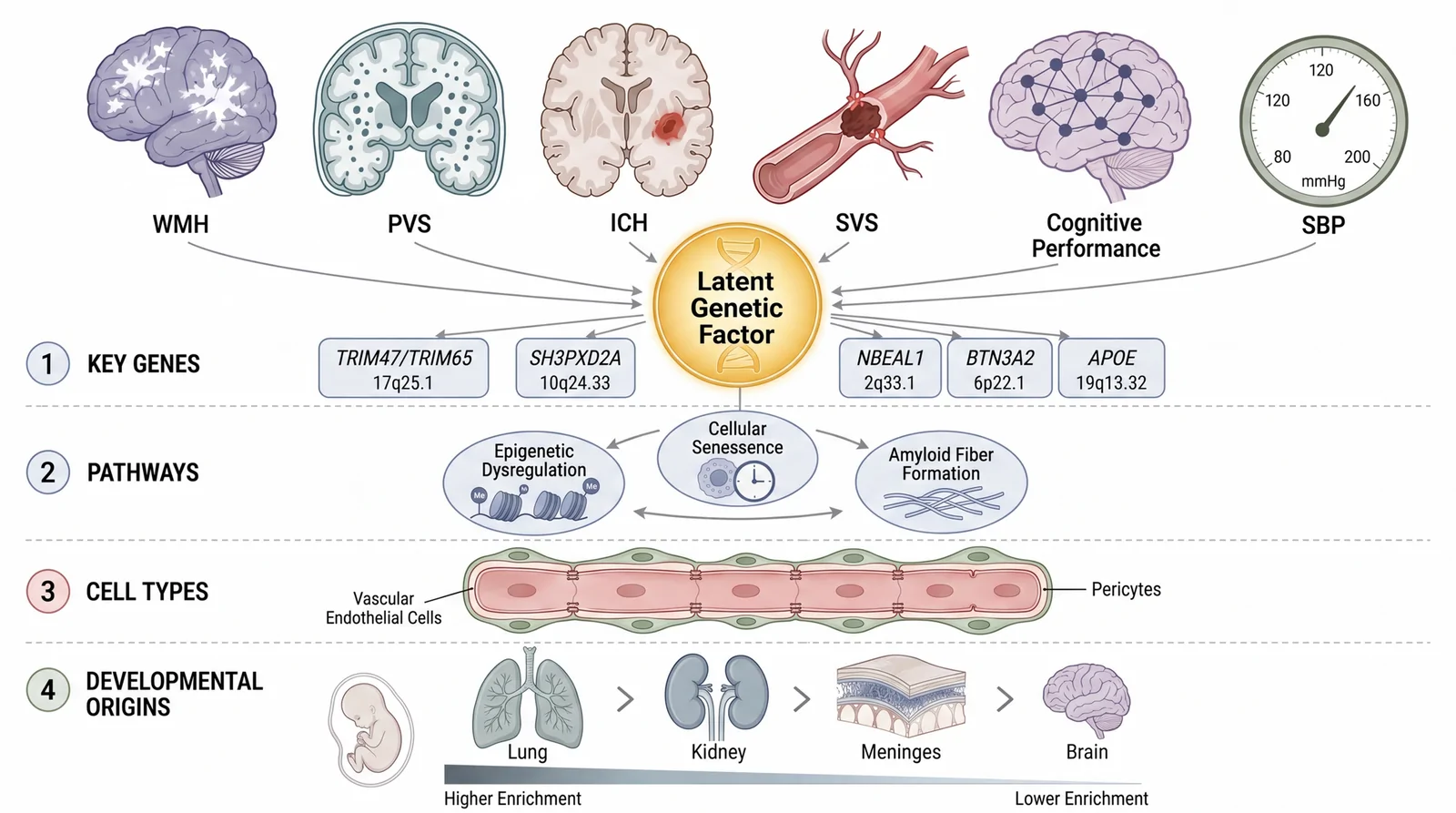
A computational analysis used summary results from human genetic studies to examine six measures related to cerebral small vessel disease, which affects the brain’s small blood vessels. These included brain-scan changes, brain bleeding, small vessel stroke, thinking performance and systolic blood pressure—the pressure when the heart contracts.
Researchers fitted a statistical model that supported shared genetic influences across the measures. The combined analysis identified associations in 14 distinct DNA regions, including two that no individual-trait analysis had detected at the threshold for genome-wide significance. Further analyses highlighted cells lining and supporting blood vessels, alongside processes involving control of gene activity and cellular senescence, a state in which cells stop dividing.
Why it matters
Cellular senescence offers a starting point for investigating whether aging-related cell changes contribute to disease in the brain’s small blood vessels.
Caveats
The findings came from computational analyses of genetic associations, not experiments testing whether the implicated biological processes cause disease. The abstract did not report participants’ numbers, ages or ancestry.
- Cellular senescence
- Epigenetic regulation of gene expression
- Proteostasis
- Cerebral small vessel disease
- Small vessel stroke
- Humans
The paper
A latent genetic factor underlies multiple component phenotypes of cerebral small vessel disease
First Affiliated Hospital of Hunan University of Traditional Chinese Medicine
BMC Neuroscience, Jul 27, 2026, Open access