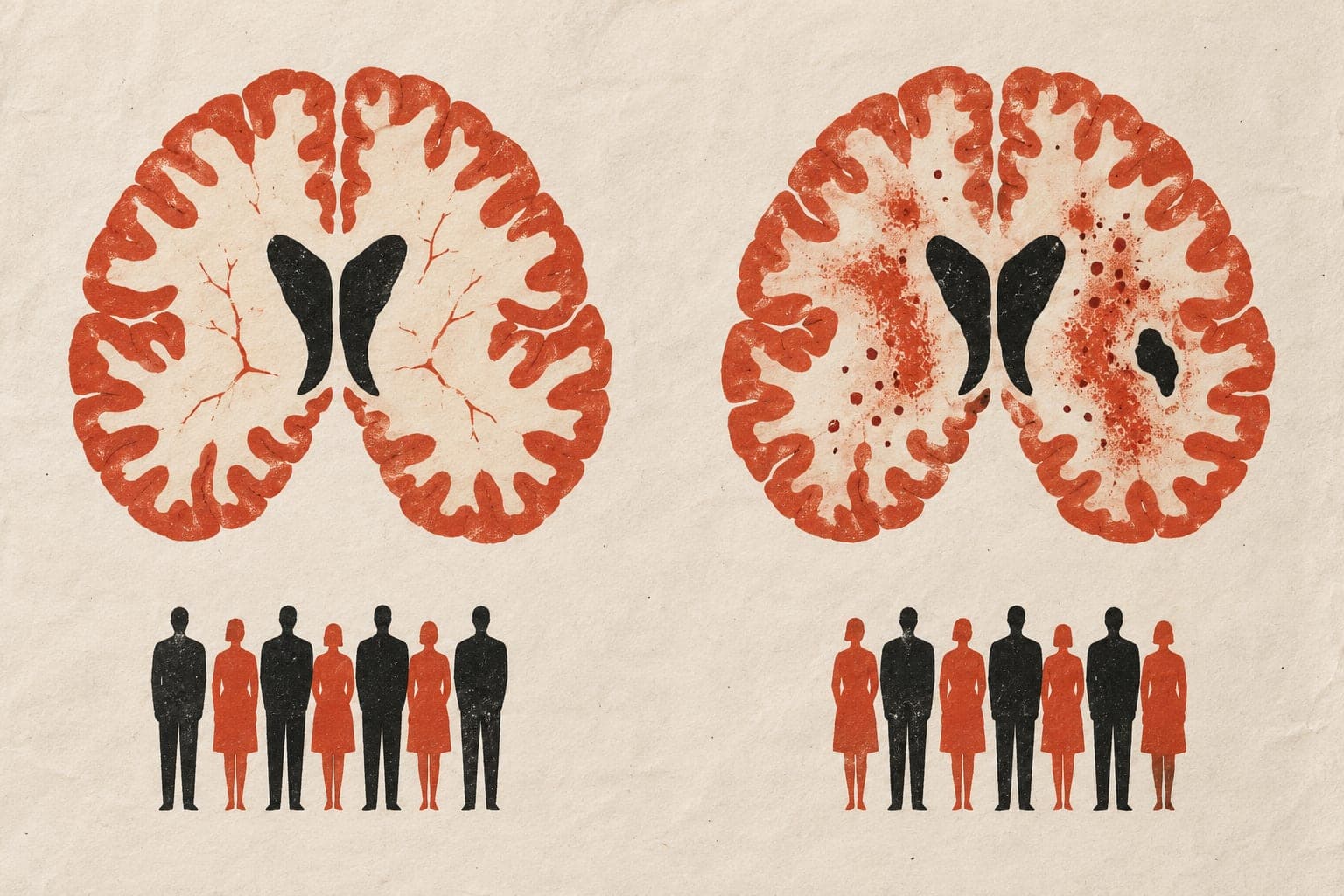
Brain small-vessel disease differed by ethnic and racial group
Black participants’ odds of greater combined disease burden were 1.66 times those of South Asian participants and 2.36 times those of Chinese participants.
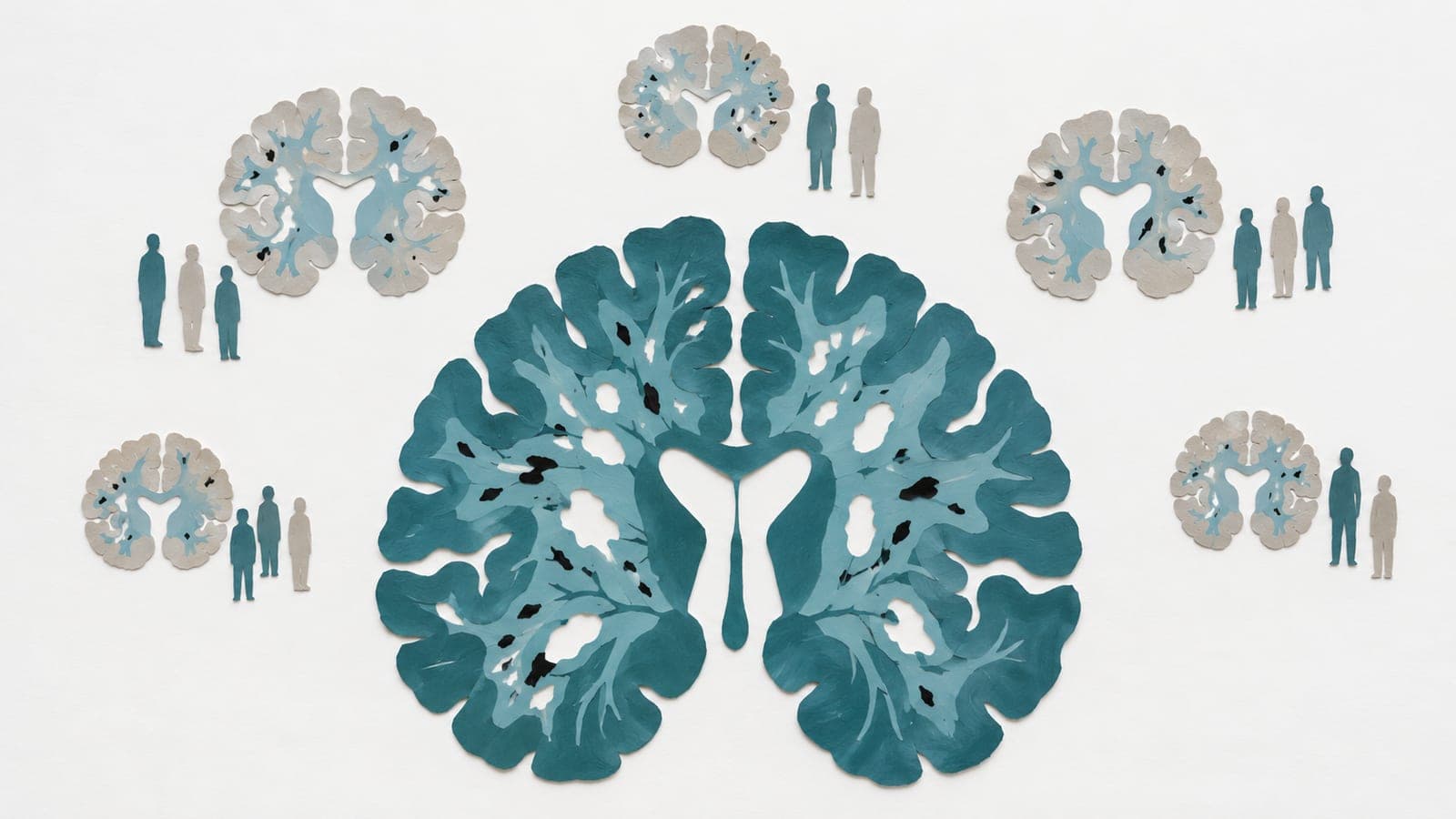
This cross-sectional study compared brain scans and thinking abilities in 44,982 White, South Asian, Black, Chinese and Mixed participants. Researchers combined scan signs of disease in the brain’s small blood vessels into two scores. An age- and sex-matched subset of 1,426 had ratings for tiny bleeds and small cavities from tissue damage reviewed for the more detailed score.
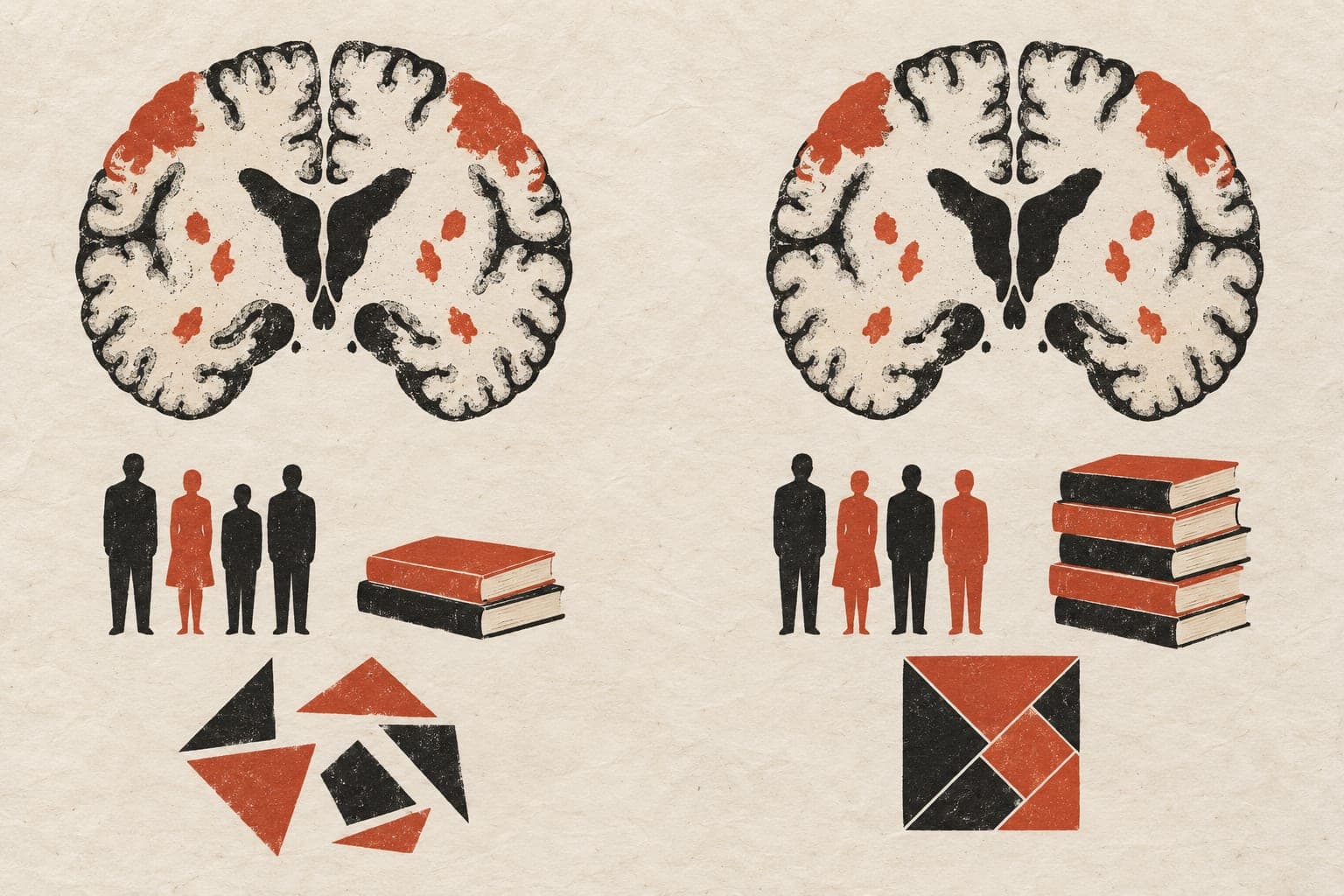
Combined burden differed across groups, but researchers detected no Black–White difference in the combined scores. Black participants had more bright areas in white matter, the brain tissue containing nerve fibres, than White participants. Better cardiovascular health was associated with fewer of these changes and lower combined burden across groups. Black and South Asian participants scored lower on overall thinking abilities than White participants. These cognitive differences did not track small-vessel disease burden.
Why it matters
The study addresses whether cardiovascular health and brain-vessel disease help account for differences in thinking abilities, a question relevant to cognitive aging. The authors supported longer-term studies of prevention and cognition.
Caveats
The cross-sectional design cannot show cause and effect or how these measures changed over time. This preprint has not been peer-reviewed, and comparisons involving tiny bleeds and small cavities were inconclusive.
- Cerebral small vessel disease
- Cerebral lacunes
- Cerebral microbleeds
- Cerebral microbleed counts
- Enlarged perivascular space count
- Humans
The paper
University of New South Wales
medRxiv, 13 Oct 2026, CC BY-NC-ND, Preprint, not peer-reviewed