Blood protein scores may refine cardiovascular risk estimates
Protein scores reclassified 18.6% of people traditionally assessed as intermediate risk into high risk; their 10-year cardiovascular event rate was 10.9%.
Limit: Protein scores incorrectly moved 20 of 106 future cases from intermediate to low risk
Edited by Boris Djordjevic · AgingResearch.News
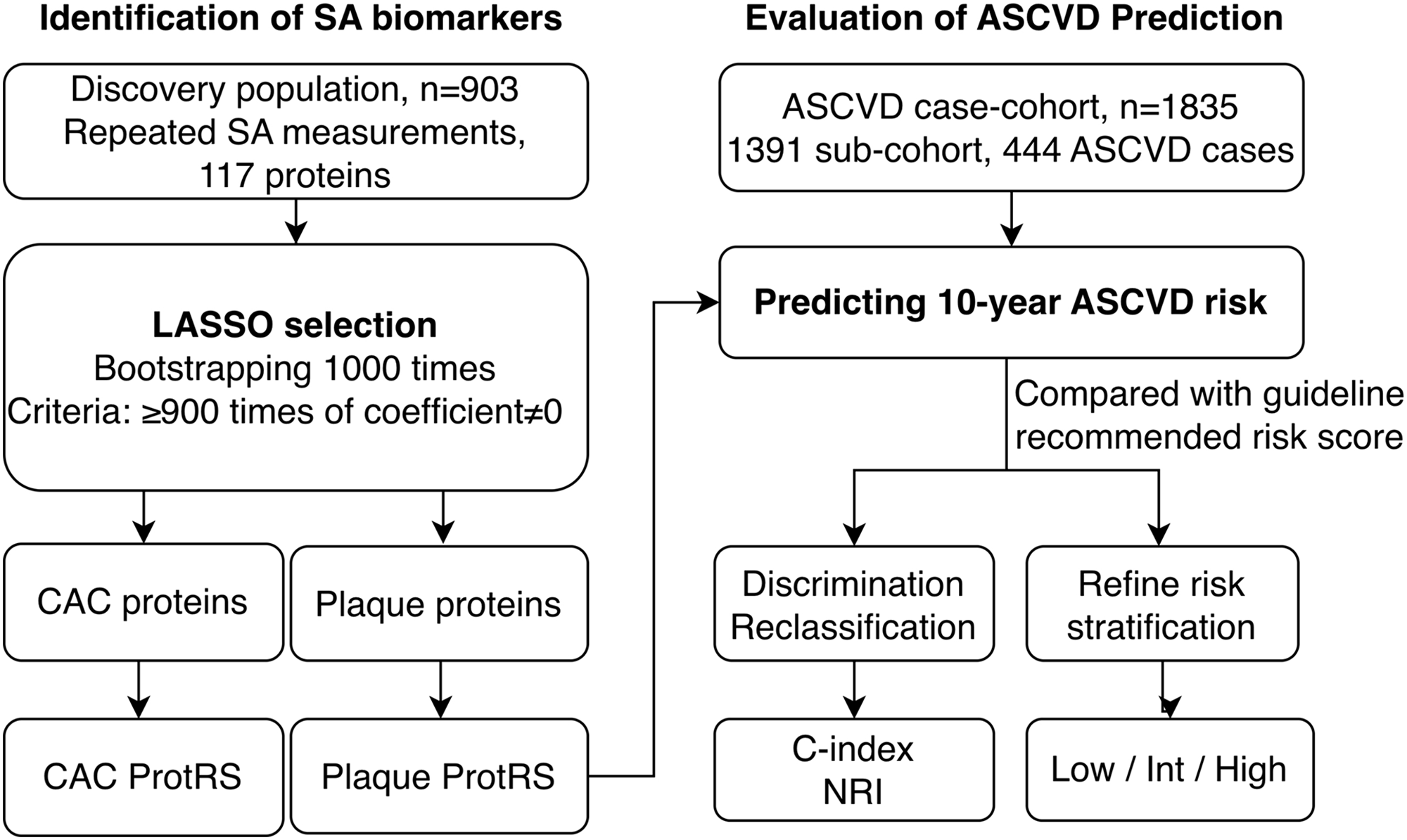
In an observational cohort study, researchers assessed artery changes in 903 people from a community cohort over six years. They measured calcium in heart arteries or plaque in neck arteries to track atherosclerosis, the buildup of plaque in arteries. From 117 blood proteins, they developed two scores, each using 14 proteins, for predicting progression.
The researchers then evaluated cardiovascular risk prediction in a case-cohort analysis of 1,835 people followed for a median of 10.4 years. Higher protein scores were associated with higher risk of cardiovascular disease caused by atherosclerosis. Adding the protein scores to a traditional risk score improved risk classification. The researchers concluded that the scores may add value to traditional assessment and potentially help guide targeted prevention.
Why it matters
Atherosclerosis is a disease associated with aging. Identifying risk before symptoms appear may help guide decisions about earlier prevention.
Caveats
This observational study assessed prediction, not whether score-guided care prevented cardiovascular events. The scores need large-scale validation in other populations.
From the paper
- Participants
This initial case-cohort comprised 1,449 sub-cohort individuals and 501 additional incident cases after a median follow-up period of 10.4 years.
- Follow-up
… and their predictive abilities for incident ASCVD risk were evaluated based on a guideline-recommended traditional risk score in a case-cohort of 1,835 individuals (2007–2008 to 2018–2021, median follow-up of 10.4 years).
- Result
After adjusting for traditional risk factors, each SD increase in the CAC ProtRS was associated with an RR of 1.26 (95% CI [1.16,1.36]; p < 0.001) for CAC progression, and each SD increase in the plaque ProtRS yielded an RR of 1.25 (95% CI [1.18,1.33]; p < 0.001) for plaque progression.
Results, Constructing protein risk scores driving SA progression
- Events by group
As expected, SA progression rates increased across ProtRSs groups, with CAC progression occurring in 14.6%, 30.8%, and 60.6% of individuals in the low, intermediate, and high CAC ProtRS groups, respectively.
Results, Constructing protein risk scores driving SA progression
Quoted word for word from the full text on journals.plos.org.


