AI detects coronary calcium in adults with zero scores
In individuals with conventional zero scores, AI-detected calcium tracked a 7.7% 20-year coronary heart disease incidence compared with 3.8% in those without.
American Journal of Preventive Cardiology
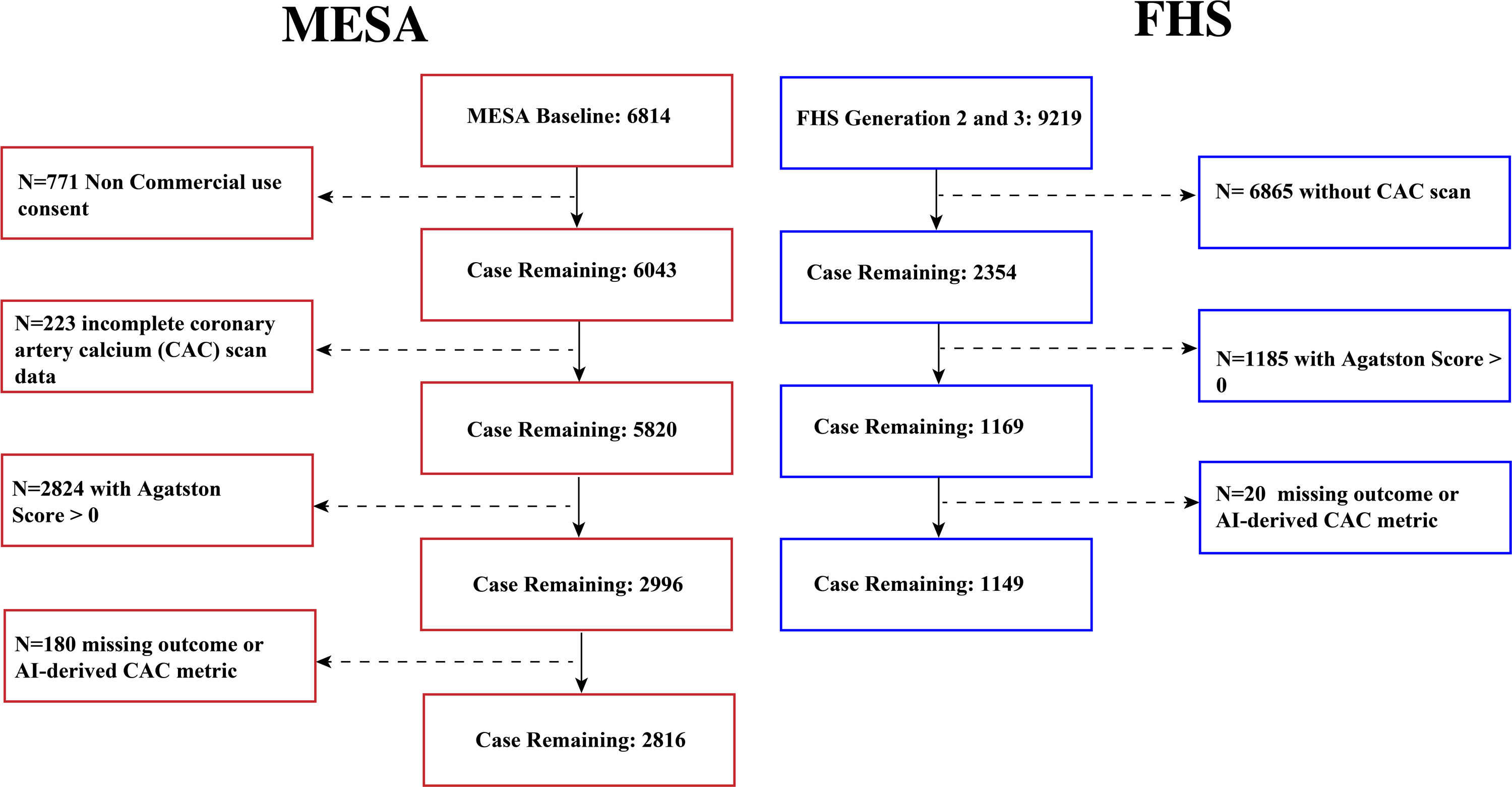
In a pooled analysis of 3,965 human participants from the Multi-Ethnic Study of Atherosclerosis and the Framingham Heart Study with conventional coronary artery calcium scores of zero, an artificial intelligence tool identified previously undetected calcification. Conventional Agatston scoring uses fixed thresholds and thick slices that can miss early, small, or low-density plaques. The new Agatston-2.0 method applies continuous voxel-wise quantification without fixed attenuation thresholds to detect early arterial changes.
The AI framework detected calcium in 862 participants, representing 21.7% of the cohort. Over up to 20 years of follow-up, participants with positive AI-derived calcium scores experienced higher coronary heart disease incidence (7.7% versus 3.8%) and higher adjusted risk of incident disease (hazard ratio 1.71). A positive AI score also predicted progression to a positive conventional calcium score (adjusted hazard ratio 1.95).
Why it matters
Coronary calcification is a hallmark of vascular aging and cardiovascular risk. Identifying subclinical calcification in people previously thought to have zero burden could improve early detection of age-related arterial disease.
Caveats
The study is observational and pooled data from two cohorts, meaning the AI framework requires validation in additional populations before it can be used as a standard clinical measure.
The paper
Show 28 more authors
Anthony P. Reeves, Chenyu Zhang, Seyed Reza Mirjalili, MohammadHossein MozafaryBazargany, Amir Ghaffari Jolfayi, Ali Hashemi, Thomas L. Atlas, Jakob Wasserthal, Rozemarijn Vliegenthart, Claudia I. Henschke, David F. Yankelevitz, Andrea D. Branch, Sion K. Roy, Jamal S. Rana, Zahi Adel Fayad, Oren Mechanic, Koen Nieman, Jagat Narula, Roxana Mehran, Prediman K. Shah, John A. Rumberger, Kim Allan Williams Sr., Paolo Raggi, David Joel Maron, Michael V. McConnell, Robert Alan Kloner, Matthew J. Budoff, Nathan D. Wong,HeartLung.AI · The Agatston Center
American Journal of Preventive Cardiology · 6 Jun 2026