Exercise reduced cognitive decline in Alzheimer’s model mice
In a three-month experiment in genetically engineered mice, exercise enhanced the breakdown of fat droplets in the brain and reduced their buildup.
Limit: Behavior was measured only after treatment, without tracking cognitive decline within individual mice
Edited by Boris Djordjevic · AgingResearch.News
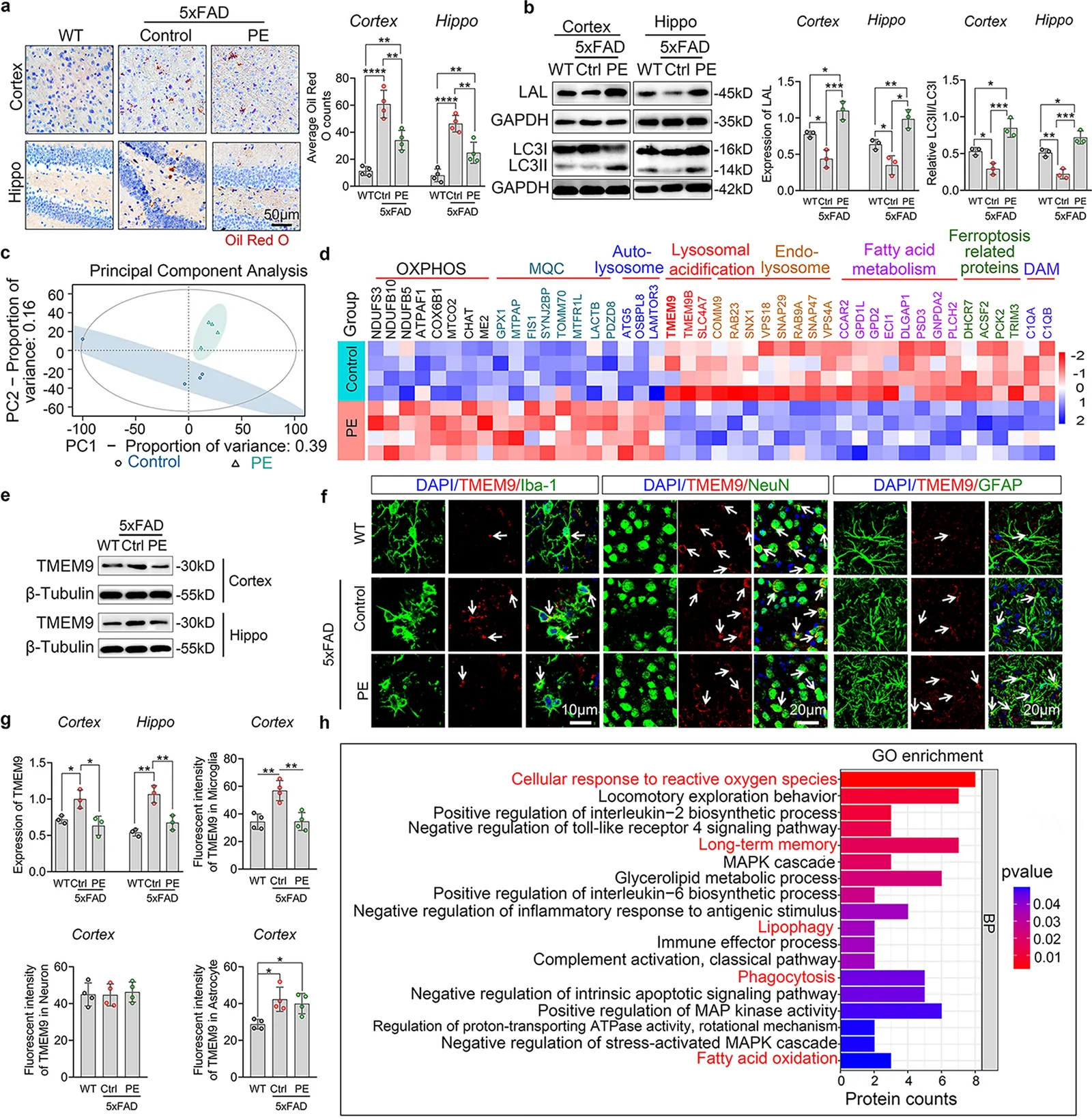
Genetically engineered 5×FAD mice used to model Alzheimer’s disease underwent three months of exercise in an animal experiment. The researchers assessed cognitive and emotional behavior using behavioral tests. They also examined fat droplets and cell structures in the brain.
Exercise reduced brain fat-droplet buildup through enhanced lipophagy, a cellular recycling process that breaks down fat droplets. It also helped preserve mitochondria, the cells’ energy-producing structures, and reduced cognitive decline. Exercise lowered levels of TMEM9, a protein in microglia, the brain’s immune cells. This reduction helped restore the breakdown of fat droplets.
Why it matters
Disrupted fat handling contributes to Alzheimer’s disease progression. The work suggests that cellular fat recycling may offer a target for research into slowing this age-related disease.
Caveats
The exercise findings came from a genetically engineered mouse model, not a trial in people. They do not establish whether exercise affects this fat-recycling process or cognitive decline in people with Alzheimer’s disease.
Exercise is part of Bryan Johnson's Blueprint
The paper
Sun Yat-sen University
Translational Neurodegeneration, Oct 19, 2026, Open access


