Population pharmacokinetic-pharmacodynamic modeling and dose selection of GS1-144 based on luteinizing hormone suppression in postmenopausal women
Abstract
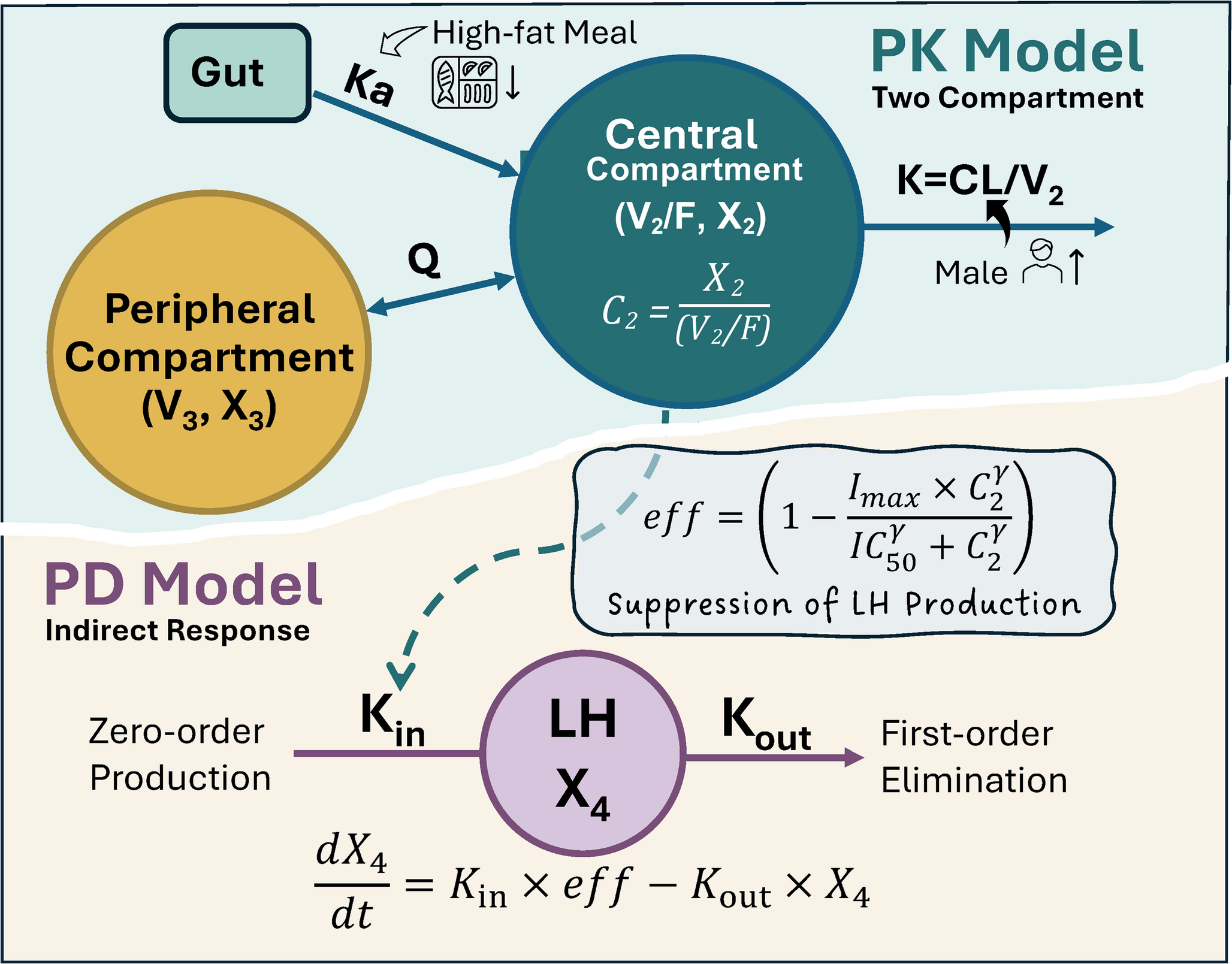
GS1-144 is a novel neurokinin-3 receptor (NK3R) antagonist under development for the treatment of vasomotor symptoms (VMS) associated with menopause. Suppression of luteinizing hormone (LH), a downstream marker of hypothalamic kisspeptin-neurokinin B-dynorphin (KNDy) neuronal activity, provides a measurable peripheral pharmacodynamic marker of central NK3R antagonism. The objective was to select a dose and dosing frequency for Phase II. A population pharmacokinetic-pharmacodynamic (PK-PD) model was developed using data from postmenopausal women. Individual pharmacokinetic parameter estimates were carried into a turnover model of serum LH. Model-based simulations using Bayesian estimates predicted GS1-144 and LH profiles for 7 days under once-daily doses of 30, 45, 60, and 90 mg and twice-daily doses of 15, 30, and 60 mg. Pharmacodynamic (PD) metrics included the minimum LH concentration, the maximum percentage reduction from baseline, and the LH area under the curve below baseline. GS1-144 produced dose-dependent LH suppression across once-daily and twice-daily regimens. Simulated LH profiles showed a rapid onset followed by recovery. 30 mg once daily, 60 mg once daily and 30 mg twice daily differed in depth and duration of suppression: 60 mg once daily gave the deepest suppression and 30 mg twice daily the largest integrated suppression at lower peak exposure. Integrated evaluation of absolute LH suppression, relative reduction from baseline, and sustained PD effects support GS1-144 doses of 30 mg once daily, 60 mg once daily, and 30 mg twice daily as providing pharmacologically meaningful NK3R target engagement. These regimens are recommended for Phase II evaluation in VMS associated with menopause.
- Gs1-144
- Modelling and theory
- TACR3
- Sex hormone signalling (oestrogen, androgen)
- Luteinizing hormone
- Humans
The paper
Ltd.
Journal of Pharmacokinetics and Pharmacodynamics, 16 Oct 2026