Menopause linked to abrupt shifts in several body systems
An observational analysis of two cohorts totalling 300 million laboratory tests linked the final menstrual period to abrupt changes across several body systems.
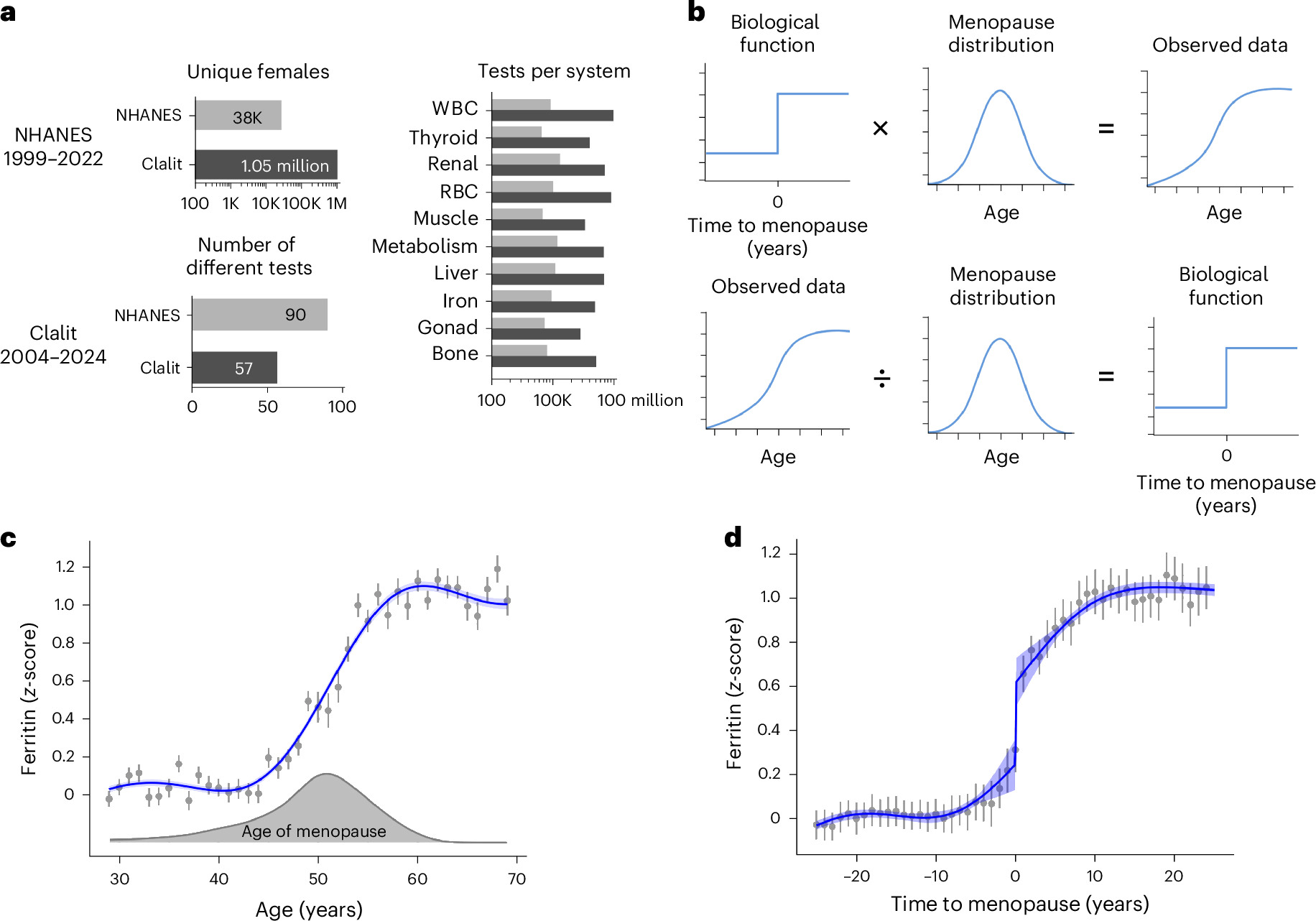
Researchers analysed cross-sectional data from female and male individuals in two independent cohorts totalling 300 million laboratory tests in an observational study of menopause. They used a computer-based method to reconstruct patterns around the final menstrual period. The method removed blurring caused by differences between individuals in the age at which that period occurred.
The reconstructed patterns showed abrupt shifts around the final menstrual period in systems involving hormones, bones, the liver, the kidneys and lipids, or fats. These shifts were absent in male individuals and agreed across the populations. They appeared markedly less pronounced with menopausal hormone therapy. Disrupted regulation of body functions began more than a decade before the final menstrual period.
Why it matters
Menopause reshapes female physiology as women age. The approach offers a way to study this transition when the timing of the final menstrual period is missing from large datasets.
Caveats
The patterns were reconstructed from cross-sectional data, rather than by following the same individuals through menopause. The hormone therapy finding was observational and does not establish that therapy caused the difference.
The paper
Weizmann Institute of Science
Nature Medicine, 12 Oct 2026