Heart risk models overestimated risk after menopause
At age 58, a blood fat marker threshold corresponded to 10.88% 10-year major cardiovascular event risk in men versus 4.34% in women after menopause.
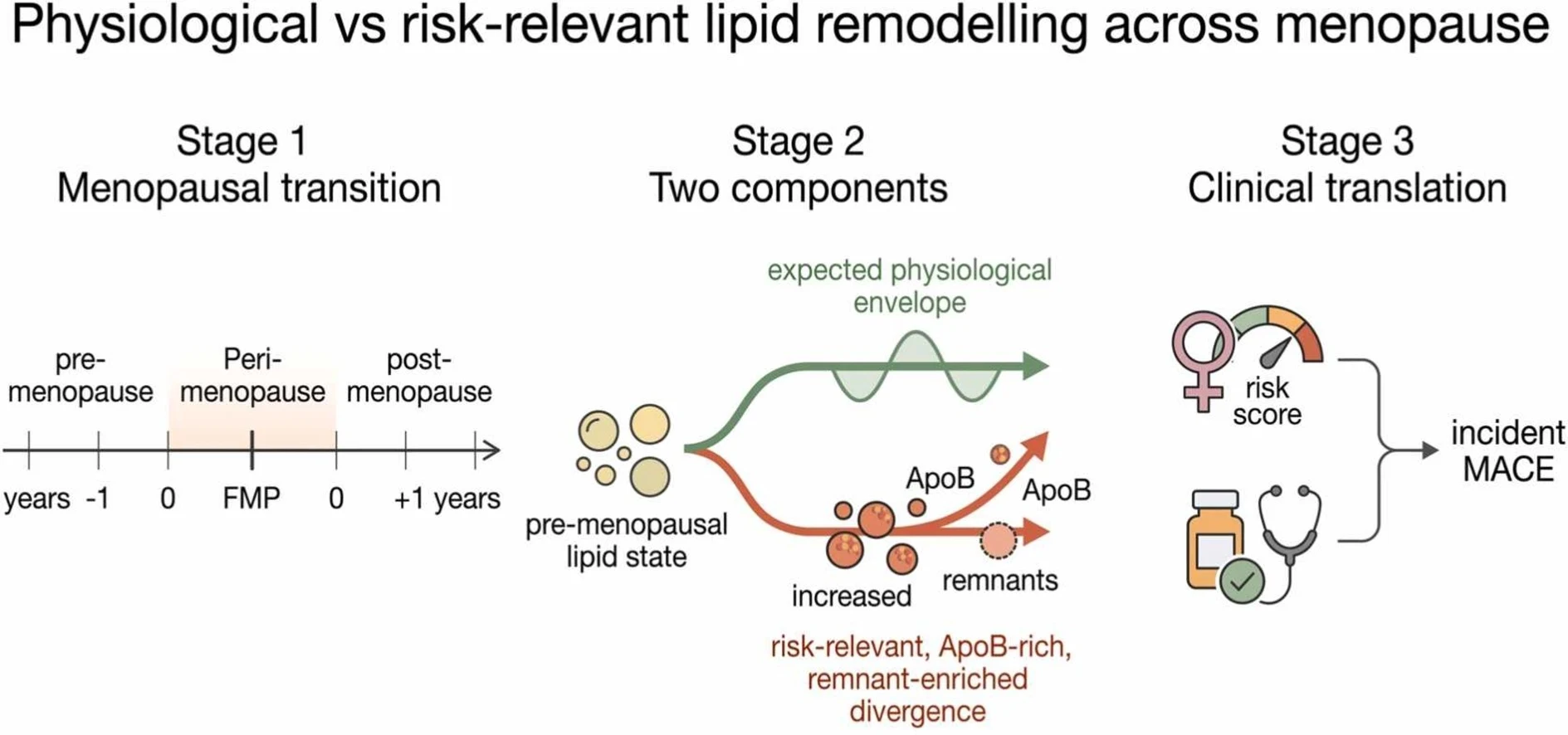
An observational study analysed 273,036 UK Biobank women to distinguish expected menopause-related changes in blood fats from changes linked to heart disease. Researchers used 228,900 age-matched men as a reference and examined changes around the final menstrual period.
Apolipoprotein B, a protein on particles that carry fats in blood, was 13.5% higher after menopause than before it. Higher levels were associated with heart disease involving reduced blood supply, but not heart failure. The researchers distinguished expected changes from patterns rich in this protein that predicted this heart disease. At age 58, levels of at least 1.2 grams per litre corresponded to different 10-year risks of major cardiovascular events in men and postmenopausal women. Models that used the same rules for both sexes overestimated women’s risk.
Why it matters
Cardiovascular risk factors accelerate around menopause, raising the question of which blood fat changes should guide prevention in midlife.
Caveats
Observational comparisons cannot establish that menopause caused these changes. Menopausal status was self-reported, and the proposed monitoring ranges need testing in studies that follow women over time.
- Lipid and ceramide metabolism
- Sex hormone signalling (oestrogen, androgen)
- Heart failure
- Ischaemic heart disease
- Major adverse cardiovascular events
- Humans
The paper
University Hospital of Wales
Journal of Clinical Lipidology, 14 Aug 2026