Matrix metalloproteinase imaging and survival prospects with aging in murine aortic aneurysm
28 days
Abstract
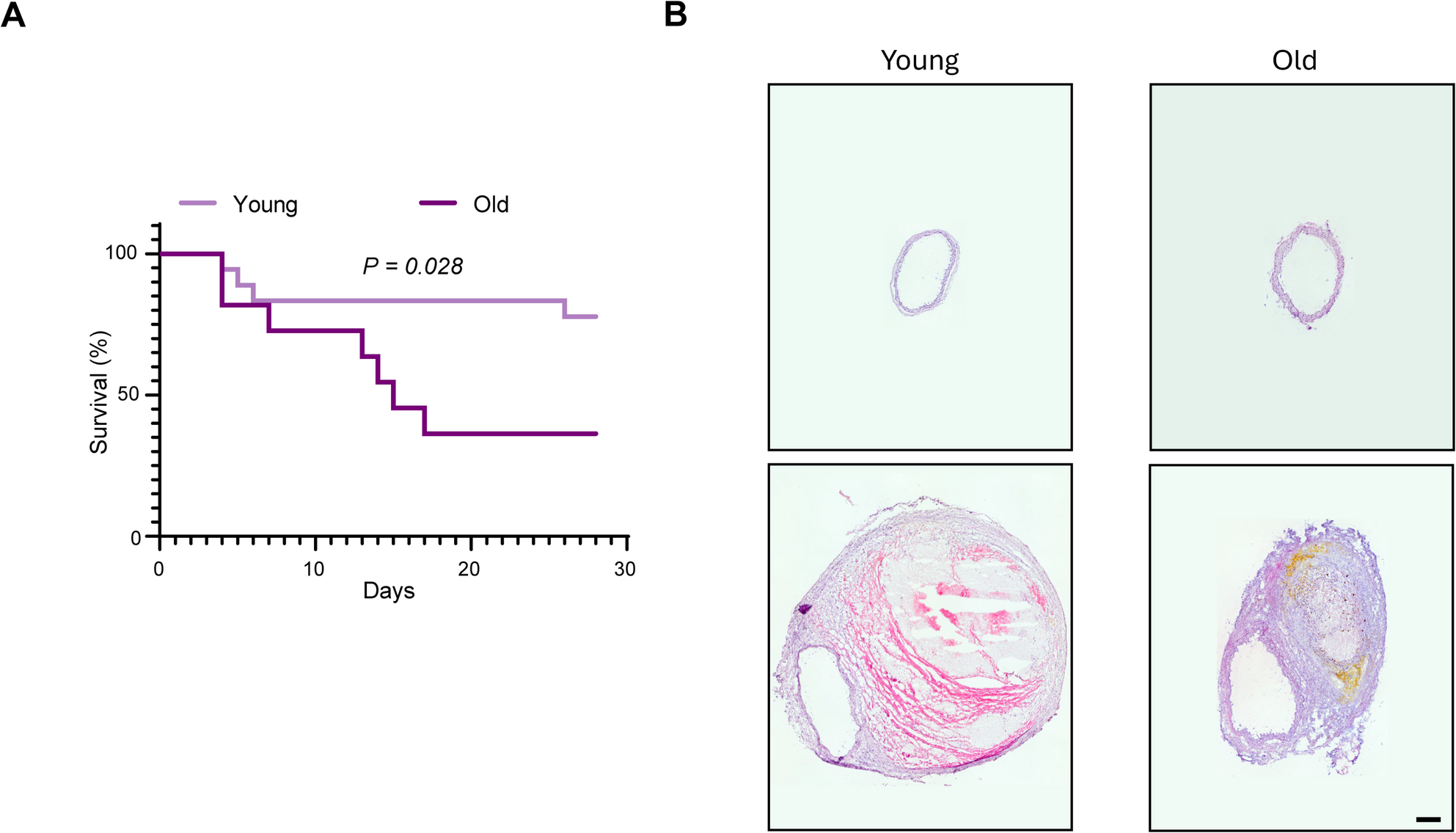
BACKGROUND: Matrix metalloproteinases (MMPs) are elevated in aortic aneurysm (AA), where older age is a risk factor. The relationship among aging, aortic MMP activity, and AA development has not been systematically evaluated. This study leveraged MMP-targeted molecular imaging to investigate how aging affects aortic MMP activity, aneurysm development, and survival. RESULTS: AA development and animal survival were monitored for 28 days after Angiotensin (Ang)-II infusion in 8-10-week-old (young) and > 51-week-old (old) apolipoprotein E (Apoe)-/- mice. Old animals' survival at 28 days was significantly lower than that of young Ang-II-infused Apoe-/- mice (P < 0.05). ⁶⁴Cu-RYM2 PET/CT showed significantly higher aortic MMP activation before and 1 week after Ang-II infusion in old compared to young Apoe-/- mice. The ⁶⁴Cu-RYM2 signal was significantly higher in animals that did not survive 28 days than in those that did (P < 0.01). MMP activity significantly increased after Ang-II infusion and correlated with aortic macrophage infiltration. The increase in MMP activity preceded aortic dissection. Finally, MMP activity was heterogeneous along the aorta of control and Ang-II-infused young and old Apoe-/- mice, and of old wild-type mice. CONCLUSIONS: Aging is associated with increased MMP activity along the aorta and worse AA survival. MMP-targeted molecular imaging provides insights regarding aneurysm survival prospects in this exploratory cohort. Combining MMP inhibitors and tracers may help prevent and track aneurysm growth, dissection, and rupture.
The paper
Yale University
EJNMMI Research, 22 Sep 2026, Open access


