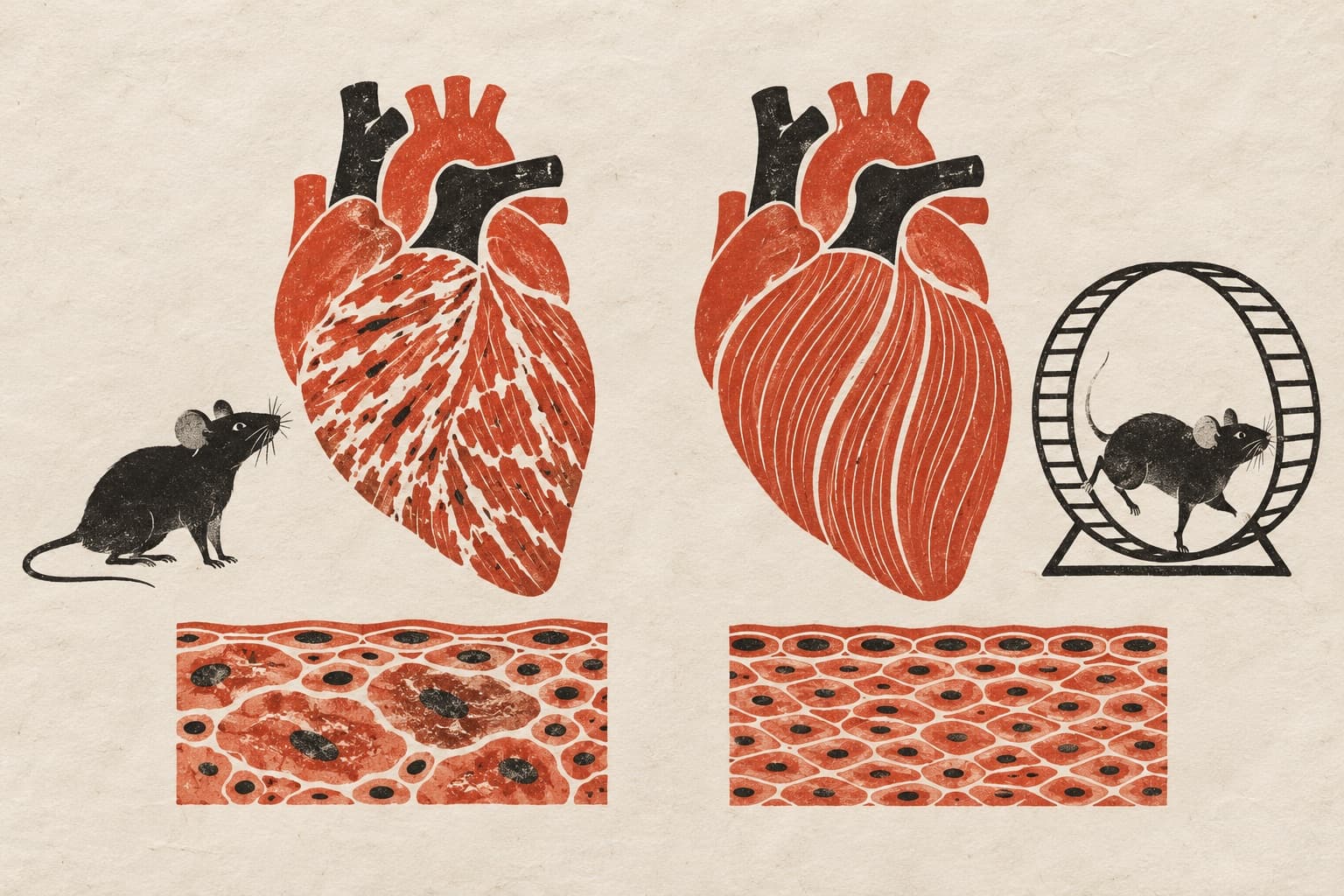
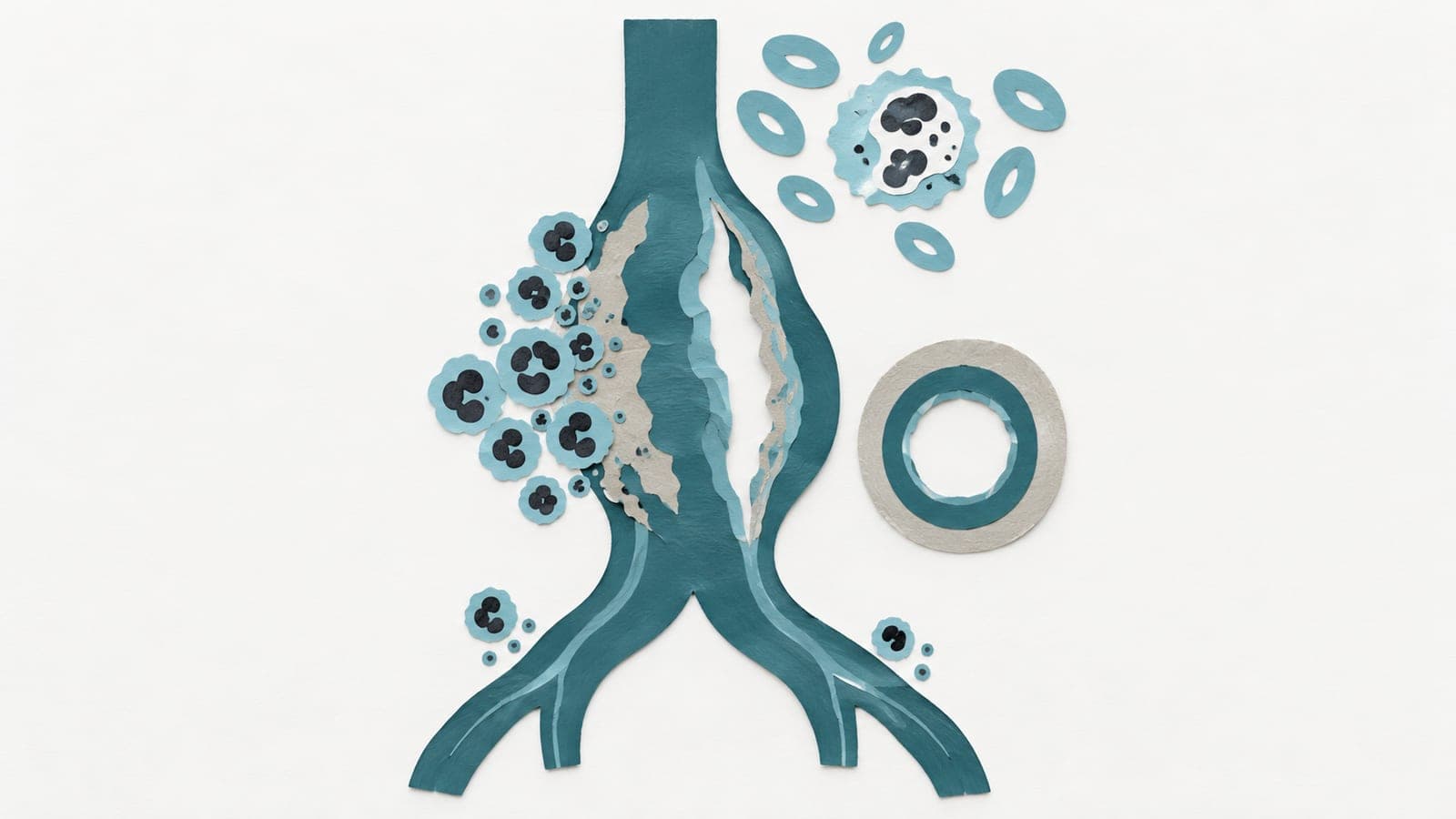
Muscle wasting worsened artery damage in immobilised mice
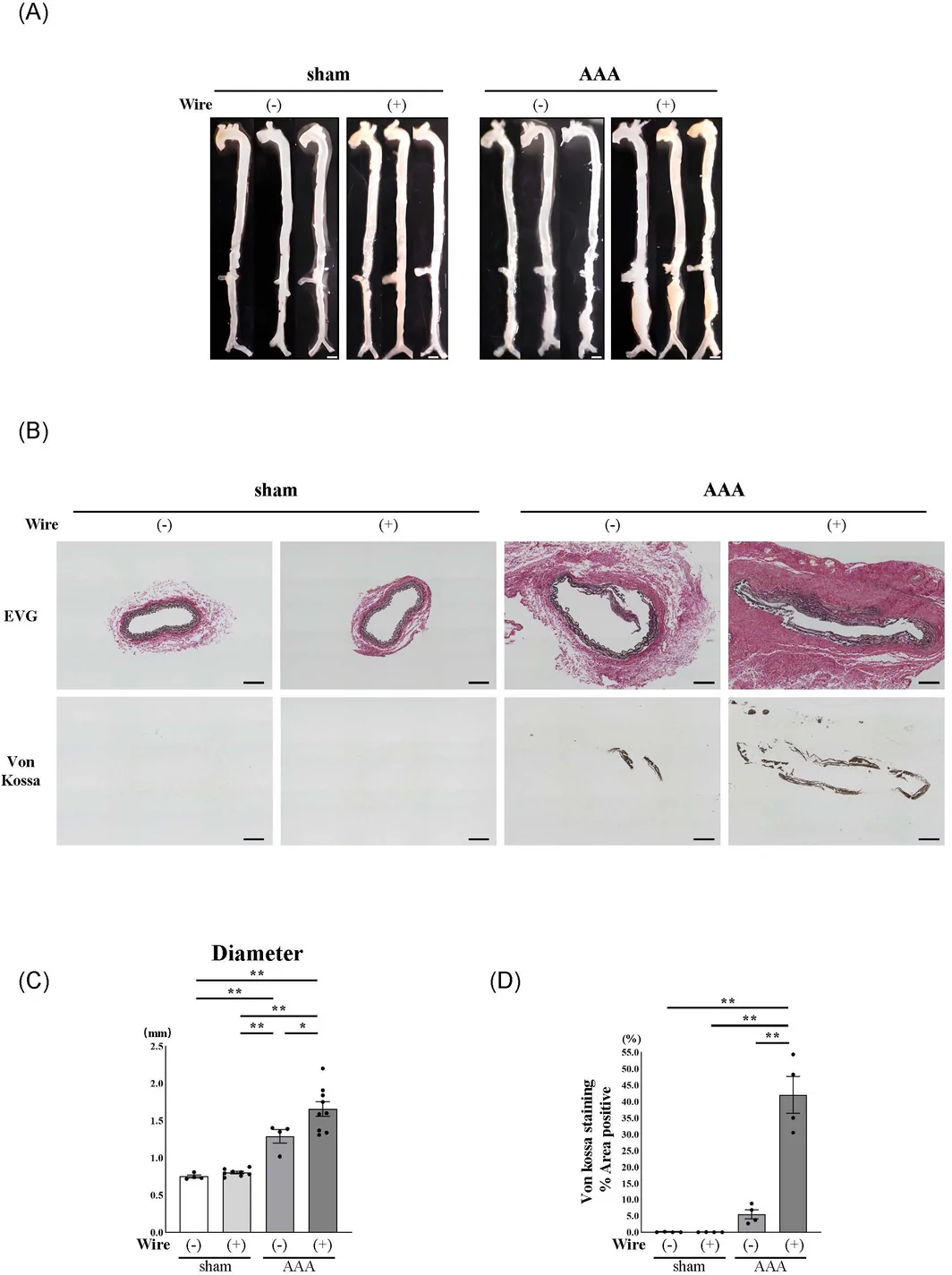
In experiments, male mice with immobilised hindlimbs developed more calcium build-up and larger aneurysms after 42 days than mice with induced aneurysms alone.
Limit: Reciprocal effects of vascular pathology on muscle atrophy were not measured
In an animal experiment, researchers immobilised the hindlimbs of 10-week-old male C57BL/6J mice and chemically induced abdominal aortic aneurysms—bulges in the body’s largest artery. They assessed the aortas 42 days after aneurysm induction. Compared with mice with induced aneurysms alone, those with muscle wasting developed larger aneurysms and more calcium build-up in the artery wall.
Muscle wasting also reduced irisin, a protein released by muscle, in muscle and blood. In immobilised mice with induced aneurysms, irisin injections reduced aneurysm progression and calcium build-up. Researchers gave 0.21 micrograms per gram of body weight every three days throughout a 56-day experiment. A drug used to inhibit irisin signalling worsened both conditions in mice with induced aneurysms.
Why it matters
Age-related muscle loss has been linked to blood vessel disease in clinical studies. This work points to muscle-derived signals as a possible target for preventing such disease.
Caveats
The study used immobilisation and chemically induced aneurysms, rather than natural aging. It tested only young male mice, so it does not show whether irisin would benefit people.
From the paper
- Limitation
First, experiments were conducted exclusively in young male mice, and sex‐ and age‐related differences could not be evaluated.
Quoted word for word from the full text on PubMed Central.
The paper
The University of Tokyo; Tokyo Metropolitan Institute for Geriatrics and Gerontology
Geriatrics & Gerontology International, 1 Oct 2026, Open access